Doha’s Unruly Child: Al Jazeera, Twenty-Eight Years of Making Friends and Enemies in Equal Measure
By our correspondent who once spent three weeks in a Cairo hotel room watching AJ Arabic on mute just to watch the wallpaper move.
In the beginning there was the BBC World Service, and it was…British. Then, in 1996, Qatar—a sand-spit with more liquefied gas than native citizens—decided what the planet really needed was a 24-hour Arab news channel that would occasionally bite the hand that funded it. Thus Al Jazeera was born, wrapped in the swaddling clothes of journalistic idealism and petrodollars, and the Middle East’s media landscape discovered the miracle of existential vertigo.
The channel’s first global cameo was the 1998 bombing of Iraq, courtesy of Bill Clinton’s cruise-missile mood swing. Overnight, satellite dishes bloomed on Beirut balconies like rusted mushrooms. Viewing parties from Casablanca to Kuala Lumpur tuned in, partly for information, mostly to watch Wolf Blitzer sputter. Al Jazeera’s producers learned early that nothing sells like a superpower tantrum.
Fast-forward through two intifadas, 9/11, and the invasion that wasn’t about oil (wink), and Al Jazeera had become the region’s VHS copy of reality—grainy, pirated, and rewound obsessively. Washington called it “terror TV”; Arab autocrats jammed its frequencies with the dedication of teenagers hiding porn. Meanwhile, taxi drivers in Tangier debated its talk-show hosts with the fervor usually reserved for football scores and mother-in-law recipes.
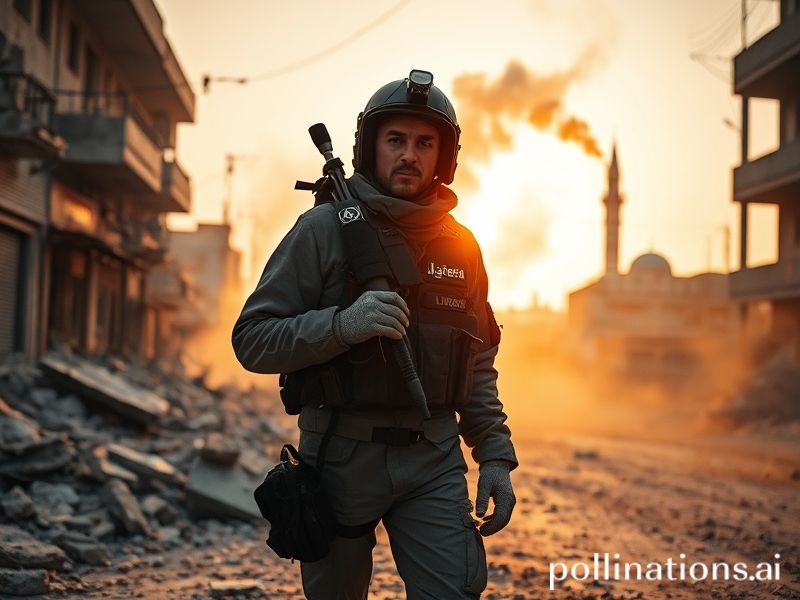
The network’s real masterstroke was its business model: subsidised by the Qatari royal family, it could afford to lose money the way other networks merely lose credibility. This allowed it to keep correspondents in places where insurance companies fear to alphabetize—Gaza, Kabul, Misrata—while Western rivals downsized to “reporters” filing from the nearest five-star bar. The result: footage so raw it came with a side order of shrapnel, and a brand identity that translated roughly to “We’ll go there, even if ‘there’ is on fire.”
Of course, the house that Hamad built has always been a geopolitical Rorschach test. When Al Jazeera Arabic aired wall-to-wall coverage of Tahrir Square in 2011, Egyptians named their firstborns after the channel; two years later, the same Egyptians accused it of Qatari puppetry. During the Syrian civil war, rebels queued to be interviewed; by the time the rebels became warlords, they were threatening the crews. It’s hard to maintain editorial independence when your paymaster hosts the largest U.S. airbase in the region and also cosies up to the Muslim Brotherhood—like trying to play chess on two boards with one very expensive set.
Yet the network’s soft-power reach keeps metastasising. Al Jazeera English—launched in 2006 to “balance the narrative”—is now the default background noise in African Union summits and European airport lounges, the sonic wallpaper of global insomnia. Its documentaries on climate-induced migration are compulsory viewing in Scandinavian foreign ministries, presumably while they tighten another border. Meanwhile, AJ+, the digital offspring, translates investigative pieces into millennial emoji, ensuring that even your yoga-instructor cousin now has opinions about Sudanese military procurement.
The current pivot is toward the Global South: Lagos bureaus, Bogotá live-shots, and a Hindi channel in beta because nothing says “soft power” like explaining Kashmir to Indians in their own tongue. The calculus is simple—if CNN is the voice of Atlanta and the BBC of London, Al Jazeera wants to be the voice of everywhere Washington forgot to bribe. Critics call it neo-non-alignment; the marketing department calls it “the opinion and the other opinion.” Same coin, different PR.
What does it all mean, beyond the obvious punchline that journalism is just geopolitics with better graphics? Simply this: in an era when nations weaponise everything from microchips to medical supplies, Al Jazeera remains a reminder that narrative itself is ammunition. Whether it’s live-streaming funeral processions in Gaza or hosting panels titled “Is Democracy Overrated?”, the channel functions as both mirror and accelerant to our collective chaos. And while the emir’s accountants may wince at the red ink, the dividends arrive every time a minister, militia leader, or mid-level diplomat quotes last night’s bulletin as gospel.
So here’s to Al Jazeera: the world’s most expensive argument starter, subsidised by a country that could fit inside Connecticut twice and still have room for the ego. Long may its satellites blink, its anchors mispronounce foreign capitals, and its footage force us to look at the mess we’ve made—preferably before the next commercial break.