Alexander Isak to Liverpool: A Transfer Saga for the End Times
By our man in the cheap seats, watching civilisation burn one rumour at a time
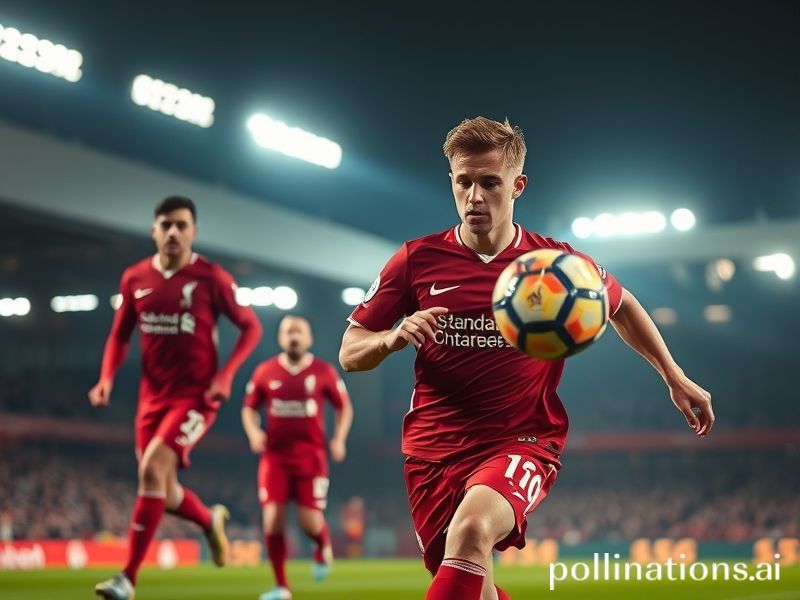
LIVERPOOL—In a world where sovereign-wealth funds treat football clubs like NFTs and the average fan’s weekly wage couldn’t cover a player’s hair-styling budget, Liverpool’s courtship of Alexander Isak feels almost… quaint. Like swapping nuclear launch codes for a particularly fetching stamp. Yet here we are, midsummer, with the Merseyside club reportedly prepared to lob £100 million-plus at Newcastle United for a Swedish striker whose surname sounds like an IKEA cupboard you assemble at 2 a.m. while questioning your life choices.
Global implications? Absolutely. Because nothing says “late-stage capitalism” quite like a 24-year-old being valued at the GDP of Samoa. Isak isn’t merely a centre-forward; he’s a sovereign bond in shin pads, a walking hedge fund whose expected goals (xG) curve is scrutinised by analysts in Singapore sky-bars with the same intensity they once reserved for Asian currency futures. Should the deal cross the line, Liverpool’s American owners, Fenway Sports Group, will have effectively purchased a Scandinavian asset to offset the depreciating pound. Somewhere, a Bank of England governor wakes in a cold sweat, haunted by the vision of central-bank policy being nudged by Jurgen Klopp’s pressing triggers.
From the Magpies’ perspective, selling Isak would be the footballing equivalent of handing over your last bottle of water during a desert rave because the DJ promised to shout you out. Saudi-backed Newcastle can technically afford the gesture—when your sovereign backstop has more oil than Texas, liquidity is a mere mood swing. But optics matter. The last time the Geordies cashed in on a talisman (remember Andy Carroll?), they spent the proceeds on French prospects who arrived with résumés longer than their highlight reels. History doesn’t repeat, it just changes agents.
Meanwhile, in Stockholm, the Swedish press treats every Isak update like a national-security briefing. Aftonbladet’s splash—“Svensken kan bli dyraste någonsin!”—roughly translates to “Local boy might fund our welfare state for a fortnight.” The Nordic nations, those perennial darlings of UN happiness indexes, find themselves in the ironic position of cheering on a system that funnels obscene wealth to a single 6-foot-4 athlete. Somewhere, a Stockholm sociology professor is updating lecture slides titled “Post-Socialist Contradictions in the Age of Sportswashing.”
Zoom out further and the transfer becomes a parable of our fractured planet. While Sudan starves and Antarctic ice shelves calve like bored debutantes, the global attention economy fixates on whether a man who kicks polyurethane better than most will swap one cold, rainy province for another. Twitter (sorry, “X”) erupts in geopolitical hot takes: Liverpool fans in Lagos burn through data bundles arguing with MAGA-accountants from Ohio about release clauses. The algorithm feeds on tribal rage; Musk rubs his hands together like a Bond villain who’s just discovered emotional engagement metrics.
Yet there’s beauty in the absurdity. For 90 minutes each weekend, the collective hallucination holds: borders dissolve, time zones collapse, and a kid in Jakarta wearing a counterfeit Salah shirt feels a dopamine rush when Isak, thousands of miles away, dinks a finish over the onrushing keeper. It’s the opium of the people, except now the opium is laced with cryptocurrency and sponsorship tiers. Marx would have needed a lie-down.
Will Isak actually move? The bookmakers—those secular oracles—say yes. Then again, they also said Britain would “definitely” stay in the EU and that Titanic was unsinkable. Until the fax machines (or their modern equivalent, a WhatsApp voice note from a bloke claiming to know Michael Edwards) sing, nothing is certain.
Conclusion: In the grand ledger of human folly, the Isak-to-Liverpool saga is a footnote written in invisible ink—visible only under the ultraviolet light of late-night sports radio. But footnotes have a habit of foreshadowing chapters. If the deal goes through, rejoice, weep, or shrug; just remember that when civilisation finally capsizes, the last headline flashing across our holographic goggles will probably read: “BREAKING: Galactic United trigger release clause for Earth’s top striker—humans demand 10% sell-on clause.” Until then, keep the receipt for your replica shirt. You may need kindling.