Borderlands 4: An Atlas of Global Dysfunction, Now With 300% More Explosions
By A. Correspondent, filing from an undisclosed server farm that smells faintly of gunpowder and unpaid overtime
Somewhere between a Mongolian copper mine that doubles as a TikTok backdrop and a Frankfurt boardroom where executives argue over loot-box legislation, the planet paused yesterday to watch a two-minute trailer for Borderlands 4. Yes, a video game—though calling it that is like calling the Suez Canal a puddle. Gearbox Software’s latest carnival of gleeful nihilism arrives at a moment when the real world has decided to cosplay its fiction: supply chains are snarled like last-gen console cables, mercenaries advertise on LinkedIn, and billionaires treat nation-states as optional side quests.
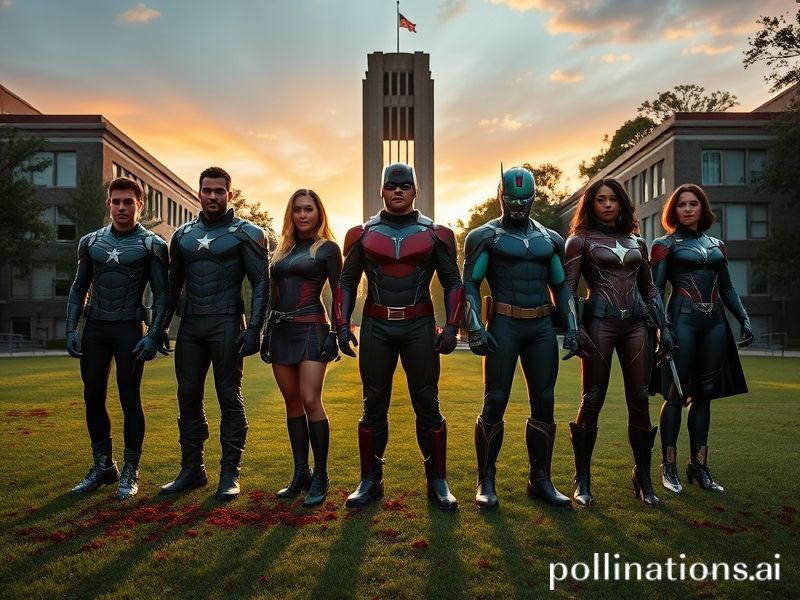
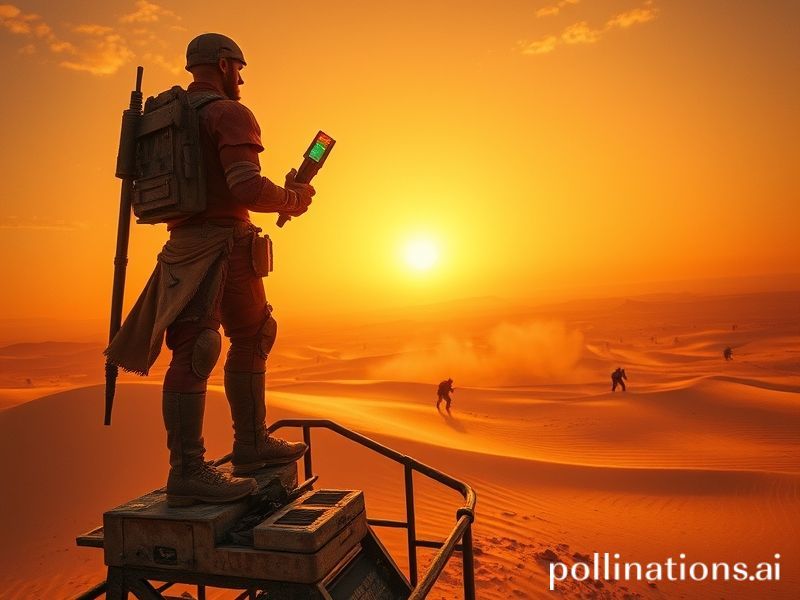
The franchise’s shtick has always been excess—guns that sing, villains who monologue in iambic pentameter, currencies that inflate faster than the lira—but the fourth installment promises something more geopolitically fashionable: procedurally generated “borderlands” that shift with player behavior, a digital Maginot Line that melts every time a teenager in Jakarta discovers a new cheese strategy. In other words, the game now mirrors the contemporary passport queue, only with better lighting and fewer functioning toilets.
Global Implications, or How We Learned to Stop Worrying and Love the Microtransaction
In Seoul, analysts at a market-research firm that shall remain unnamed (their nondisclosure agreement is scarier than their non-compete) estimate Borderlands 4 could siphon $1.3 billion in discretionary spending from emerging economies in its first quarter alone. That’s roughly the GDP of Vanuatu, spent on digital hats. Meanwhile, Brazilian streamers have already unionized—yes, unionized—demanding a bigger cut of the revenue they generate while shouting Portuguese profanities over rocket launchers. The International Labour Organization, historically occupied with textile fires in Bangladesh, now finds itself mediating disputes over “emote royalties.” Civilization’s to-do list grows ever more surreal.
Europe, ever the fretful nanny, is drafting regulations that would classify randomized loot crates as a form of “algorithmic gambling.” The proposed law is 400 pages long and contains the word “child” 1,247 times, suggesting either genuine concern or a very efficient copy-paste macro. Gearbox’s response has been to introduce “transparent loot boxes” that display the odds in Comic Sans, a font choice that feels suspiciously like trolling. The European Parliament is scheduled to vote on the measure next month, right after they finish arguing about olive-oil labeling. Priorities.
From the Sahel to the Subreddit
In Mali, French forces withdrew last year, leaving behind a security vacuum and an astonishingly robust 4G network built, locals joke, entirely from conflict minerals and FIFA Ultimate Team revenue. Into that vacuum has marched not Al-Qaeda, but something almost as relentless: Borderlands 4 pre-order hype. Cyber-cafés in Bamako now host midnight tournaments sponsored by a cryptocurrency exchange whose CEO is, allegedly, a 19-year-old in Lagos with three passports and no last name. The prize pool is denominated in Torgue Tokens, a fictional currency that, through the miracle of unregulated finance, can allegedly be swapped for actual rice. If that sounds insane, remember that people once traded tulip bulbs for canal houses. Human gullibility remains the only renewable resource.
Back in Washington, the Pentagon’s soft-power division—yes, that’s a thing—has begun monitoring in-game chat for “narrative influence operations.” Apparently, nothing destabilizes a fragile democracy quite like a Russian teenager griefing Congress with a flamethrower shaped like a bald eagle. The irony, of course, is that the game’s writers predicted this four years ago in a DLC nobody played because everyone was busy arguing about the color of a dress.
Conclusion: Apocalypse, But Make It Co-Op
Borderlands 4 drops this fall on every platform short of your smart fridge, though Samsung is reportedly working on that. It will sell millions, mint new micro-economies, and spawn academic papers with titles like “Ludonarrative Disjunction and the Post-National Subject.” Meanwhile, the actual borderlands—those dusty, contested strips of earth where passports are checked and bodies occasionally disappear—will remain underfunded, over-policed, and utterly bereft of respawn points.
Still, the game offers something the real world can’t: a shared arena where a kid in Lagos and a banker in Zurich can scream the same profanities at a giant space squid. In an age of fracturing alliances and resurgent walls, perhaps that’s the closest we’ll get to international cooperation. Just don’t forget to buy the season pass—diplomacy, like everything else, now costs extra.