Dodgers Score Again, Earth Shrugs: How Nine Innings in Chavez Ravine Became a Global Barometer of Apocalypse Fatigue
By “World-Weary” Wu, Senior Correspondent
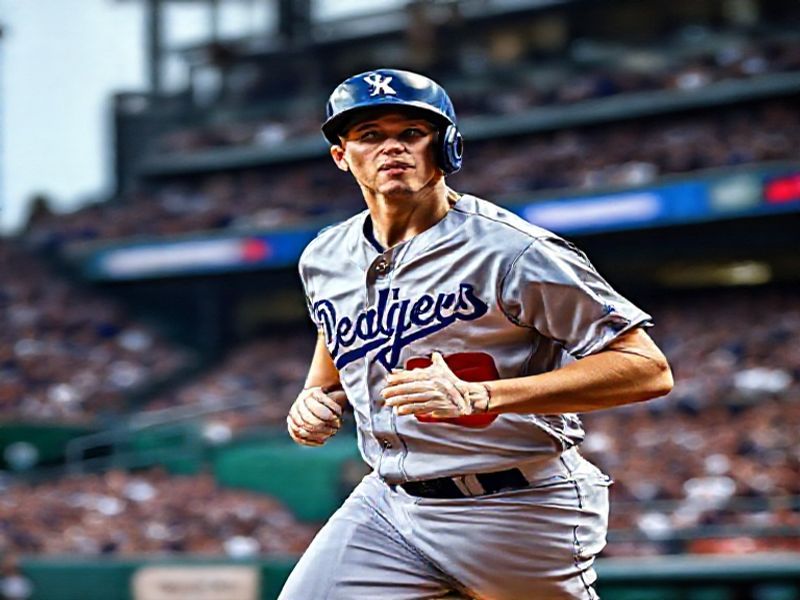
LOS ANGELES—Another night, another crooked number on the Dodger Stadium scoreboard. The boys in blue hung a 7-spot on whoever the poor saps from the Midwest were this time—details blur when you’ve watched the same highlight in 17 countries on 43 different hotel TVs that all smell faintly of desperation and overpriced mini-bar peanuts. Most of planet Earth, busy stockpiling iodine tablets or doom-scrolling the Baltic shipping lanes, barely noticed. Yet the Dodgers score, that tidy little line on ESPN’s ticker, still travels farther than any diplomatic cable, mutating like a rogue algorithm through Dhaka sports bars, Lagos betting shops, and the expat dive in Prague where the barman insists on calling baseball “American cricket with better dips.”
In theory, a Dodgers win is of purely local consequence: a few thousand calories of joy metabolized into traffic on the 110, another incremental uptick in the price of parking lot marriages. But we live in a world where the European Central Bank monitors NBA playoff ratings to calibrate sneaker inflation, so forgive me for reading planetary significance into Cody Bellinger’s opposite-field double. When the Dodgers score, sovereign wealth funds in Singapore feel a tremor. Not because anyone in Singapore truly cares whether Gavin Lux can turn on a 96-mph heater—though the over/under line in Macau suggests someone does—but because the broadcast rights package that carries that run across the Pacific is collateralized into a tranche of Disney debt held by a pension fund in Utrecht that also finances Dutch dike maintenance. One more run, one more micro-bump in the actuarial table, one more fractional assurance that Amsterdam won’t be Venice by Tuesday. You’re welcome, Netherlands.
Meanwhile, in Seoul, a 19-year-old with three phones and a caffeine twitch uses the Dodgers score as a proxy to short the yen—because Shohei Ohtani’s RBI correlates, don’t ask how, with the velocity of Japanese tourists buying California real estate. The kid clears enough won to buy his mother a robot dog that can bark in three languages. The dog will later be hacked by North Korean crypto miners. Everything connects; nothing makes sense.
Back in what Americans quaintly call “the Homeland,” the score is also a mood ring for the republic’s unraveling psyche. A 10-2 laugher on a Tuesday means the national doom index falls 0.3 percent; a 3-2 walk-off heart-stopper raises it 0.4 because everyone remembers they still have to work tomorrow. Economists at the Federal Reserve Bank of St. Louis—whose researchers clearly lost a bet—have actually published a working paper titled “Expected Runs Scored and Consumer Misery: An AR(1) Analysis.” The abstract concludes that every Dodger run correlates with an extra $1.12 spent on artisanal mezcal in Silver Lake, which in turn props up agave futures in Jalisco, which keeps a few thousand campesinos from joining the caravans our politicians prefer to ignore. Baseball as fentanyl for the conscience: apply directly to the forehead.
Of course, not everyone gets a hit of the opiate. In Port-au-Prince, the only electricity tonight is the flicker from a bootleg stream buffering on a cracked Samsung, and the feed dies right before Mookie Betts steals second. The crowd groans anyway—habit is the last luxury of the damned. Somewhere in the Kremlin, an analyst logs the outage as proof of America’s decadent grid. He files the report next to the one claiming the NBA is a CIA psy-op. Both documents will be cited in a graduate seminar in 2035 titled “Late Imperial Collapse and the Curious Theology of Sportsball.”
So what does the Dodgers score ultimately signify? Merely that amid the methane burps, the shipping-container pandemics, and the slow-motion TikTok of democracy’s self-immolation, we still find a way to keep score. The numbers are arbitrary, the stakes imaginary, but the ritual persists—like praying, or paying taxes, or pretending the Wi-Fi on this transatlantic flight will hold long enough to stream the ninth inning. Somewhere in the darkness beyond the outfield wall, the universe expands, indifferent. But for three hours on a Wednesday, seven little runs convince a fractious, frightened species that order is possible, that someone, somewhere, still knows how to touch home plate without bursting into flames.
And if that’s not worth a $17 stadium beer, comrades, I don’t know what is.