Volcanic Ash and Haute Couture: France vs. Iceland and the Glorious Futility of Trying to Out-Cool the North Atlantic
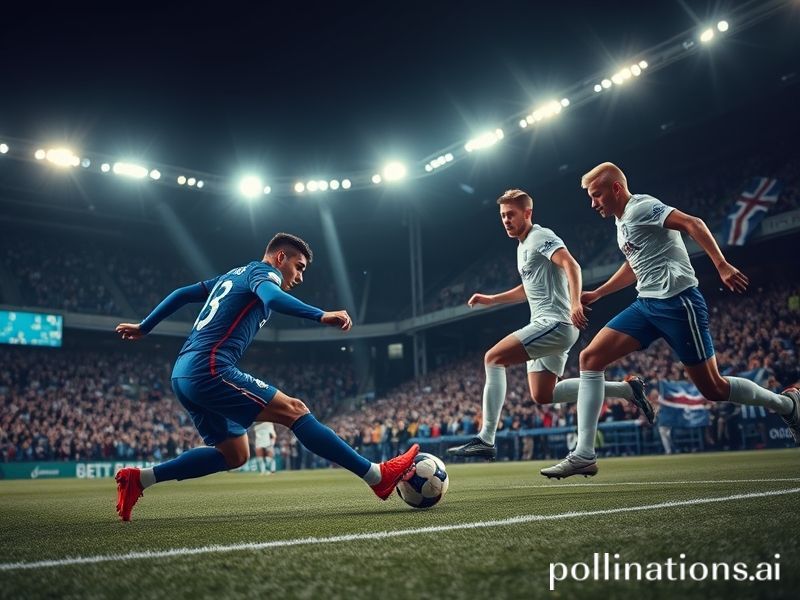
PARIS—Somewhere between the Champs-Élysées and Reykjavík’s geothermal hot-dog stands, the world is once again being asked to choose between champagne flutes and glacier runoff. France versus Iceland—on the surface, a Euro 2024 qualifying fixture that could have been scheduled by a bored algorithm. In practice, it is the geopolitical equivalent of a Michelin-starred chef arm-wrestling a Viking influencer while the rest of us place over-leveraged bets on who has better Wi-Fi.
The match itself is almost irrelevant; the real spectacle is watching two national brands compete for soft-power supremacy. France arrives with a squad valued at roughly the GDP of Tonga, plus the existential burden of having once ruled everything from Haiti to Vietnam and still pretending that was just a cultural exchange program. Iceland counters with 370,000 citizens, more active volcanoes than traffic lights, and a tourism board that has convinced the planet that inhaling sulfur fumes beside a geysir is “mindfulness.”
Global audiences tune in because the subplot is irresistible: old-world grandeur versus new-world branding. France exports perfume, nuclear reactors, and the lingering suspicion that civilization peaked sometime around Sartre. Iceland exports Björk, fermented shark, and Instagram backgrounds so aggressively pristine they make Switzerland look like a landfill. Each nation has weaponized its clichés so effectively that the match feels less like sport and more like a focus group for the apocalypse: would you prefer to drown in rising seas beside a baguette, or be flash-frozen under the Northern Lights?
Financial markets—those sober arbiters of human folly—treat the fixture like a derivatives contract on national ego. French luxury conglomerates hedge against volcanic ash disrupting supply chains; Icelandic pension funds short the euro every time Kylian Mbappé sneezes. Meanwhile, crypto bros in Singapore arbitrage fan tokens named after players whose surnames contain letters no keyboard has ever seen. Somewhere in Basel, a central banker sighs and adds another zero to the global debt tally.
The environmental subplot is equally bleak. France’s team flew in on a chartered Airbus belching the annual carbon budget of a small Malian village; Iceland’s squad offset theirs by planting three twigs and promising the elves would handle the rest. Greta Thunberg tweets something unprintable in Swedish; the tweet is immediately recycled into a marketing campaign for electric SUVs. The planet, unimpressed, schedules another heatwave.
Culturally, the standoff is a referendum on twenty-first-century aspiration. Urban millennials from Lagos to Lima dream of Parisian balconies where they can smoke melancholy cigarettes and pretend Simone de Beauvoir is still taking notes. Their Gen-Z siblings, meanwhile, stream 4K drone footage of Reykjavík’s rainbow streets and fantasize about relocating to a country whose entire prison population could fit in a bowling alley. Both fantasies are equally delusional—France’s unemployment office is a Kafka novella with fluorescent lighting, and Iceland will happily bankrupt you on a single plate of langoustine—but hope, like cheap credit, springs eternal.
Yet for all the snark, the encounter does serve one serious purpose: reminding the world that nationalism is now just another content vertical. The French tricolor flutters beside TikTok ads for Korean sheet masks; Iceland’s Viking clap is auto-tuned by a Swedish producer and uploaded to Spotify before halftime. Each cheer is data-mined, each groan monetized. The stadium is no longer a battlefield but a pop-up analytics lab, and every fan is both customer and product.
When the final whistle blows—likely to a 1-1 draw choreographed by UEFA’s broadcast partners—the real winner will be the algorithm that keeps us doom-scrolling long enough to miss the next catastrophe. France will console itself with Beaujolais and strikes; Iceland will celebrate by naming a new volcano after the referee. The rest of us will queue at passport control, pretending we still believe in borders, while quietly Googling real-estate prices in places neither team could locate on a map.
In the end, France versus Iceland is not about football. It is a live demonstration that in the age of infinite content, even national identity can be A/B tested. And the control group, as always, is us—watching, betting, inhaling the sulfur of our own making.