Norway, the postcard nation that keeps the rest of the planet honest—and slightly annoyed—about its own life choices, has quietly become the world’s moral GPS. While other countries fumble for direction, Norway just keeps recalculating, politely suggesting we take the next exit toward decency. The rest of us, naturally, ignore the instructions and end up in the geopolitical equivalent of a strip-mall parking lot.
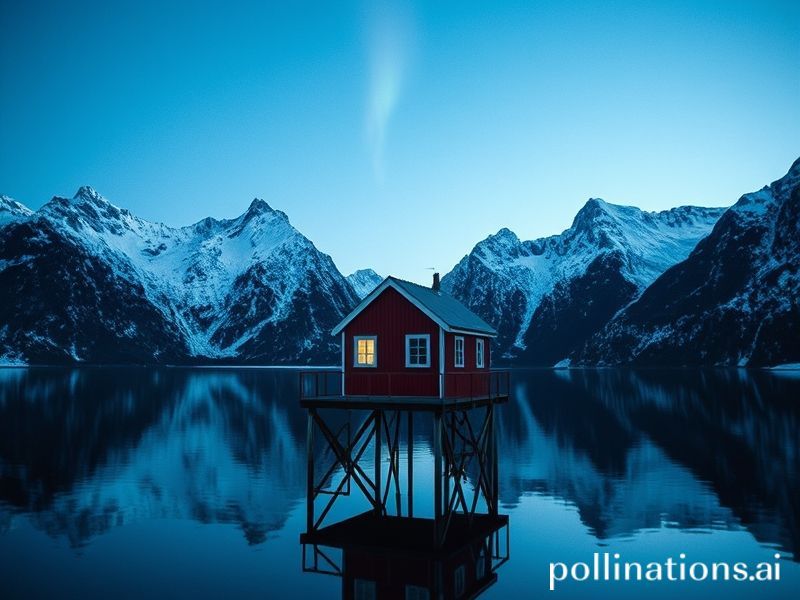
From Oslo, the view looks suspiciously utopian: fjords carved like existential metaphors, oil revenue tucked away in a sovereign-wealth fund so large it could paper over the sins of several medium-sized continents, and a social contract that still believes in humans. Internationally, this is both inspirational and infuriating. China, busy building coal plants like it’s a competitive sport, glances northward and mutters something about “cultural differences.” The United States, fresh from another infrastructure week that produced only a commemorative tweet, wonders aloud if Norway would consider franchising its government. The answer, delivered in flawless English and a tone of gentle regret, is “Nei, takk.”
Yet the global stakes keep rising. As the Arctic melts faster than a popsicle in Riyadh, Norway finds itself the reluctant landlord of the newly navigable North. Cargo ships from Guangzhou to Gdańsk are queuing up for the shortcut over the top, where Russian submarines play hide-and-seek and American icebreakers pretend they still own the map. Norway’s response has been characteristically Scandinavian: build more coast guard vessels, host NATO exercises, and insist that everyone clean up their trash before leaving the premises. The rest of the world nods respectfully, then litters anyway.
Inside the Arctic Council—diplomacy’s answer to group therapy—Norway chairs the session with the patience of a kindergarten teacher separating toddlers fighting over hydrocarbons. The Chinese delegation wants “near-Arctic” status, a phrase that translates roughly to “I read about penguins once.” Russia brandishes flags like it’s 1899. The Norwegians counter with satellite imagery, marine-biology data, and the unspoken threat of withholding salmon. Somehow, it works. Tempers cool. Everyone agrees to meet again in six months and pretend progress was made.
Meanwhile, the oil keeps flowing, an awkward inheritance from earlier, less enlightened decades. Norway’s parliament recently approved new North Sea fields, prompting Greta Thunberg to tweet a single, devastating period. The cognitive dissonance is deafening: how does a nation simultaneously export climate guilt and liquefied natural gas? Simple—by pricing carbon at $200 a tonne at home while politely requesting the EU do the same, then watching Brussels respond with the enthusiasm of a cat facing a bathtub. Hypocrisy, it turns out, is recyclable.
Refugees notice the paradox too. Thousands arrive hoping for the promised land of free university and ergonomic furniture, only to discover that paradise has a waiting list and a language full of sounds that defy human vocal cords. Integration classes teach newcomers to ski, file taxes, and avoid sitting next to strangers on public transport—skills that prove remarkably transferable to surviving humanity in general. Graduates emerge fluent in Norwegian irony: a society founded on Lutheran modesty that also sells $40 billion in weapons annually. They shrug, get jobs in IT, and vote for the Green Party like everyone else.
In the end, Norway functions as the world’s conscience in a fleece jacket—slightly smug, undeniably functional, and impossible to ignore. Other nations oscillate between envy and the urge to poke holes in the myth. But every time the UN publishes another happiness index, Norway tops it, and the rest of us are left scrolling through Instagram shots of midnight sun and wondering why our own cities smell faintly of despair and fried dough.
Perhaps the lesson is that virtue, like lutefisk, is an acquired taste best served cold. The planet will keep warming, the Arctic will keep opening, and Norway will keep offering sensible solutions while quietly cashing the checks. And we, the global audience, will continue binge-watching the Nordic noir of our own making—comforted by the knowledge that somewhere up north, a small nation is still trying to adult on behalf of us all.