Liam King, the 29-year-old software engineer from Manchester who spent three consecutive nights on the roof of a burning data centre in Jakarta, has unwittingly become the poster child for what happens when late-stage capitalism meets a heatwave and a looming recession. While CNN hailed him as “the last firewall standing between civilisation and a global TikTok blackout,” the rest of us might reasonably ask why a single over-caffeinated Brit is now expected to save the digital appetites of 1.2 billion users—most of whom were doom-scrolling through videos of other people’s cats setting themselves on fire anyway.
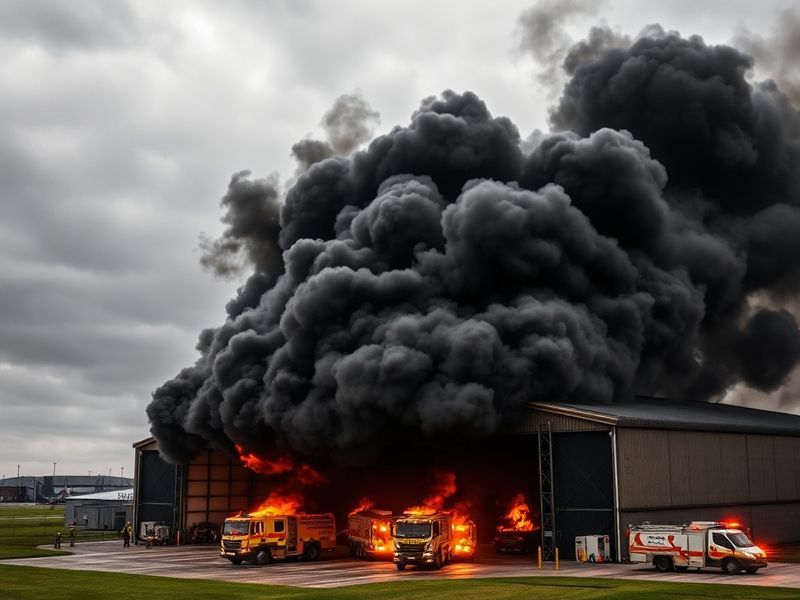
The international angle is deliciously grim. King’s employer, ByteVault, is registered in Delaware, majority-owned by a Cayman shell company, and stores the data of Indonesian teenagers in servers cooled by glacier water trucked in from New Zealand. When the local grid failed—because Jakarta’s air-conditioning units were busy undoing the work of every climate accord ever signed—the generators kicked in for exactly eleven minutes before the diesel turned to soup. Enter King, armed with a litre of bargain-bin iced coffee and a single fire extinguisher he later admitted he “borrowed” from a nearby KFC. He stayed up there, he says, “mostly because the Wi-Fi was still working on the roof and the evacuation bus was full of VCs.”
Global implications? Obvious. One man’s rooftop vigil postponed the collapse of an advertising ecosystem that currently determines everything from Brazilian election outcomes to the price of oat milk in Oslo. Analysts at the OECD estimate that a 48-hour outage would have shaved 0.3% off global GDP—roughly the annual economic output of Paraguay, or one medium-sized Elon Musk tantrum. Meanwhile, the Indonesian rupiah wobbled, crypto markets coughed up another $4 billion in pretend value, and the European Commission held an emergency Zoom to discuss “digital fire brigades,” which is Brussels-speak for “let’s form a committee and call it courage.”
King himself has become a Rorschach test for whatever axiom you’re grinding. In Silicon Valley, venture capitalists speak of him in hushed tones, as though he’d personally discovered a new battery made of orphan tears. In Brussels, he’s evidence that AI regulation is overdue; in Beijing, proof that Western infrastructure is held together by shoelaces and nostalgia. Down in Canberra, some senator already wants to knight him, presumably because Australia has run out of its own crises to mismanage. The only people not lionising him are the Jakarta firefighters, who note—rather dryly—that if King had simply evacuated when told, they could have saved the adjacent textile factory and the 400 jobs inside it.
Human nature being what it is, the merchandising began before the flames were out. A Berlin start-up is selling “Rooftop Resilience” hoodies for €89, each emblazoned with a pixelated King silhouetted against a stock-photo inferno. In Lagos, a fintech has launched the King Index, tracking how many minutes the average data centre could survive on one overworked millennial and a prayer. Even the Vatican issued a statement praising King’s “quiet heroism,” which is ecclesiastical code for “at least he wasn’t on Grindr at the time.”
What does it all mean? Nothing, and everything. The planet keeps warming, the servers keep humming, and somewhere in a Dublin co-working space another Liam King is being handed the night shift and a fire blanket. The world will forget this particular episode by Thursday, right around the time the next billionaire announces his plan to terraform Mars with NFTs. But for one sweaty, sleepless moment, a solitary human being stood on a corrugated iron roof in the tropics, holding back the digital dark ages with a $6 fire extinguisher and the delusion that any of this was sustainable. If that isn’t a metaphor for the 21st century, I don’t know what is.