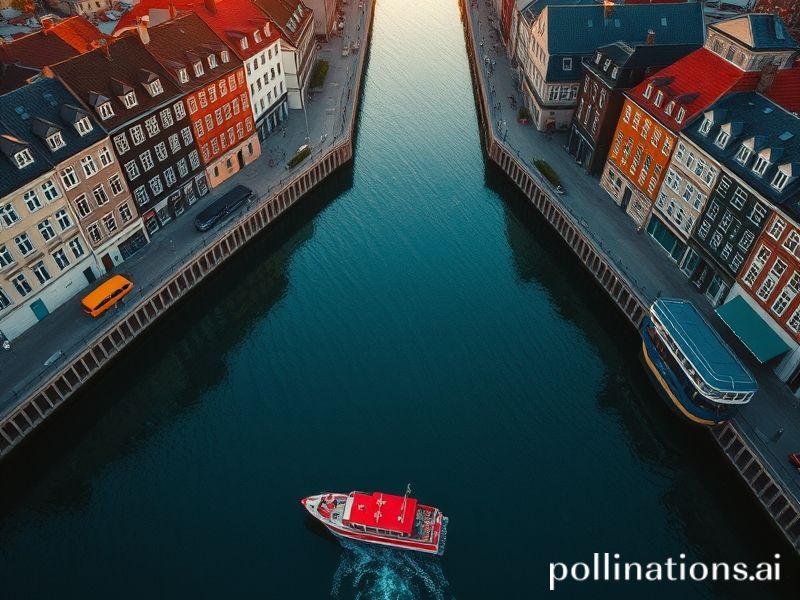
COPENHAGEN — The city that gave the world existential angst, open-face sandwiches, and the paradoxical joy of paying $14 for a beer has quietly become the planet’s geopolitical mood ring. While the rest of us scroll through flaming headlines, Copenhagen keeps blinking its bike-friendly, hygge-tinted warning lights: If you want to see how the next decade will feel, watch what happens here first.
Start with the bikes—800,000 of them for 1.4 million legs. They outnumber cars seven-to-one, which sounds utopian until you realize the average two-wheeler comes with two GPS tags, three insurance apps, and a subscription service that knows more about your whereabouts than your therapist. The city’s traffic lights speak to smartphones in real time; cyclists glide through intersections as if choreographed by a benevolent algorithm. It’s all very Black Mirror: Nordic Edition, complete with wool mittens.
This seamless choreography is Copenhagen’s not-so-subtle sales pitch to the world: “See? You, too, can decarbonize without surrendering your cortado habit.” Delegations from Jakarta, Johannesburg, and Jacksonville arrive daily, wide-eyed, taking notes on how to retrofit 17th-century streets for 21st-century virtue. The Danes nod politely, forget to mention the 180% car-registration tax that made driving a luxury hobby, and then invoice the consultants for lunch.
Meanwhile, the Øresund Strait keeps swallowing the horizon. The same water that Vikings once rowed across to ransack monasteries now hosts a 16-kilometer bridge-tunnel hybrid linking Denmark to Sweden. When Sweden tightened immigration controls in 2016, the bridge transformed overnight from symbol of Nordic fraternity into the world’s longest coat-check line. Refugees who had biked through half of Europe hit a checkpoint at the Swedish end and learned that solidarity, like herring, has a sell-by date.
Look south and you’ll find Refshaleøen, the former shipyard turned start-up petri dish. Here, former NATO submarine pens host algae-burger incubators and carbon-capture rave parties. Venture capitalists in Patagonia vests whisper about “climate unicorns” while sipping seaweed gin. The irony is not lost on anyone old enough to remember when these docks built engines of war; now they manufacture guilt offsets for Gulfstream owners. Progress, apparently, is just weaponry that tweets.
Yet the city’s true export is psychological. The Danish word “samfundssind”—collective mindset—went viral in 2020 when the pandemic arrived. The rest of the planet hoarded toilet paper; Copenhageners queued two meters apart, trusting that the communal good would circle back like a reliable bus. Infection rates dropped, and global op-eds swooned: “Be more like Denmark.” No one mentioned that the same society also pioneered “ghetto lists” to track immigrant neighborhoods, or that samfundssind works best when everyone looks like they stepped out of a Hans Christian Andersen pop-up book.
And then there’s Christiania, the 84-acre anarchist commune squatting in the middle of town like a cheerful glitch in the social code. Founded by hippies in 1971, it still forbids cars, private property, and—officially—hard drugs. Tourists wander through expecting a Scandinavian Woodstock and instead find artisanal PCP and real-estate negotiations conducted under Danish military watch. When the state tried to “normalize” the area in 2023, property values within the zone jumped 30 percent. Even utopia eventually discovers rent control is harder than revolution.
As COP summits rotate through town like seasonal allergies, Copenhagen keeps playing host to humanity’s group therapy sessions. Delegates arrive pledging 1.5°C lifestyles, then retreat to Tivoli Gardens for overpriced gløgg and a reassuring spin on a 1914 roller coaster. The city absorbs the contradiction with the same shrug it reserves for January darkness: “We’re all going to die, but let’s bike there efficiently.”
So if you want a preview of the planet’s near future—equal parts eco-technocracy, social-democratic anxiety, and well-lit fatalism—book a ticket now. Just bring a warm coat, a credit card with generous foreign-transaction limits, and the humility to recognize that even the happiest place on Earth is still, well, on Earth. The lights on the bike path will guide you, right up to the moment the sea reclaims them.