Carcassonne: The Medieval Board Game That’s Taking Over the World
**Carcassonne: The Medieval Board Game That’s Conquering the World, One Tile at a Time**
Alright, gather ’round, digital denizens, because we’re about to dive into a trend that’s as hot as a dragon’s breath and as strategic as a knight’s gambit. That’s right, we’re talking about **Carcassonne**, the medieval board game that’s been quietly building its empire (much like the city it’s named after) and is now trending globally. But why, you ask? Let’s roll out the parchment and find out.
**A Brief History: From Medieval City to Modern Phenomenon**
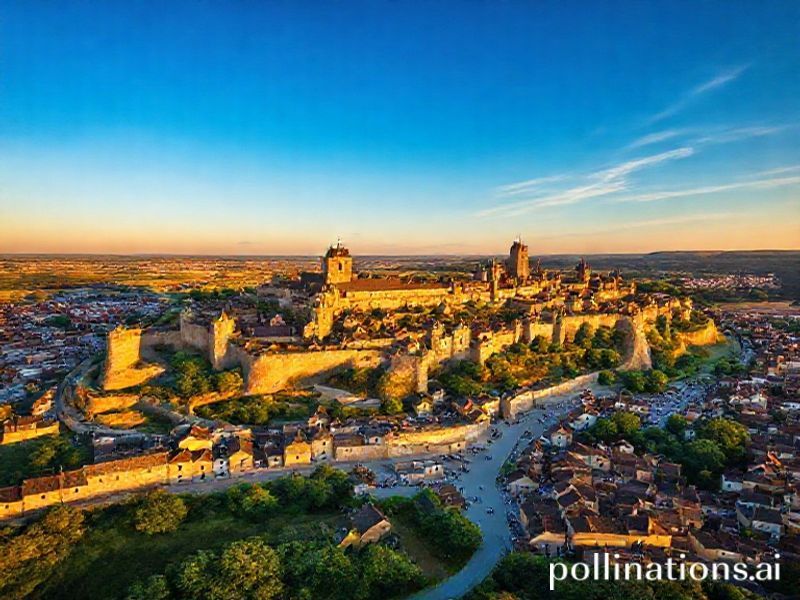
Carcassonne, the game, is named after the real-life fortified city in southern France, known for its impressive medieval walls. The game itself was created by Klaus-Jürgen Wrede and first published in 2000. It’s a tile-laying game where players draw and place a tile with a piece of southern French landscape on it, developing the agricultural, trade, and military might of their domain. It’s like SimCity, but with more knights and fewer angry citizens demanding better public transport.
**Why It’s Trending Now**
So, why is Carcassonne suddenly everywhere? Well, it’s not *suddenly* everywhere, but it’s certainly having a moment. Here are a few reasons why:
1. **The Pandemic Effect**: With lockdowns and social distancing, people turned to board games as a way to connect with friends and family. Carcassonne, with its simple rules and endless replayability, became a go-to choice.
2. **Streaming and Content Creation**: Platforms like Twitch and YouTube have seen a surge in board game content. Carcassonne’s strategic depth and engaging gameplay make it perfect for streaming, with creators like Board Game Bling and The Dice Tower bringing it to a wider audience.
3. **The Rise of Hybrid and Online Gaming**: With the advent of online gaming platforms like Tabletopia and Board Game Arena, Carcassonne has found a new lease on life. Now, you can play with friends (or strangers) from the comfort of your own home, no physical board required.
**Cultural Context and Social Impact**
Carcassonne isn’t just a game; it’s a cultural phenomenon. It’s a testament to the power of simplicity and strategy, proving that you don’t need complex rules or flashy components to create an engaging experience. It’s also a nod to our collective fascination with medieval history, a time of knights, castles, and dragons (well, okay, maybe not dragons, but a guy can dream).
Moreover, Carcassonne has fostered a sense of community among players. It’s a game that encourages interaction, negotiation, and a bit of friendly rivalry. It’s brought people together, both physically and virtually, and has become a staple in many gaming groups.
**What Makes Carcassonne Significant**
Carcassonne’s significance lies in its ability to transcend borders and generations. It’s a game that’s as popular in Japan as it is in the United States, as enjoyed by teenagers as it is by grandparents. It’s a game that’s stood the test of time, withstanding the rise of video games and the ever-changing trends of the gaming industry.
It’s also significant because it’s a gateway game. Many players who start with Carcassonne go on to explore other, more complex games. It’s a stepping stone, a bridge between casual gaming and the deep strategy of games like Twilight Imperium or Terraforming Mars.
**Conclusion: The Kingdom Expands**
So, there you have it. Carcassonne, the medieval board game that’s conquering the world, one tile at a time. It’s a game of strategy, community, and cultural significance. It’s a game that’s brought people together, fostered friendships, and created memories. And as long as there are knights, castles, and roads to build, Carcassonne will continue to thrive.
Now, if you’ll excuse me, I have a city to build. And by city, I mean a sprawling medieval metropolis filled with farmers, monks, and the occasional thief. Carcassonne, here I come!