Doctors Down Tools: The Global Strike Wave That’s Got Us All Prescribing Solidarity
**Title: “Doctors Down Tools: The Global Strike Wave That’s Got Us All Prescribing Solidarity”**
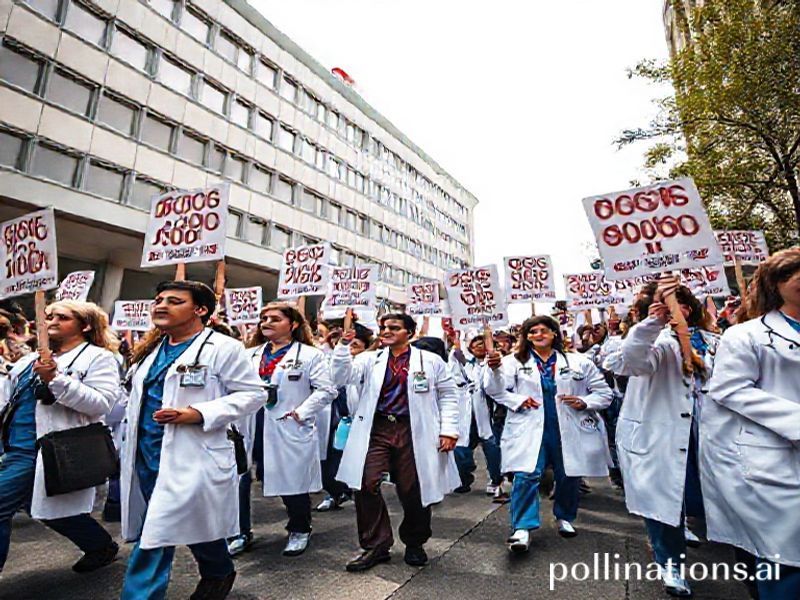
Alright, folks, buckle up! The internet’s been buzzing louder than a hospital ward’s worth of heart monitors, and it’s all because doctors worldwide are trading their stethoscopes for picket signs. From the UK to Kenya, Brazil to India, doctors are staging strikes, and the global chatter is reaching fever pitch. But why’s this happening, and why should you care? Let’s dive in.
**The Global Pulse**
First off, let’s not panic—your local ER isn’t about to turn into a scene from *The Walking Dead*. But it’s true that doctors in various countries are downing tools to protest a mix of issues, from pay cuts to unsafe working conditions, and underfunded healthcare systems. The strikes are trending globally because, well, the internet loves a good protest, and when the pros start revolting, we all sit up and take notice.
Take the UK, for example. Junior doctors there are on strike over a contract dispute that’s been simmering for years. The British Medical Association (BMA) argues the new contract is unfair and unsafe, while the government insists it’s necessary to provide a seven-day NHS. Cue a stand-off that’s got everyone from nurses to patients weighing in on social media.
Meanwhile, in Kenya, doctors are on day 50 of a strike over unpaid allowances and poor working conditions. The hashtag #KenyaDoctorsStrike has been trending, with Kenyans at home and abroad rallying behind the medics. And in Brazil, doctors are protesting against a proposed bill that could see their wages slashed by up to 25%.
**Cultural Context: When the Healers Need Healing**
So why’s this happening now? Well, healthcare systems worldwide are under strain, and doctors are often the ones picking up the pieces. But when the healers need healing, that’s when we know things have gone too far.
In many countries, doctors are overworked, underpaid, and underappreciated. They’re the ones holding the system together with duct tape and hope, and when they say enough is enough, it’s a sign that something’s deeply wrong.
**Social Impact: More Than Just a Hashtag**
The social impact of these strikes is huge. For one, it’s sparking conversations about the value of healthcare workers and the state of our healthcare systems. It’s also highlighting the power of collective action in the digital age. Social media has become a megaphone for these protests, amplifying the doctors’ voices and rallying support from around the world.
But perhaps the most significant impact is the potential for change. When doctors strike, it’s a wake-up call to governments and policymakers. It’s a reminder that healthcare isn’t just a political football—it’s a fundamental human right, and those on the frontlines deserve better.
**Why Should You Care?**
You might be thinking, “I’m not a doctor, why should I care?” Well, here’s the thing: when doctors strike, it’s not just about them. It’s about all of us. It’s about the quality of healthcare we receive, the conditions our loved ones are treated under, and the kind of society we want to live in.
Plus, let’s not forget the sheer drama of it all. Doctors are usually the ones saving lives, not the ones causing the drama. It’s like when your favorite superhero starts a rebellion—it’s unexpected, thrilling, and you can’t help but watch.
**Conclusion: The Prescription for Change**
So, what’s the prognosis for these global doctor strikes? It’s hard to say, but one thing’s for sure: they’re a symptom of a much larger issue. They’re a sign that our healthcare systems are sick and in need of urgent care.
But there’s hope. These strikes are also a sign of resilience, of a global community coming together to demand better. They’re a reminder that change is possible, and that sometimes, the most effective protest is the one that comes from the most unexpected places.
So, let’s keep the conversation going. Let’s support our doctors, demand better from our governments, and strive for a world where healthcare is a right, not a privilege. And who knows? Maybe one day, we’ll look back on these strikes as the tipping point that led to a healthier, fairer world.