Fog So Thick, You Can’t See the Meme: The Met Office’s Yellow Fog Warning Takes Over the World
# **Fog So Thick, You Can’t See the Meme: The Met Office’s Yellow Fog Warning Takes Over the World**
In a world where we’re used to doomscrolling through news of wars, political drama, and the latest celebrity feud, something as seemingly mundane as a fog warning has managed to capture global attention. Yes, you heard it right—the Met Office’s yellow fog warning has become the unlikely star of the internet, sparking memes, discussions, and even a bit of existential dread. But why is this weather advisory trending globally, and what does it say about our collective psyche in 2024?
## **The Fog That Stole the Show**
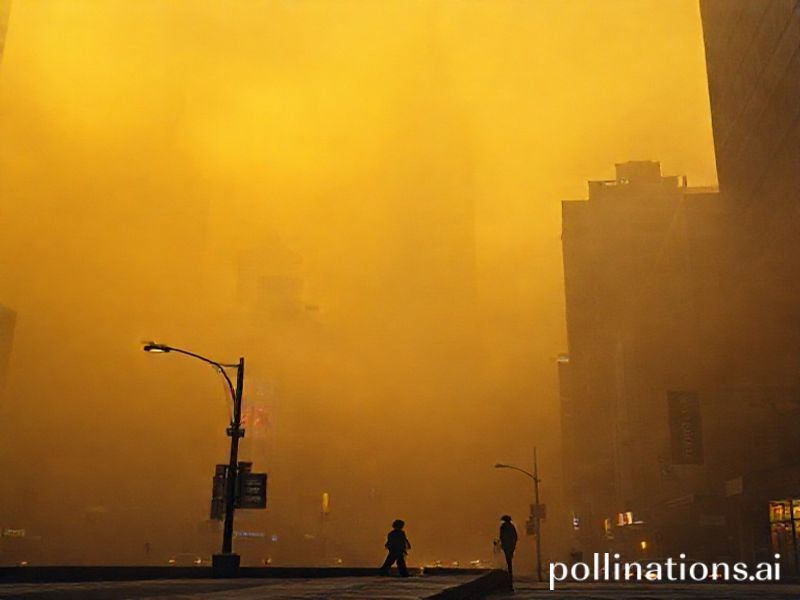
For those living under a (foggy) rock, the Met Office issued a yellow fog warning for parts of the UK, advising people to be cautious due to reduced visibility. While fog warnings are nothing new, this particular one went viral, becoming a hot topic on social media platforms like Twitter, Reddit, and TikTok. Suddenly, everyone was talking about fog—whether they were in London, Los Angeles, or Tokyo.
So, what made this fog warning so special? For starters, the timing was impeccable. It arrived just as people were gearing up for the holiday season, adding an extra layer of drama to their travel plans. The warning also coincided with a surge in discussions about climate change and its impact on weather patterns, making it a timely (and slightly ominous) reminder of the world’s shifting climate.
## **The Cultural Context: Fog as a Metaphor**
Fog has long been a powerful metaphor in literature, film, and art, often symbolizing mystery, uncertainty, and the unknown. From the foggy streets of Victorian London in Sherlock Holmes to the eerie mist in Stephen King’s *The Mist*, fog has a way of setting the mood—whether it’s ominous, romantic, or just plain confusing.
In the digital age, fog has taken on new meanings. It’s become a symbol of the blurred lines between reality and the virtual world, the fog of misinformation, and the uncertainty of the future. The Met Office’s yellow fog warning, then, wasn’t just about weather—it was about the fog of modern life, where everything feels a little hazy and unpredictable.
## **The Social Impact: Memes, Misinformation, and Mayhem**
Of course, no internet trend is complete without its fair share of memes. The yellow fog warning quickly became fodder for comedians, artists, and meme lords everywhere. People joked about the fog being so thick you could “see the memes forming in the mist,” or that the fog was “just the internet’s collective anxiety manifesting in real life.”
But beyond the laughs, the fog warning also sparked some serious discussions. Some people used it as an opportunity to talk about the importance of weather preparedness, while others debated the role of government agencies in issuing such warnings. There were even conspiracy theories floating around, with some suggesting the fog was a government experiment gone wrong (because, of course, there’s always a conspiracy theory).
## **Why This Matters**
At first glance, a fog warning might seem like small potatoes in the grand scheme of things. But the fact that it captured global attention speaks volumes about our collective psyche in 2024. We’re living in a world where information (and misinformation) spreads faster than ever, where climate change is a constant backdrop to our lives, and where even the most mundane events can become viral sensations.
The Met Office’s yellow fog warning was more than just a weather advisory—it was a reflection of our times. It reminded us that even in the age of instant gratification and 24/7 news cycles, sometimes the most powerful stories are the ones that force us to slow down, take a breath, and appreciate the beauty (and mystery) of the world around us.
So, the next time you find yourself lost in a fog of uncertainty, remember: you’re not alone. And who knows? Maybe the next big trend will be a warning about the fog of existential dread. (Just kidding. Maybe.)
—