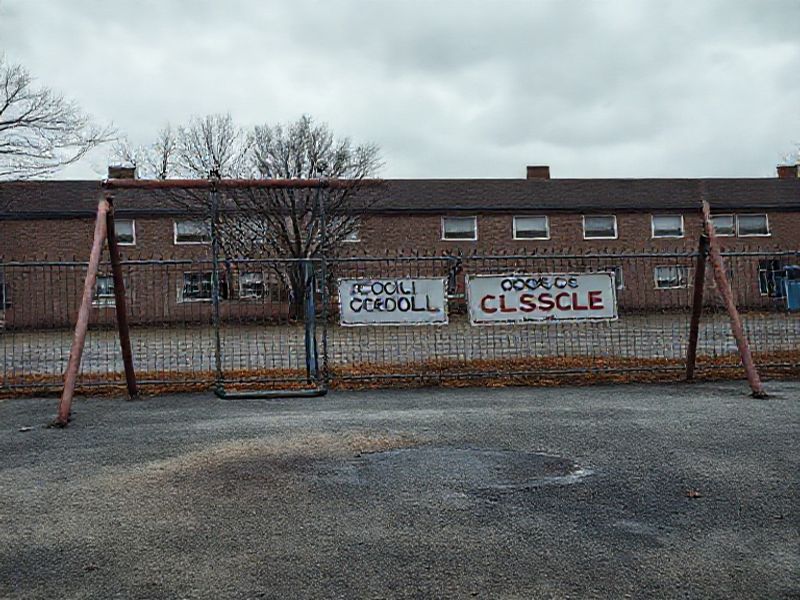
The Great Pause: Why School Closures Are the Ultimate Global Plot Twist
**The Great Pause: Why School Closures Are the Ultimate Global Plot Twist**
In a world where memes spread faster than the common cold, there’s a trend that’s been sweeping the globe, leaving students, parents, and educators in a state of collective bewilderment. No, it’s not the latest TikTok dance craze or a new Netflix binge-worthy series—it’s the unprecedented wave of school closures. That’s right, folks, the chalkboards are gathering dust, and the playgrounds are eerily silent. But why is this happening, and why is it trending harder than a #ThrowbackThursday post?
**The Global Phenomenon**
School closures have become a hot topic, with countries from Australia to Zimbabwe grappling with the fallout. The trend gained momentum during the COVID-19 pandemic, with UNESCO reporting that over 1.6 billion students in more than 190 countries were affected by school closures at its peak. But even as the world slowly emerges from the pandemic’s shadow, school closures continue to make headlines, fueled by factors ranging from natural disasters to political unrest.
**Cultural Context: The New Normal?**
In the digital age, where information travels at the speed of light, school closures have become a symbol of our times. They’ve sparked a cultural shift, with students and teachers adapting to virtual classrooms, and parents juggling work-from-home life with homeschooling. It’s a scene straight out of a Black Mirror episode, but with more Zoom calls and less dystopian dread.
The trend has also given rise to a new wave of internet culture. From memes about “Zoom university” to TikTok videos of parents struggling to teach their kids, the digital world is abuzz with school closure content. It’s a testament to our collective ability to find humor in even the most challenging situations.
**Social Impact: The Good, The Bad, and The WFH**
The social impact of school closures is as complex as a 1000-piece puzzle. On the one hand, they’ve forced us to rethink education, accelerating the adoption of technology in classrooms and making learning more accessible. On the other hand, they’ve highlighted stark inequalities, with students from low-income families and marginalized communities often left behind.
School closures have also turned parents into reluctant teachers, with many juggling work-from-home life with homeschooling. It’s a balancing act that’s sparked countless viral posts, from parents begging for help on Reddit to hilarious TikTok videos of kids “teaching” their parents.
**Why It Matters: The Bigger Picture**
So, why is this trend significant? Because it’s a mirror held up to society, reflecting our strengths, weaknesses, and everything in between. It’s a reminder of the power of community, as neighbors rally to support each other, and teachers go above and beyond to ensure their students don’t fall behind.
Moreover, school closures have shone a spotlight on the importance of education. They’ve shown us that learning isn’t just about textbooks and exams—it’s about connection, curiosity, and the resilience to adapt in the face of adversity.
**Conclusion: The Plot Twist**
In the grand narrative of our lives, school closures have been an unexpected plot twist. They’ve disrupted our routines, challenged our assumptions, and forced us to rethink the way we live, work, and learn. But as with any good story, there’s a silver lining. Because it’s in these moments of disruption that we find opportunities for growth, innovation, and connection.
So, as we navigate this new normal, let’s remember to laugh, to learn, and to support each other. After all, in the words of the great philosopher Shrek, “Ogres are like onions. Onions have layers. Ogres have layers. Onions have layers. And ogres… oh, for the love of Pete! They have layers! We both have layers.” And so do school closures. Layers of complexity, challenge, and yes, even humor.