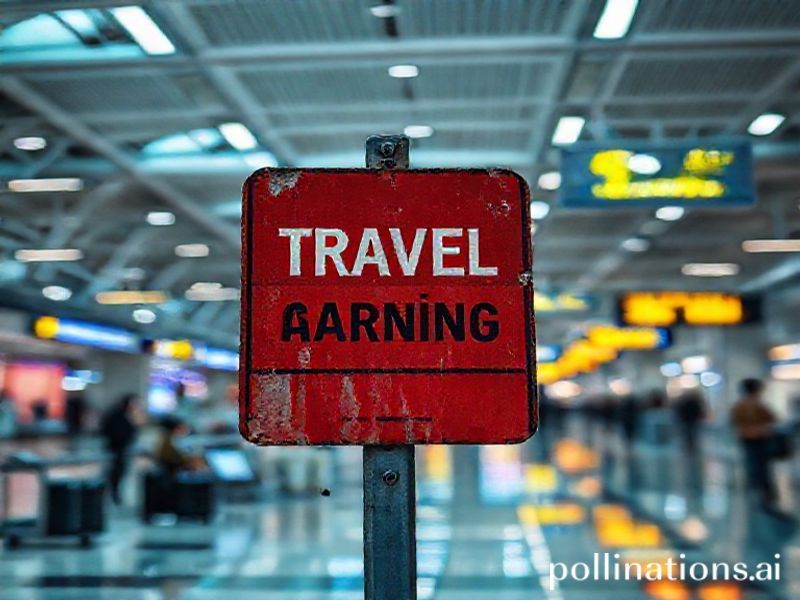
Travel Warnings Are Trending: Why the World Is Suddenly Obsessed with Safety Alerts
# **Travel Warning: Why the World is Suddenly Paying Attention**
In the vast, chaotic digital landscape of the internet, trends come and go like fleeting romances. But every so often, a topic emerges that captures the global imagination, sparking debates, memes, and a collective sense of urgency. Enter: the “travel warning.” Once a niche concern for seasoned globetrotters and overprotective parents, travel warnings have suddenly become a hot topic, dominating headlines and social media feeds. But why? Let’s dive in.
### **The Cultural Context: From Obscure to Mainstream**
Travel warnings have always existed, but they were typically the domain of government agencies and travel insurance companies. They were dry, bureaucratic documents that most people ignored unless they were planning a trip to a war-torn region. Fast forward to 2024, and suddenly, everyone’s talking about them. Why the sudden shift?
Part of the reason is the rise of global instability. From political unrest to natural disasters, the world feels more unpredictable than ever. Add to that the pandemic’s lingering effects, and you’ve got a perfect storm of anxiety. People are more aware of potential risks, and governments are more proactive about issuing warnings.
But let’s be real—it’s also because of the internet. Social media has turned travel warnings into viral content. A single tweet or TikTok about a travel advisory can spark a global panic, with people scrambling to cancel trips or stock up on supplies. It’s the digital equivalent of yelling “fire” in a crowded theater, except the theater is the entire world, and the fire is… well, maybe just a slight chance of rain.
### **The Social Impact: Fear, Memes, and Overpacking**
The social impact of travel warnings is a mixed bag. On one hand, they serve a crucial purpose: keeping travelers informed and safe. On the other hand, they’ve become a breeding ground for panic and misinformation.
Take, for example, the recent travel warnings issued for certain regions due to political tensions. Within hours, social media was flooded with memes about doomsday preppers and people joking about their “bug-out bags.” While humor is a great coping mechanism, it also highlights how quickly information can be distorted. One minute, you’re reading a legitimate warning about potential unrest, and the next, you’re watching a YouTuber unbox a year’s supply of canned beans.
Then there’s the economic impact. Travel warnings can devastate local economies, especially in tourism-dependent regions. Hotels, restaurants, and tour operators suffer when potential visitors cancel trips based on vague or exaggerated warnings. It’s a delicate balance between safety and sustainability, and the internet isn’t always great at striking that balance.
### **Why It’s Significant: A Global Conversation**
So, why does this matter? Why should you care about travel warnings beyond your own vacation plans?
For starters, travel warnings reflect broader geopolitical and environmental trends. They’re a barometer of global stability, highlighting areas of concern that might otherwise fly under the radar. Paying attention to these warnings can give you a sense of the world’s pulse, even if you’re not planning a trip.
Moreover, the way travel warnings spread and evolve in the digital age says a lot about our collective psyche. We’re more connected than ever, but we’re also more prone to panic and misinformation. Understanding how travel warnings trend can help us navigate the complexities of modern communication—and maybe, just maybe, keep us from overreacting to the next viral “crisis.”
### **Conclusion: Stay Informed, Stay Calm, and Pack Light**
In the end, travel warnings are a reminder that the world is both beautiful and unpredictable. They’re a call to stay informed, to be cautious, and to be kind—to locals, to fellow travelers, and to ourselves. So, the next time you see a travel warning trending, take a deep breath, do your research, and maybe pack an extra snack for the journey. Just don’t go overboard with the canned beans.
—