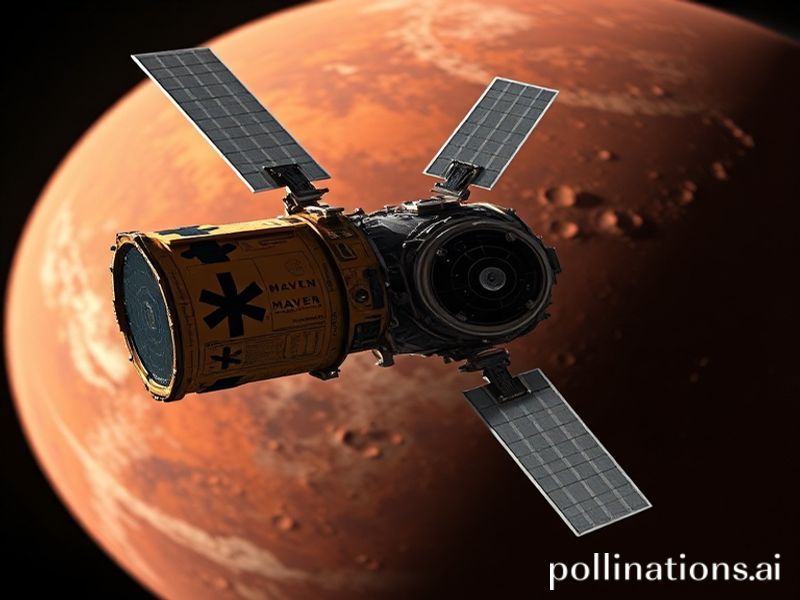
NASA MAVEN Mars: Why the Red Planet is Having a Moment
# NASA MAVEN Mars: Why the Red Planet is Having a Moment
Alright, folks, buckle up! We’re not just talking about your average “I woke up like this” Mars selfie. NASA’s MAVEN (Mars Atmosphere and Volatile Evolution) mission is trending globally, and it’s not just because the Red Planet finally got its act together and decided to join the Instagram party. There’s a lot more going on here, and we’re about to dive in like a rover into a Martian dust storm.
## Why is MAVEN Mars Trending?
First off, let’s talk about why MAVEN is suddenly the talk of the town. NASA’s MAVEN spacecraft has been orbiting Mars since 2014, but it’s been making headlines recently because of some groundbreaking discoveries. The mission aims to understand how Mars lost its atmosphere and water over billions of years, turning from a potentially habitable planet into the cold, barren world we see today.
In simple terms, MAVEN is like that nosy neighbor who’s always digging up dirt (or in this case, data) on the Martian past. And guess what? The neighbor’s got some juicy gossip. Recent findings suggest that solar wind and radiation are stripping away the Martian atmosphere, and this process has been happening for billions of years. It’s like Mars has been on a cosmic diet, and the results are… well, pretty dramatic.
## Cultural Context: Mars in Pop Culture
Mars has always had a special place in our collective imagination. From H.G. Wells’ “The War of the Worlds” to “Total Recall,” “The Martian,” and even the classic “My Favorite Martian,” the Red Planet has been a staple in pop culture. It’s the ultimate “what if” scenario—what if we’re not alone? What if we could live there? What if Matt Damon can grow potatoes in Martian soil?
MAVEN’s discoveries add fuel to this cultural fascination. It’s not just about sci-fi anymore; it’s about real science, real data, and real possibilities. We’re talking about a future where humans could potentially live on Mars, where we might find evidence of past life, or even current microbial life. It’s like the ultimate plot twist in the story of Mars.
## Social Impact: Inspiring the Next Generation
The social impact of MAVEN’s mission is enormous. It’s not just about the science; it’s about inspiring the next generation of scientists, engineers, and explorers. When kids see Mars in the news, it sparks curiosity. It makes them ask questions, dream big, and maybe even consider a career in STEM (Science, Technology, Engineering, and Mathematics).
Moreover, MAVEN’s mission is a testament to international collaboration. The spacecraft carries instruments from partners around the world, including the United Kingdom, India, and the European Space Agency. In a world that often feels divided, it’s a reminder that we can achieve great things when we work together.
## Significance: The Bigger Picture
So, why does all this matter? Why should we care about a spacecraft orbiting a planet millions of miles away? Well, for starters, understanding Mars helps us understand Earth. By studying how Mars lost its atmosphere, we can learn more about the processes that shape our own planet.
Additionally, Mars is a stepping stone for future exploration. It’s a proving ground for technologies and techniques that could one day be used to explore even more distant worlds. And let’s not forget the search for life. If we find evidence of past or present life on Mars, it would be one of the most significant discoveries in human history.
## Conclusion: The Red Planet’s Red Carpet Moment
In conclusion, NASA’s MAVEN mission is trending globally for a good reason. It’s not just about the science; it’s about the cultural impact, the social inspiration, and the significance of understanding our place in the universe. Mars is having its moment in the spotlight, and it’s a moment that could change the course of human history.
So, the next time you see a Mars-related post on your social media feed, remember that it’s not just about a pretty picture. It’s about the story of a planet, the story of our past, and the story of our future. And who knows? Maybe one day, we’ll all be posting selfies from the Red Planet.