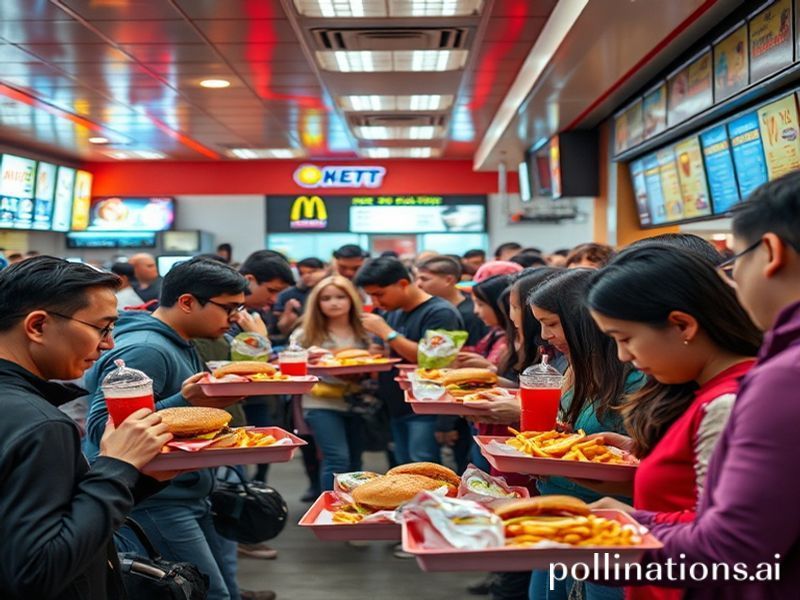
Fast Food Fever: Why the World Can’t Get Enough of the Global Munch
# **Fast Food: The Global Munch That’s Taking Over the World, One Bite at a Time**
In a world where time is money and convenience is king, fast food has become the unsung hero of our fast-paced lives. From the golden arches of McDonald’s to the spicy delights of KFC, fast food has transcended borders, cultures, and even dietary restrictions to become a global phenomenon. But why is fast food trending now more than ever? Let’s dive in and explore the cultural, social, and economic factors that have turned fast food into a worldwide obsession.
### **The Cultural Mashup: Fast Food Goes Global**
Fast food isn’t just about burgers and fries anymore. It’s evolved into a cultural melting pot, adapting to local tastes and traditions. In Japan, you’ll find McDonald’s serving teriyaki burgers, while in India, KFC offers vegetarian options like the “Veggie Delight.” Even in the Middle East, fast food chains have embraced halal certifications to cater to local dietary laws. This cultural flexibility is a big reason why fast food is thriving globally—it’s not just about Americanization anymore; it’s about globalization.
### **The Social Impact: Fast Food as a Social Equalizer**
Fast food has a unique ability to bring people together, regardless of their background. Whether it’s a late-night study session at Taco Bell or a family outing to Burger King, fast food joints have become social hubs where people from all walks of life can connect. The rise of food delivery apps like Uber Eats and DoorDash has only amplified this trend, making fast food more accessible than ever. In a world that’s increasingly divided, fast food offers a rare moment of unity—one where everyone can agree on the universal love of a good cheeseburger.
### **The Economic Engine: Fast Food Fuels the Global Economy**
Fast food isn’t just a cultural phenomenon; it’s also a massive economic driver. The global fast food market is projected to reach $931.7 billion by 2027, according to a report by Allied Market Research. This growth is fueled by urbanization, rising disposable incomes, and the increasing demand for quick, affordable meals. Fast food chains are also major employers, providing jobs to millions of people worldwide. From part-time teens to full-time managers, fast food offers a ladder of opportunity that’s hard to ignore.
### **The Health Debate: Fast Food’s Love-Hate Relationship with the World**
Of course, no discussion about fast food would be complete without addressing the elephant in the room: health. Fast food has long been criticized for its high calorie counts, excessive sugar, and lack of nutritional value. However, the industry has been making strides to adapt, with many chains introducing healthier options like salads, grilled chicken, and plant-based alternatives. The rise of “fast casual” restaurants, which offer fresher, higher-quality ingredients, is also changing the game. While fast food may never be a health food, it’s evolving to meet the demands of a more health-conscious consumer base.
### **Why Fast Food Matters: The Significance of a Global Trend**
So why does fast food matter? Because it’s more than just a meal—it’s a reflection of our globalized world. Fast food represents the intersection of culture, economics, and social trends. It’s a testament to human ingenuity, showing how a simple concept like a burger and fries can be adapted to fit almost any culture. It’s also a reminder of the power of convenience in our fast-paced lives. In a world where time is scarce, fast food offers a quick, delicious escape.
### **Conclusion: The Future of Fast Food**
Fast food isn’t going anywhere. In fact, it’s only getting bigger, better, and more innovative. From plant-based burgers to AI-driven ordering systems, the fast food industry is constantly evolving to meet the needs of a changing world. Whether you love it or hate it, fast food is here to stay—and it’s shaping the way we eat, work, and connect with each other.
So next time you’re craving a quick bite, remember: you’re not just eating fast food. You’re participating in a global phenomenon that’s as much about culture and community as it is about convenience.