Bunting Bonanza: The Unexpected Rise of the Internet’s Newest Obsession
**Bunting Bonanza: Why the World’s Suddenly Obsessed with DIY Decor**
In the vast, ever-shifting landscape of internet trends, a peculiar phenomenon has emerged, captivating the global collective consciousness like a glittery, paper confetti cannon. We’re talking, of course, about the sudden, inexplicable rise of bunting—a humble, festive decoration that’s been quietly hanging around since the 19th century, like that one cousin who’s always there but never really noticed.
But why, oh why, has bunting become the belle of the internet ball? Let’s dive in and explore this colorful conundrum, shall we?
**The Cultural Context: From Fairs to Feeds**
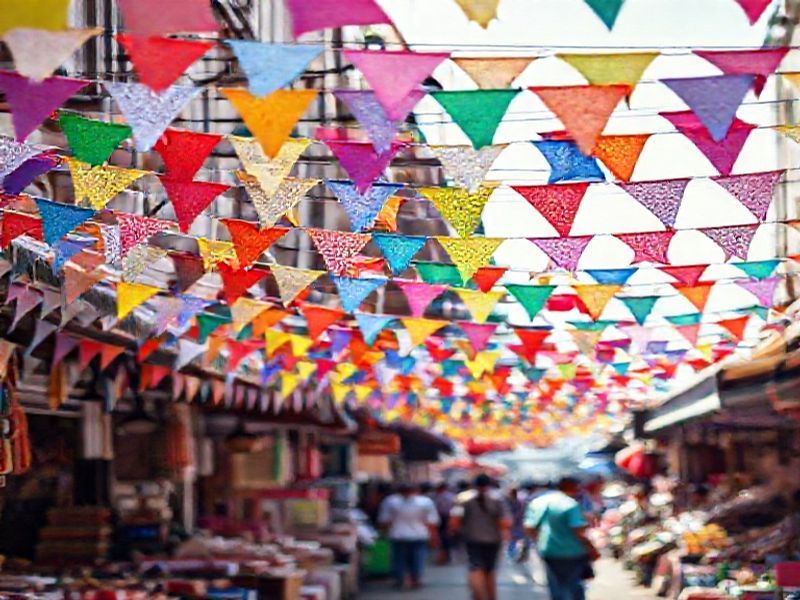
Bunting, in its most basic form, is a string of triangular flags or pennants, often made from paper or fabric. Traditionally, it’s been used to decorate everything from county fairs to political rallies, adding a touch of whimsy and celebration to any event. But in the digital age, bunting has evolved into a symbol of creativity, personal expression, and, let’s face it, a damn good way to make your Instagram feed look like a Pinterest board come to life.
The trend’s global appeal can be attributed to a few key factors. Firstly, it’s cheap and cheerful—perfect for the budget-conscious, DIY-loving internet user. Secondly, it’s versatile. Bunting can be made from almost any material, from recycled paper to upcycled fabric, and can be customized to fit any aesthetic, from rustic chic to minimalist modern.
**The Social Impact: A Stitch in Time Saves the Feed**
In an era where mental health awareness is at an all-time high, bunting offers a therapeutic, creative outlet for stressed-out millennials and Gen Zers. The process of making bunting—cutting, folding, gluing—can be a form of mindfulness, a digital detox in a world that’s always switched on.
Moreover, bunting has become a symbol of community and connection. In the wake of global crises, from the COVID-19 pandemic to climate change, people are turning to bunting as a way to express solidarity, hope, and resilience. It’s a tangible, tactile way to say, “We’re in this together,” in a world that often feels increasingly fragmented and isolated.
**The Significance: More Than Just a String of Flags**
But why is bunting significant? Why does it matter that the internet has collectively decided to embrace this particular trend? Well, for starters, it’s a testament to the power of simplicity. In a world that’s constantly bombarding us with noise, bunting offers a quiet, understated alternative. It’s a reminder that sometimes, less is more.
Furthermore, bunting’s rise to fame is a reflection of the internet’s evolving relationship with consumerism. In an age where fast fashion and disposable culture are under increasing scrutiny, bunting offers a sustainable, eco-friendly alternative. It’s a way to decorate your space without contributing to the planet’s growing waste problem.
**The Future of Bunting: What’s Next?**
So, what’s next for bunting? Will it continue to dominate our feeds, or will it fade into obscurity like so many trends before it? Only time will tell. But one thing’s for sure—bunting has left an indelible mark on the internet, a colorful, festive reminder of the power of creativity, community, and connection.
In conclusion, bunting is more than just a string of flags. It’s a symbol of our times, a reflection of our collective consciousness, and a testament to the power of simplicity in an increasingly complex world. So, go ahead, make some bunting, hang it up, and let it be a reminder that even in the darkest of times, there’s always room for a little bit of color, a little bit of cheer, and a whole lot of DIY spirit.