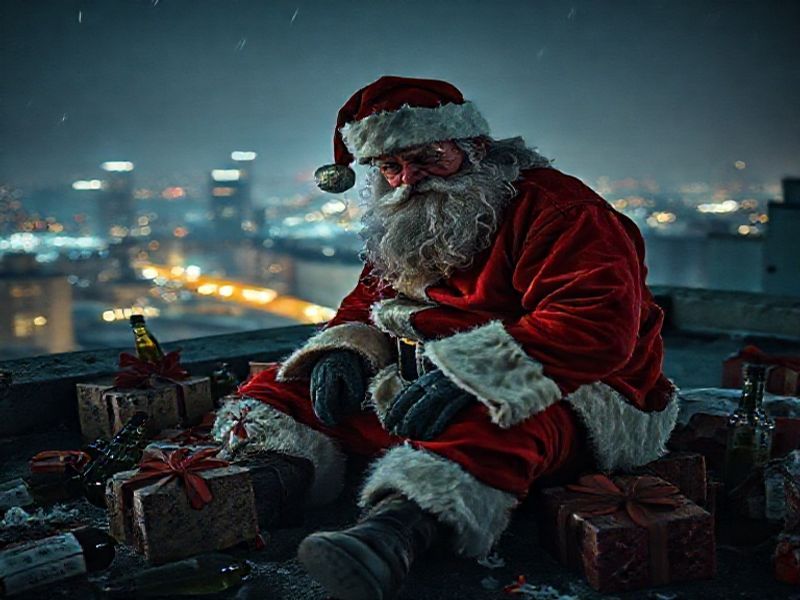
Bad Santa: Why the World Can’t Get Enough of the Naughty North Pole Icon
# **Bad Santa: The Naughty List Just Got a Lot More Interesting**
Ho ho ho, folks. It’s that time of the year again—twinkling lights, festive cheer, and, of course, the inevitable trending topic that’s got the internet buzzing: **Bad Santa**. Whether it’s a viral video of a mall Santa gone rogue, a meme about the “dark side” of the jolly old elf, or a real-life Grinch stealing Christmas, Bad Santa is back in the spotlight. But why is this trope so enduringly popular, and what does it say about our collective holiday spirit (or lack thereof)?
### **The Cultural Context: Santa’s Dark Side**
Santa Claus, the beloved, bearded bringer of gifts, has long been a symbol of holiday cheer. But let’s be real—he’s also been the subject of some seriously questionable behavior in pop culture. From the 2003 cult classic *Bad Santa*, starring Billy Bob Thornton as a foul-mouthed, boozy, and morally ambiguous Santa, to the countless memes and parodies that have followed, the idea of a “bad” Santa has been a recurring theme for decades.
The appeal of Bad Santa lies in its subversion of the traditional, wholesome image of Santa. In a world where holiday stress, consumerism, and family drama often overshadow the magic of the season, the idea of a Santa who’s just as flawed and chaotic as the rest of us is oddly comforting. It’s a reminder that even the most iconic figures can have a dark side—and sometimes, that’s what makes them relatable.
### **Why Bad Santa is Trending Globally**
So, why is Bad Santa trending now? For starters, the internet loves a good villain—or at least a flawed antihero. Whether it’s a viral video of a mall Santa getting into a scuffle with a parent, a meme about Santa’s questionable life choices, or a news story about a real-life Santa gone rogue, these stories tap into our collective fascination with the unexpected.
Social media has also played a huge role in amplifying the Bad Santa phenomenon. Platforms like TikTok, Twitter, and Instagram are filled with users sharing their own “Bad Santa” experiences—whether it’s a Santa who’s had one too many eggnogs, a Santa who’s just not into the whole “ho ho ho” thing, or a Santa who’s straight-up terrifying. The internet’s love for humor, irony, and the absurd makes Bad Santa the perfect trending topic.
### **The Social Impact: A Mirror to Our Holiday Struggles**
Beyond the laughs, Bad Santa also serves as a mirror to our real-world holiday struggles. The pressure to create a perfect, Pinterest-worthy Christmas can be overwhelming, and the idea of a Santa who’s just as stressed, grumpy, or even a little bit evil can be a welcome relief. It’s a way for people to laugh at the absurdity of it all and to remember that the holidays don’t have to be picture-perfect to be meaningful.
Bad Santa also highlights the darker side of holiday consumerism. In a season where the focus is often on material gifts, the idea of a Santa who’s more interested in stealing than giving can be a poignant commentary on the commercialization of Christmas. It’s a reminder that the true spirit of the season isn’t about the latest gadgets or the biggest presents—it’s about connection, kindness, and maybe a little bit of chaos.
### **What Makes Bad Santa Significant?**
Bad Santa is more than just a meme or a viral trend—it’s a cultural phenomenon that speaks to our collective psyche. It’s a way for us to laugh at the absurdity of the holidays, to embrace our flaws, and to remember that even the most iconic figures can be flawed. In a world where the pressure to be perfect is higher than ever, Bad Santa is a welcome reminder that it’s okay to be a little bit bad sometimes.
So, as you deck the halls and jingle all the way, remember: Santa might be watching, but he’s probably also stealing cookies, cursing under his breath, and questioning his life choices. And that, my friends, is the magic of Bad Santa.
—