Wordle-ing Through the Hype: Why the NYT’s Viral Puzzle Has the World Hooked
**Title: “Wordle-ing Through the Hype: Why the NYT’s Viral Puzzle Has the World Hooked”**
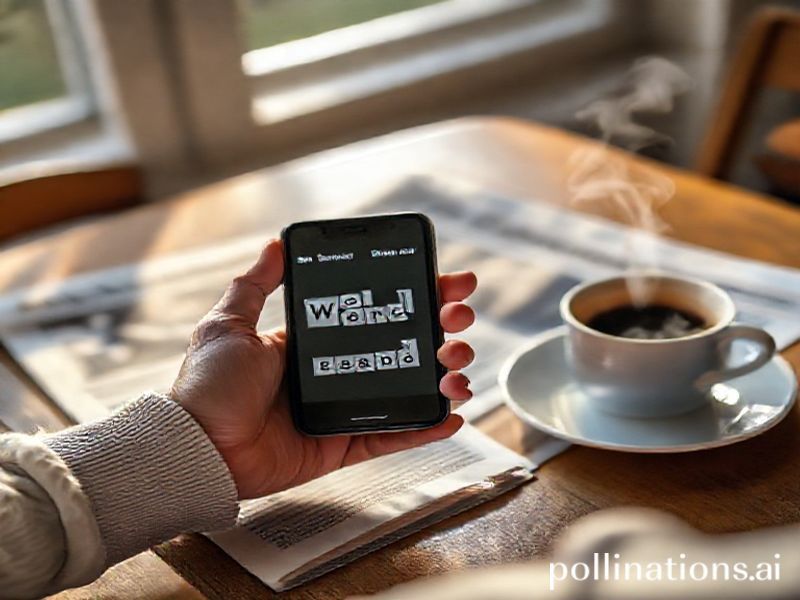
In the vast, ever-shifting landscape of internet trends, few phenomena have captured global attention quite like *Wordle*. The simple, daily word puzzle, now owned by The New York Times, has become a cultural juggernaut, sparking conversations, debates, and even a bit of friendly competition among friends, families, and strangers alike. But what’s the deal with Wordle? Why has it become the talk of the town (or rather, the talk of the globe)? Let’s dive in.
**A Brief History of Wordle**
Created by software engineer Josh Wardle (yes, that’s where the name comes from), Wordle started as a personal project in 2021. Wardle wanted to create a game for his partner, a word game enthusiast. Little did he know, his creation would soon take the world by storm. In January 2022, Wardle sold Wordle to The New York Times for an undisclosed seven-figure sum. Since then, the game has only grown in popularity, becoming a staple in the daily routines of millions.
**The Cultural Context**
Wordle’s rise to fame can be attributed to several factors, but perhaps the most significant is its simplicity. In an era of information overload and digital noise, Wordle offers a moment of calm, a daily ritual that’s easy to understand and engaging to play. It’s a breath of fresh air in the chaotic world of social media.
Moreover, Wordle’s design is inherently shareable. After each game, players are presented with a grid of colored squares representing their guesses. These grids have become a universal language of their own, a way for players to communicate their successes (and failures) without spoiling the game for others. This shareability has fueled Wordle’s viral growth, turning it into a global phenomenon.
**The Social Impact**
Wordle has had a profound impact on social dynamics. It’s a conversation starter, a bonding experience, and even a source of friendly rivalry. Friends compare their scores, families discuss strategies, and coworkers share their daily Wordle grids. It’s a unifying force in a world that often feels divided.
Wordle has also sparked a wave of creativity. Memes, fan art, and even spin-off games have emerged, further fueling the hype. There’s something about Wordle that inspires people to express their creativity and connect with others.
**Why Wordle Matters**
In the grand scheme of things, Wordle might seem like a trivial pursuit. But its significance lies in its ability to bring people together, to foster a sense of community and shared experience. In a world that’s increasingly digital and disconnected, Wordle offers a moment of connection, a shared language that transcends borders and cultures.
Moreover, Wordle’s success has paved the way for other indie games and creators. It’s a testament to the power of simplicity and the potential of the internet to turn a small, personal project into a global phenomenon.
**Conclusion**
Wordle is more than just a game; it’s a cultural moment. It’s a testament to the power of simplicity, shareability, and community. It’s a daily ritual that brings people together, a shared language that transcends borders. So, whether you’re a Wordle veteran or a newcomer, embrace the hype. After all, who doesn’t love a good word puzzle?