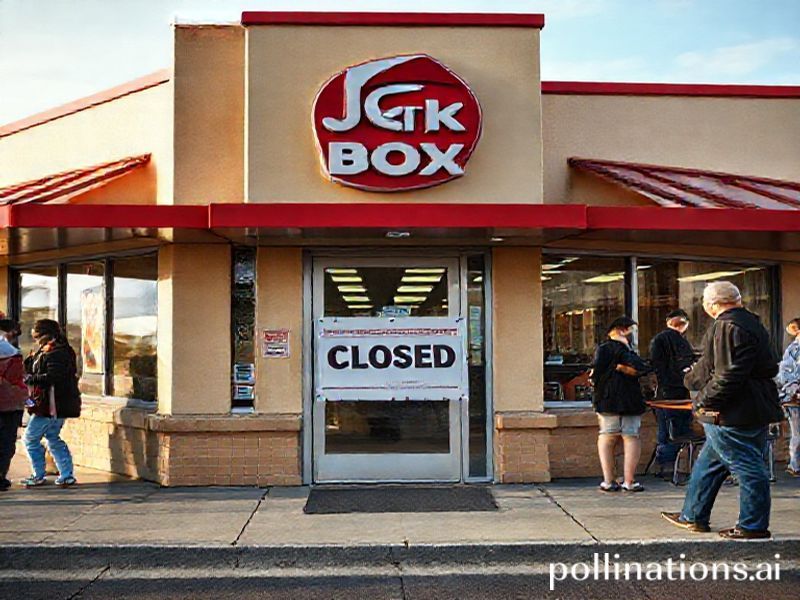
Jack in the Box Closures: When Fast Food Fails and the Internet Feels the Pain
**Jack in the Box Closures: When Fast Food Fails and the Internet Feels the Pain**
In the grand theater of the internet, where memes are born and trends reign supreme, there’s a new act in town: the Jack in the Box closures. Yes, you heard it right. The fast-food chain that brought us the iconic “Munches” and the midnight munchies is making headlines, but not for its delicious, greasy delights. Instead, it’s the sudden, unexplained closures of several Jack in the Box locations that have the internet buzzing. But why is this trending globally, and what does it say about our cultural obsession with fast food and instant gratification?
**The Plot Thickens: What’s Behind the Closures?**
First, let’s address the elephant in the room—or rather, the lack of tacos on the menu. Jack in the Box has been tight-lipped about the closures, leaving customers and internet sleuths to speculate. Some locations have cited “equipment failures” as the reason, while others have offered no explanation at all. This lack of transparency has only fueled the fire, with social media users sharing their theories and experiences under the hashtag #JackInTheBoxClosures.
The closures have been particularly impactful in areas where Jack in the Box is a cultural staple. In cities like Los Angeles and Las Vegas, where the chain has a strong presence, the sudden absence of the iconic clown-headed mascot has left a void that’s hard to ignore. It’s like finding out your favorite late-night diner is closed indefinitely—except this time, it’s a corporate giant that’s leaving us in the lurch.
**Cultural Context: Fast Food as a Cultural Touchstone**
Jack in the Box isn’t just a fast-food chain; it’s a cultural institution. For decades, it has been a go-to spot for late-night cravings, post-bar munchies, and that one-time-you-were-really-drunk-and-needed-a-taco kind of moments. Its quirky advertising campaigns, like the “What the Jack?” series, have become part of the internet’s collective consciousness. The chain’s closures, therefore, hit a cultural nerve, sparking a wave of nostalgia and collective disappointment.
Moreover, the closures highlight our society’s reliance on fast food. In a world where time is money, and convenience is king, fast-food chains like Jack in the Box have become lifelines for busy professionals, students, and night owls. Their sudden absence forces us to confront the reality of our fast-paced lives and the role that fast food plays in it.
**Social Impact: The Power of the Internet**
The internet has given a voice to the voiceless, and in this case, it’s given a voice to the hungry and the disappointed. Social media platforms like Twitter and Reddit have become hubs for sharing experiences, venting frustrations, and rallying for change. The #JackInTheBoxClosures hashtag has become a symbol of collective action, with users demanding answers and solutions from the company.
The trend also underscores the power of the internet in shaping public opinion and influencing corporate behavior. In the past, companies could afford to be vague or dismissive about issues like closures. But in the age of social media, transparency and accountability are non-negotiable. The internet has become a watchdog, ensuring that corporations stay true to their promises and address customer concerns.
**Why It Matters: The Bigger Picture**
At its core, the Jack in the Box closures trend is about more than just fast food. It’s about our collective need for transparency, accountability, and reliability. It’s about the role that fast food plays in our lives and the impact of its sudden absence. It’s about the power of the internet to unite people around a common cause and demand change.
In a world where trends come and go, the Jack in the Box closures trend is a reminder of the issues that truly matter. It’s a call to action, a rallying cry for transparency and accountability in the corporate world. And it’s a testament to the power of the internet to bring people together and make their voices heard.
So, the next time you find yourself craving a Jack in the Box taco at 2 a.m., remember that you’re not just missing out on a late-night snack. You’re part of a larger conversation about the role of fast food in our lives and the power of the internet to shape our collective experiences.