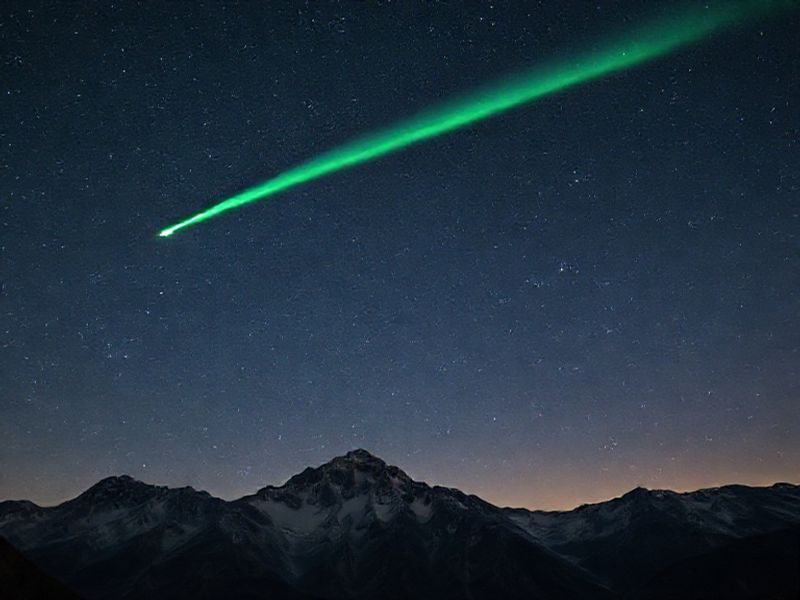
Atlas Comet: The Celestial Showstopper That’s Got the World Looking Up
# **Atlas Comet: The Celestial Showstopper That’s Got the World Looking Up**
In a world where we’re all glued to our screens, it’s refreshing to see something that literally stops us in our tracks and makes us look up—way up. Enter the Atlas Comet, the cosmic diva that’s been stealing the spotlight and trending globally. But why all the fuss? Let’s break it down.
### **What’s the Big Deal About the Atlas Comet?**
First things first, the Atlas Comet (officially named C/2019 Y4) isn’t your average space rock. Discovered in December 2019 by the ATLAS (Asteroid Terrestrial-impact Last Alert System) survey in Hawaii, this comet has been on a journey that’s captivated astronomers and stargazers alike. What makes it special? Well, it’s been brightening up faster than expected, leading to some serious hype—and a few memes about whether it’s the harbinger of doom or just a really good Instagram backdrop.
### **Cultural Context: Why Now?**
The Atlas Comet’s rise to fame coincides with a time when the world is craving a little bit of magic. With 2020 throwing curveballs left and right, people are looking for something to inspire awe and wonder. Enter the Atlas Comet, stage left. It’s the perfect distraction from the mundane, a celestial spectacle that’s got everyone from amateur astronomers to TikTok influencers buzzing.
But it’s not just about the visuals. The Atlas Comet has sparked a wave of creativity online. From memes about it being the “comet of doom” to artistic interpretations of what it might look like up close, the internet has run wild with ideas. It’s a testament to how a single astronomical event can unite people across the globe in a shared moment of wonder.
### **Social Impact: A Global Phenomenon**
The Atlas Comet’s trending status isn’t just about its brightness; it’s about the community it’s built. Social media platforms like Twitter, Instagram, and Reddit have become hubs for sharing photos, videos, and theories about the comet. Astronomers and scientists have been actively engaging with the public, debunking myths and sharing fascinating facts.
For instance, the comet’s potential to become visible to the naked eye has sparked a wave of “comet hunting” expeditions. People are dusting off their telescopes and binoculars, and even those without equipment are using apps to track its path. It’s a reminder that science can be accessible and exciting, and that the night sky is a canvas for everyone to explore.
### **Significance: More Than Just a Pretty Light Show**
While the Atlas Comet might not be the “comet of the century” (that title still belongs to Hale-Bopp), its significance lies in its ability to bring people together. In a time of social distancing and isolation, the comet serves as a reminder that we’re all part of something bigger—a universe that’s full of mysteries waiting to be uncovered.
Moreover, the Atlas Comet has highlighted the importance of astronomical research. The ATLAS survey, which discovered the comet, is a crucial part of our planet’s defense against potential asteroid impacts. By tracking near-Earth objects, we can better understand our place in the cosmos and prepare for any threats that might come our way.
### **Conclusion: Keep Your Eyes on the Sky**
The Atlas Comet might not be the end of the world, but it’s certainly a spectacle worth watching. Whether you’re an astronomy enthusiast or just someone looking for a bit of cosmic inspiration, this comet has something to offer. So, grab your binoculars, download a stargazing app, and join the global community in marveling at the wonders of the universe. After all, in a world that’s always changing, the night sky remains a constant source of beauty and wonder.
—