San Francisco Bay Area Flooding: When the City by the Bay Becomes the City in the Bay
# **San Francisco Bay Area Flooding: When the City by the Bay Becomes the City in the Bay**
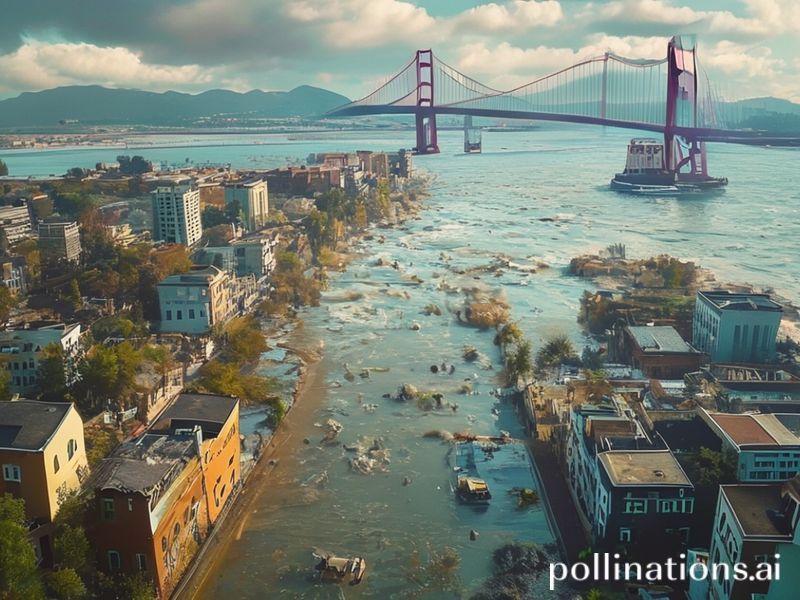
Ah, San Francisco—the tech mecca, the home of the Golden Gate Bridge, and now, the unwitting star of a real-life water park. The San Francisco Bay Area has been making waves (pun intended) globally as flooding becomes an increasingly pressing issue. But why is this trending, and what does it mean for the city, its residents, and the rest of the world? Let’s dive in.
### **Why Is This Trending Globally?**
First off, San Francisco is a cultural powerhouse. It’s the heart of Silicon Valley, the birthplace of movements, and a city that’s always been ahead of the curve. When something happens there, the world takes notice. Flooding in the Bay Area isn’t just a local issue—it’s a global conversation starter because it’s a microcosm of what’s happening worldwide. Rising sea levels, climate change, and urban infrastructure struggles are universal concerns, and San Francisco is ground zero for some of the most dramatic examples.
Social media has also played a massive role in amplifying the issue. Memes, viral videos, and dramatic photos of flooded streets and submerged cars have turned the flooding into a trending topic. The internet loves a good disaster story, especially when it’s paired with the irony of a tech hub struggling with something as basic as water management.
### **Cultural Context: The City That’s Always Been a Step Ahead (But Maybe Not This Time)**
San Francisco has always been a city of contrasts—innovation and nostalgia, wealth and homelessness, hills and, well, more hills. Now, it’s adding “flooding” to that list. The city’s unique geography makes it particularly vulnerable to flooding. With sea levels rising at an alarming rate, the Bay Area is facing a future where high tides and storm surges could turn streets into canals.
But here’s the kicker: San Francisco is a city that prides itself on being forward-thinking. It’s the home of tech giants, environmental activists, and progressive policies. Yet, despite all its innovation, it’s struggling to keep up with the very real threat of flooding. This disconnect has sparked a lot of debate—are we focusing too much on the future and not enough on the present? Are we so busy looking at the stars that we’re forgetting to fix the potholes (and the drainage systems)?
### **Social Impact: More Than Just Wet Feet**
Flooding isn’t just an inconvenience; it’s a social and economic disaster in the making. For residents, it means property damage, disrupted lives, and the constant worry of whether their homes will be underwater tomorrow. For businesses, it’s a logistical nightmare. Imagine trying to run a tech startup when your office is knee-deep in water. The economic ripple effects are enormous, and they’re not just limited to the Bay Area. If one of the world’s most influential tech hubs starts to drown, the global economy feels the splash.
There’s also the issue of equity. Flooding disproportionately affects lower-income communities, which often lack the resources to prepare or recover. In a city as unequal as San Francisco, this raises serious questions about who bears the brunt of climate change and who gets to stay dry.
### **What Makes This Topic Significant?**
The flooding in San Francisco Bay Area is significant for a few reasons. First, it’s a stark reminder that climate change is here, and it’s not just a future problem—it’s a present-day crisis. Second, it’s a wake-up call for urban planners, policymakers, and tech innovators to start thinking about sustainable, resilient solutions. And third, it’s a cultural moment that’s forcing us to confront some uncomfortable truths about progress, inequality, and our relationship with the environment.
### **Conclusion: When the Tide Comes In, Will We Be Ready?**
San Francisco has always been a city of resilience, but the flooding crisis is testing that spirit like never before. As the world watches, the Bay Area is becoming a case study in what happens when climate change meets urban infrastructure. Will we rise to the challenge, or will we keep our heads in the sand (or, more accurately, in the water)?
One thing’s for sure: the world is watching, and the stakes couldn’t be higher. So, San Francisco, good luck. We’re all counting on you to figure this one out—preferably before the next big storm hits.