The Great Pause: Why School Closures Are the New Global Trend
**The Great Pause: Why School Closures Are the New Global Trend**
Alright, folks, let’s talk about the elephant in the digital classroom—the global trend that’s got parents juggling Zoom meetings like circus performers and kids turning into TikTok stars overnight. That’s right, we’re diving into the world of school closures, the trend that’s taken over the globe like a viral meme but with way more homework.
**The Cultural Context: When Schools Became Streaming Services**
Remember the good old days when the biggest school drama was who stole your lunch or who got caught passing notes? Yeah, those days are about as relevant as dial-up internet. Now, the drama is all about Wi-Fi passwords, virtual backgrounds, and why your teacher’s cat keeps photobombing the lesson. Schools have gone from chalkboards to cloud-based learning, and it’s been a wild ride.
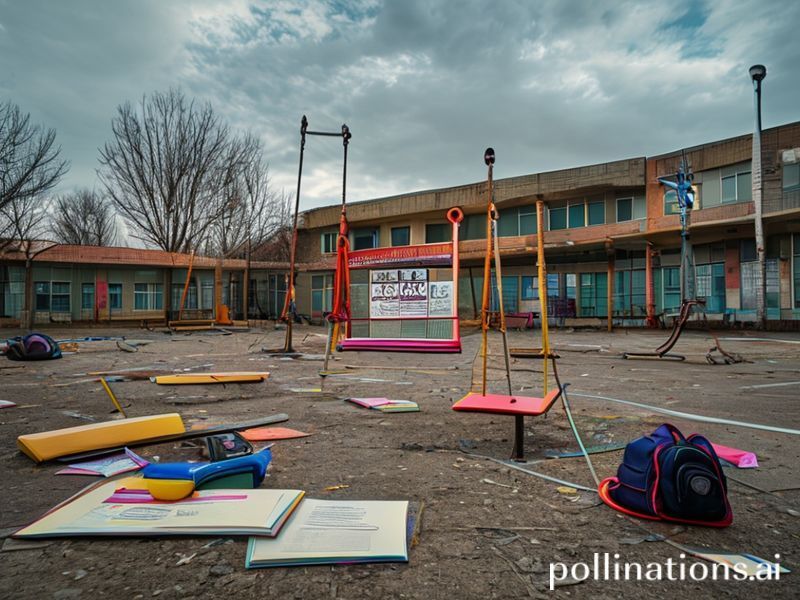
In countries like Japan, South Korea, and the US, school closures have become as common as avocado toast in a hipster café. The pandemic initially kicked off this trend, but now it’s sticking around like a bad case of cabin fever. With new variants popping up faster than you can say “quarantine,” schools are shutting down left and right, leaving parents and students to navigate the treacherous waters of online learning.
**The Social Impact: When Homework Meets Housework**
Let’s be real—school closures have turned parents into accidental teachers, and let’s just say, not everyone is winning an Oscar for their performance. Suddenly, mom and dad are expected to double as math tutors and science lab assistants, all while trying to keep their own jobs afloat. It’s like a real-life version of “The Parent Trap,” but with more screen time and less glamour.
For students, the impact is just as significant. The social aspect of school—those hallway chats, lunchroom gossip, and after-school hangouts—has been replaced by silent chats and virtual study groups. It’s a stark reminder of how much we rely on those daily interactions to feel connected. And let’s not forget the mental health toll. Kids are missing out on prom, graduation, and even just the simple joy of raising their hand to ask a question without being on mute.
**Why It’s Significant: The New Normal or a Temporary Detour?**
School closures aren’t just a blip on the radar; they’re a symptom of a much larger issue. They highlight the glaring inequalities in our education system. Not every kid has access to a reliable internet connection, a quiet study space, or even a device to log into class. This digital divide is widening faster than a yawn in a boring meeting, and it’s leaving some students behind.
But it’s not all doom and gloom. School closures have also sparked innovation. Teachers are getting creative with virtual field trips, interactive apps, and even virtual pet adoption to keep kids engaged. Parents are forming support groups, sharing resources, and finding new ways to connect with their kids. It’s a testament to human resilience and adaptability.
**Conclusion: The Future of Education**
So, what’s next for school closures? Will they become a permanent fixture in our education system, or will we return to the days of backpacks and bus rides? Only time will tell. But one thing is for sure: the pandemic has changed the way we think about education, and those changes are here to stay.
As we navigate this new normal, let’s remember to be kind to ourselves and each other. Parents, give yourself a pat on the back for making it through another day of homeschooling. Teachers, you’re doing an amazing job under incredibly tough circumstances. And students, keep raising your hand—even if it’s just to ask for a bathroom break.
Here’s to the future of education—may it be filled with less screen time and more face time.