The Great Unsettling: Why ‘Travelers’ Are Everywhere and Why You Should Care
In a world that’s increasingly connected yet paradoxically more isolated, there’s a new breed of humans roaming the globe, and they’re not just backpackers with a questionable tan. They’re the “travelers”—a nomadic tribe of digital nomads, van lifers, and wanderlust-stricken millennials who’ve traded in their 9-to-5s for a life of perpetual motion. But why is this trend blowing up like a viral TikTok dance, and what does it mean for the rest of us glued to our desks?
The Cultural Context: From “Eat, Pray, Love” to “Eat, Code, Surf”
Once upon a time, travel was a luxury reserved for the rich or the retired. But thanks to the internet, a laptop, and a strong Wi-Fi signal, the dream of living like a modern-day Marco Polo is now within reach of anyone with a skill set that can be monetized remotely. The rise of remote work, fueled by the pandemic, has turned the world into a giant playground for those who can work from anywhere.
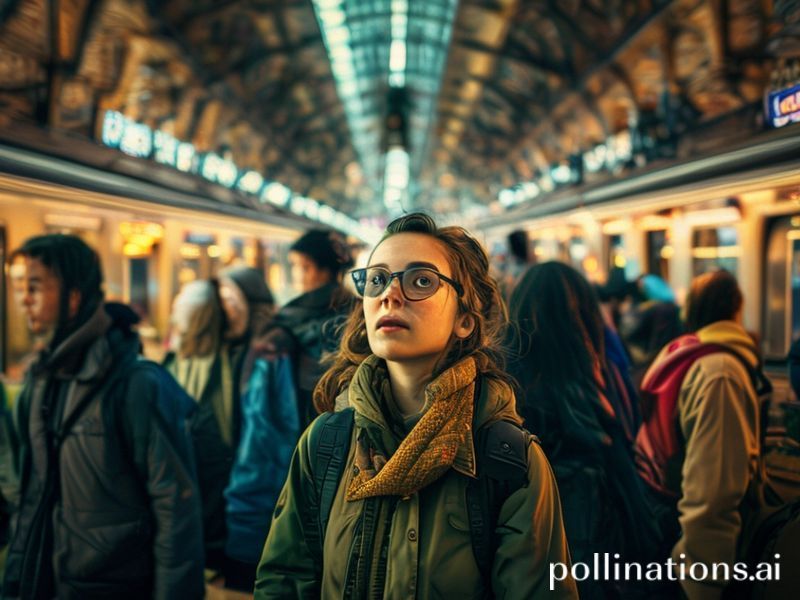
Enter the “traveler”—a term that’s become a catch-all for anyone who’s swapped their fixed address for a life on the move. They’re the digital nomads sipping coffee in Bali while attending Zoom meetings, the van lifers exploring national parks with their homes on wheels, and the backpackers hopping from one Airbnb to the next, collecting stamps in their passports like they’re Pokémon cards.
The Social Impact: The Good, the Bad, and the Ugly
The Good: Cultural Exchange and Economic Boost
Travelers bring with them a curiosity and openness that can foster cultural exchange. They’re often eager to immerse themselves in local cultures, learn new languages, and share their own experiences. This exchange can lead to a richer, more interconnected world—at least in theory.
From an economic standpoint, travelers are a boon for local economies. They spend money on accommodation, food, and experiences, often in destinations that might not see much tourist traffic otherwise. Think of the small towns in Portugal or the rural areas of Vietnam that have seen a surge in visitors thanks to the digital nomad community.
The Bad: Gentrification and Environmental Impact
But it’s not all sunshine and rainbows. The influx of travelers can lead to gentrification, driving up the cost of living and pushing out locals. Places like Lisbon, Chiang Mai, and Bali have seen a dramatic rise in housing prices, making it difficult for residents to afford their own neighborhoods.
Then there’s the environmental impact. While travelers might pride themselves on their eco-friendly lifestyles, the reality is that constant travel contributes to carbon emissions. And let’s not forget the waste generated by short-term rentals and the strain on local resources.
The Ugly: The “Digital Nomad” Fantasy
There’s also the darker side of the traveler lifestyle—the illusion that it’s all sunshine, surf, and self-discovery. The reality is often far less glamorous. Travelers face challenges like visa issues, loneliness, and the constant struggle to find reliable internet. And let’s not forget the pressure to maintain a picture-perfect life on social media, which can lead to burnout and mental health issues.
Why It’s Significant: A Reflection of Our Times
The rise of the traveler is more than just a trend; it’s a reflection of our times. It’s a response to the rigid structures of traditional work and life, a rebellion against the 9-to-5 grind, and a search for meaning in an increasingly uncertain world. It’s also a testament to the power of technology to reshape our lives in ways we’re still grappling to understand.
But perhaps most significantly, the traveler trend forces us to confront some big questions: What does it mean to belong somewhere? What is the true cost of freedom? And can we really have it all—career success, personal fulfillment, and a life of adventure?
Conclusion: The Road Ahead
As the traveler trend continues to gain momentum, it’s clear that we’re at a crossroads. On one hand, we have the potential to create a more connected, open, and flexible world. On the other, we risk exacerbating inequality, environmental degradation, and the commodification of culture.
The road ahead is uncertain, but one thing is clear: the travelers aren’t going anywhere. And neither are the questions they raise about the way we live, work, and connect with the world around us.
So, whether you’re a seasoned traveler, a curious observer, or someone dreaming of a life on the road, one thing is certain: the journey is just beginning.