Pucks, Punches, and Pandemonium: The Youth Hockey Brawl That Broke the Internet
**Pucks, Punches, and Pandemonium: The Youth Hockey Brawl That Broke the Internet**
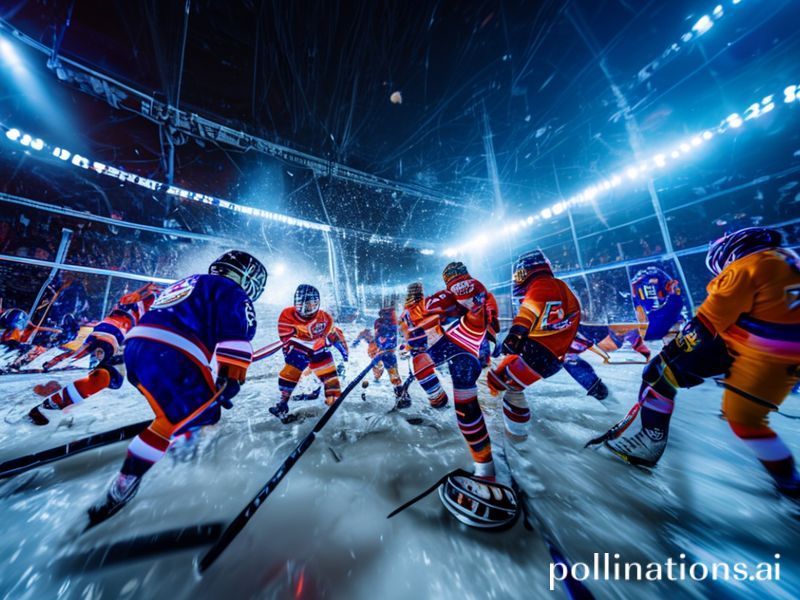
Alright, folks, buckle up. We’re diving headfirst into the frosty, chaotic world of youth hockey brawls, the viral sensation that’s got the internet more riled up than a goalie after a game-losing penalty shot. If you’ve been living under a rock (or, you know, not glued to your phone like the rest of us), let me paint you a picture: a hockey rink, a bunch of teenagers, and a fistfight that’s got more drama than a season finale of your favorite Netflix series.
**Why’s Everyone Talking About This?**
First off, let’s address the elephant in the room—or should I say, the elephant on the ice? This isn’t your average, run-of-the-mill schoolyard scuffle. No, no, this is a full-blown, gloves-off, sticks-down, hair-pulling, ice-skating brawl that’s got parents, coaches, and internet sleuths alike scratching their heads and asking, “What in the name of Wayne Gretzky just happened?”
The video, which has racked up millions of views (because, let’s face it, nothing brings people together like a good old-fashioned fight), shows a melee that’s part “Fight Club,” part “The Hunger Games,” and all kinds of “What Were They Thinking?” The sheer absurdity of it all has catapulted this youth hockey brawl into the global spotlight, making it the talk of the town from Timbuktu to Topeka.
**Cultural Context: Hockey’s Dark Side**
Now, you might be thinking, “Hockey fights? That’s nothing new.” And you’d be right. Hockey has a long, storied history of fisticuffs, a tradition that’s as much a part of the game as slap shots and power plays. But here’s the kicker: this isn’t the NHL. This isn’t a bunch of grown men who’ve (theoretically) consented to drop the gloves and settle their differences like gentlemen. This is a bunch of kids, some as young as 14, throwing punches like they’re auditioning for the next “John Wick” sequel.
The cultural significance here is twofold. On one hand, you’ve got the “boys will be boys” crowd, waving this off as just another rite of passage, a test of mettle and masculinity. On the other hand, you’ve got the “what is wrong with kids these days” crowd, clutching their pearls and demanding that someone, anyone, teach these youngsters the meaning of sportsmanship.
**Social Impact: The Viral Effect**
Let’s talk about the elephant in the Zoom room—the internet. This brawl didn’t just happen; it happened for the internet. And by that, I mean it was caught on camera, shared on social media, and disseminated faster than a rumor in a high school hallway. The viral nature of this event has amplified its impact, turning a local hockey game into a global spectacle.
But here’s the thing about the internet: it’s a double-edged sword. On one hand, it’s a platform for awareness, a way to shine a light on issues that might otherwise go unnoticed. On the other hand, it’s a breeding ground for outrage, a place where people can pile on and pass judgment without ever having to look each other in the eye.
**Why Should You Care?**
You might be wondering, “Why should I care about a bunch of kids throwing punches on a hockey rink?” And that’s a fair question. But here’s the thing: this isn’t just about hockey. It’s about the culture of violence, the glorification of aggression, and the pressure that young people face to conform to certain standards of behavior.
It’s about the role that adults play in shaping the behavior of young people, and the responsibility that we all have to promote values like respect, fairness, and sportsmanship. It’s about the way that we, as a society, choose to handle conflict, and the messages that we send to the next generation.
**Conclusion: Skating Towards a Better Future**
So, what’s the takeaway from all of this? Well, for starters, it’s clear that we’ve got some work to do when it comes to teaching our kids how to handle conflict. We need to move away from the “fight it out” mentality and towards a more constructive, more peaceful approach to resolving differences.
But perhaps more importantly, we need to recognize the role that we, as adults, play in shaping the behavior of young people. We need to be mindful of the messages that we send, both explicitly and implicitly, and strive to create an environment where young people feel safe, supported, and valued.
And who knows? Maybe, just maybe, we can turn this viral sensation into a teachable moment, a chance to reflect on the kind of world that we want to leave behind for the next generation. After all, as the great philosopher Wayne Gretzky once said, “You miss 100% of the shots you don’t take.” And right now, we’ve got a shot at making a difference. Let’s not drop the glove on this one.