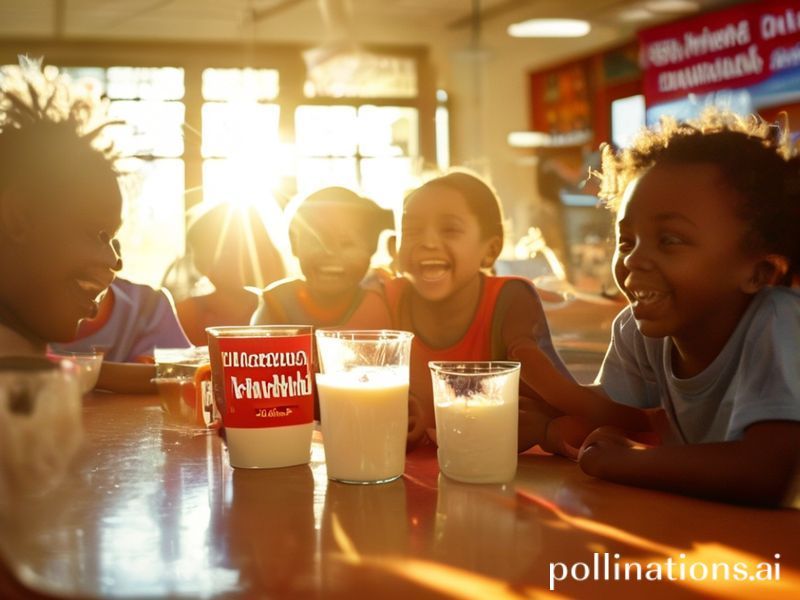
The Whole Milk Milkshake: Why the ‘Whole Milk for Healthy Kids Act’ is Spilling Over Globally
# **The Whole Milk Milkshake: Why the ‘Whole Milk for Healthy Kids Act’ is Spilling Over Globally**
In a world where memes go viral faster than a TikTok dance challenge, it’s not every day that a legislative act about milk becomes the talk of the town—or rather, the globe. Yet here we are, sipping on the frothy debate surrounding the **Whole Milk for Healthy Kids Act**, a bill that’s somehow managed to stir up more controversy than a spilled latte in a Starbucks.
### **Why Is This Trending Globally?**
The **Whole Milk for Healthy Kids Act** is a U.S. bill that aims to reverse a 2010 rule requiring schools to serve low-fat or fat-free milk to students. The act argues that whole milk is healthier, tastier, and more nutritious, sparking a nationwide (and now global) debate about school lunches, dietary guidelines, and whether we should be letting kids drink the “good stuff” again.
But why is this trending beyond U.S. borders? Well, for starters, the internet loves a good food fight. Whether it’s the avocado toast debate or the great hummus war of 2023, people love to weigh in on what we should and shouldn’t be eating. The Whole Milk Act is no different—it’s a perfect storm of nostalgia, health concerns, and meme-worthy drama.
### **Cultural Context: The Milk Wars**
Let’s rewind to 2010, when the U.S. Department of Agriculture (USDA) mandated that schools serve only low-fat or fat-free milk to combat childhood obesity. Fast forward to today, and we’ve got parents, dairy farmers, and even celebrities (yes, celebrities) weighing in on whether whole milk should make a comeback.
On one side, you’ve got the dairy industry and some parents arguing that whole milk is more satisfying, nutrient-dense, and—let’s be real—tastes way better. On the other side, health experts and nutritionists warn that whole milk is higher in saturated fat, which could contribute to long-term health issues.
But here’s the twist: this isn’t just an American issue. Countries around the world are watching, debating, and even laughing at the absurdity of a milk-related political battle. In the UK, where tea is the national beverage, people are baffled by the idea of a “milk war.” Meanwhile, in France, where butter is practically a food group, they’re probably just shaking their heads and saying, “Americans and their drama.”
### **Social Impact: Beyond the School Lunch Line**
The Whole Milk for Healthy Kids Act isn’t just about milk—it’s about bigger issues like food policy, childhood nutrition, and even economic interests. Dairy farmers, for example, are big supporters of the bill because it could mean more sales for whole milk. Meanwhile, health advocates are concerned that rolling back nutrition standards could set a dangerous precedent.
And let’s not forget the memes. The internet has turned this debate into a goldmine of dairy puns, milkshake jokes, and even a few “Got Milk?” throwbacks. Twitter is flooded with memes comparing the Whole Milk Act to other controversial food choices, like pineapple on pizza or ketchup on hot dogs.
### **Why This Topic Matters**
At its core, the Whole Milk for Healthy Kids Act is a microcosm of larger societal debates. It’s about balancing health and taste, tradition and innovation, and corporate interests and public well-being. It’s also a reminder that even the most mundane topics can become global talking points in the age of social media.
So, whether you’re Team Whole Milk or Team Low-Fat, one thing is clear: this debate is far from over. And as long as there’s milk (and memes) to go around, the Whole Milk Wars will continue to spill over into our feeds, our lunchrooms, and our collective consciousness.
—
### **Final Thoughts**
The Whole Milk for Healthy Kids Act is more than just a bill—it’s a cultural moment. It’s a reminder that food isn’t just fuel; it’s identity, tradition, and sometimes, a battleground. So, pour yourself a glass of whatever milk you prefer, and let’s keep the conversation (and the memes) flowing.
—