Amazon Warehouse Disease Outbreak: When Convenience Comes at a Cost
**Amazon Warehouse Disease Outbreak: When the ‘Everything Store’ Becomes the ‘Everything’s Gone Wrong’ Store**
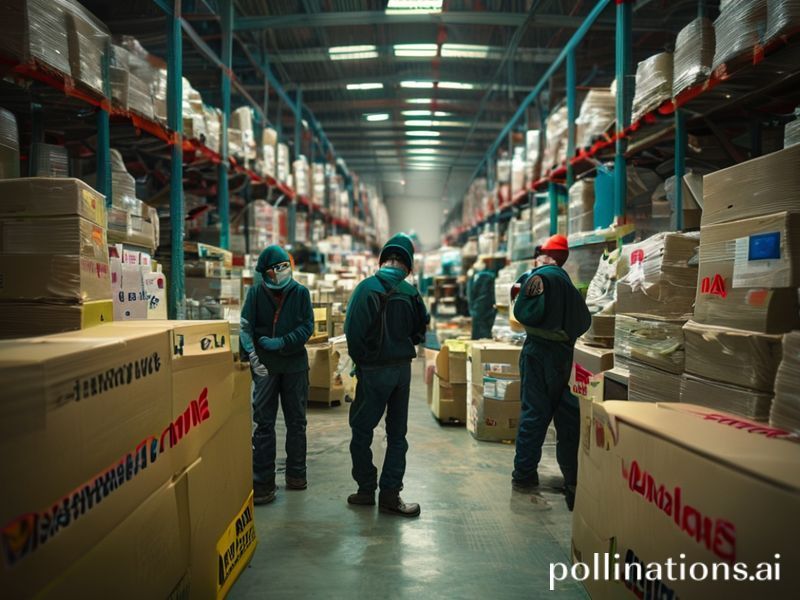
Alright, folks, buckle up. We’re diving headfirst into the latest internet sensation that’s got people more fired up than a Kindle on a jet ski—Amazon’s warehouse disease outbreak. Yes, you read that right. It’s not just about late deliveries and lost packages anymore; now we’re talking about actual, literal diseases spreading like wildfire in Amazon’s warehouses. Cue the dramatic music, please.
**Why is this trending globally?**
First off, let’s address the elephant in the room—or should I say, the warehouse. The outbreak of diseases like COVID-19, influenza, and even norovirus in Amazon’s warehouses has sparked a global conversation. Why? Because Amazon is everywhere. It’s like the McDonald’s of online shopping—you can’t escape it, and it’s got a footprint bigger than Godzilla’s. When something goes wrong in an Amazon warehouse, it’s not just a local issue; it’s a global headache.
People are talking about this for a few reasons:
1. **Worker Safety**: Workers’ rights and safety have always been a hot topic, and this outbreak has thrown a spotlight on the conditions inside Amazon’s warehouses. It’s like the plot of a dystopian novel, but with more scanners and less rebellion.
2. **E-commerce Boom**: With the rise of e-commerce, especially post-pandemic, more people are aware of and invested in the inner workings of these giant warehouses. It’s like when you suddenly start caring about how sausages are made—except here, the sausages are your packages, and the factory is a massive, labyrinthine warehouse.
3. **Amazon’s Reputation**: Amazon has built a reputation as an efficient, customer-centric company. But when stories of disease outbreaks start surfacing, it’s like finding out your favorite celebrity has been caught in a scandal—it’s shocking, disappointing, and you can’t unsee it.
**Cultural Context**
This outbreak is more than just a health issue; it’s a cultural moment. It’s a reflection of our society’s reliance on convenience and the human cost behind it. We live in an era where we expect our packages to arrive faster than we can say “Prime membership.” But at what cost?
Think about it. We’ve all been there—ordering something online, tracking its journey from warehouse to doorstep, and feeling a sense of satisfaction when it arrives. But now, we’re being forced to confront the reality of what happens behind the scenes. It’s like when you realize your favorite fast-food burger isn’t quite as magical once you’ve seen the kitchen.
**Social Impact**
The social impact of this outbreak is twofold. On one hand, it’s raised awareness about worker safety and the conditions in warehouses. On the other hand, it’s made people question their own shopping habits. Are we contributing to a system that prioritizes speed and efficiency over human well-being?
It’s also sparked conversations about corporate responsibility. Amazon, as a global giant, has a significant influence on labor practices and public health. When outbreaks occur, it’s not just about the immediate health risks; it’s about the broader implications for society.
**Why is this significant?**
This topic is significant because it’s a microcosm of larger issues in our society. It’s about the balance between convenience and ethics, between profit and people. It’s about the power dynamics between corporations and workers, and the role of technology in our lives.
Moreover, it’s a reminder that behind every click, every purchase, there are real people with real lives. It’s easy to forget that in the age of one-click shopping and drone deliveries. But this outbreak brings us back to reality.
**Conclusion**
So, there you have it. The Amazon warehouse disease outbreak is more than just a trending topic—it’s a wake-up call. It’s a reminder that our actions have consequences, and that the pursuit of convenience shouldn’t come at the cost of human well-being.
As we continue to navigate the complexities of the digital age, let’s not forget the human element. Let’s demand better conditions for workers, let’s question the systems that prioritize profit over people, and let’s strive for a future where technology serves us all, not just the privileged few.
And hey, maybe next time you’re about to click ‘Buy Now,’ take a moment to think about the journey your package will take—and the people who will make it happen.