Free America Walkout: The Viral Protest That’s Redefining Digital Activism
# **Free America Walkout: The Viral Protest That’s Got the World Talking**
In the grand theater of internet culture, a new act has taken center stage: the “Free America Walkout.” What started as a grassroots protest against perceived injustices in the United States has morphed into a global phenomenon, sparking conversations, memes, and even counter-movements. But why is this particular protest trending worldwide, and what does it say about the state of activism in the digital age?
### **The Roots of the Movement**
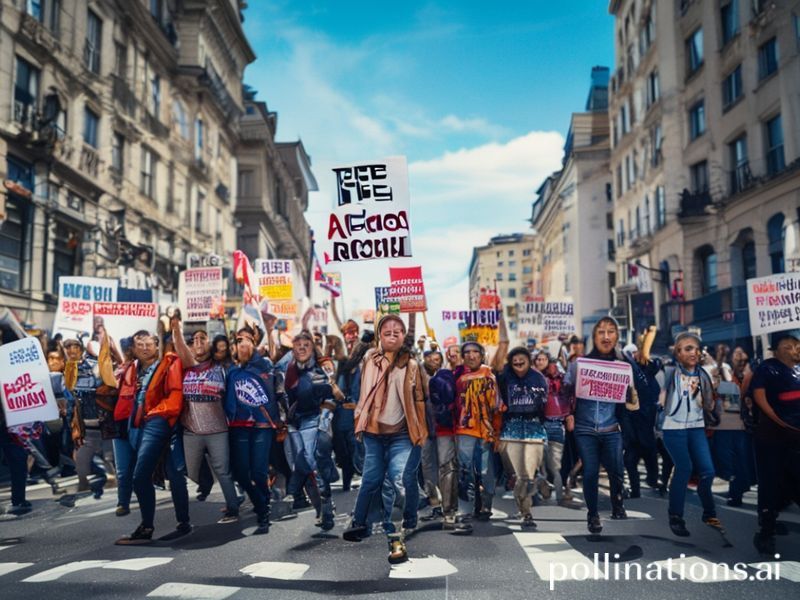
The Free America Walkout gained traction after a series of high-profile events—ranging from political controversies to social justice movements—sparked outrage among activists. The idea was simple: walk out of work, school, or any public space to protest perceived injustices and demand change. The movement quickly gained momentum on social media, with hashtags like #FreeAmericaWalkout and #WalkOutForJustice trending on platforms like Twitter, TikTok, and Instagram.
But what makes this protest different from others? For starters, it’s decentralized. Unlike traditional protests organized by specific groups or leaders, the Free America Walkout is a leaderless, grassroots effort. This decentralization has allowed it to spread organically, with participants interpreting the call to action in their own ways. Some walk out of classrooms, others leave their workplaces, and a few even stage symbolic walkouts in virtual spaces like Zoom meetings.
### **Cultural Context: The Rise of Digital Activism**
The Free America Walkout is a product of the digital age, where activism is no longer confined to physical streets but thrives in the vast, interconnected world of the internet. Social media has democratized protest, allowing anyone with a smartphone and an internet connection to participate. The movement taps into a broader cultural shift where younger generations, in particular, are more likely to engage in activism through digital means.
This isn’t the first time a digital protest has gone viral. Remember the #MeToo movement? Or the global climate strikes inspired by Greta Thunberg? These movements share a common thread: they leverage the power of social media to amplify their messages and mobilize participants. The Free America Walkout is just the latest in a long line of digital activism that has reshaped how we think about protest.
### **Social Impact: A Double-Edged Sword**
The Free America Walkout has had a significant social impact, both positive and negative. On the one hand, it has brought attention to issues that might otherwise go unnoticed. By walking out, participants are making a statement that demands attention, forcing conversations about systemic injustices into the public sphere.
On the other hand, the movement has also faced criticism. Some argue that walking out is a symbolic gesture that doesn’t lead to tangible change. Others point out that the decentralized nature of the protest makes it difficult to measure its impact or hold anyone accountable for its outcomes. There’s also the risk of the movement being co-opted by political groups or turning into performative activism, where the act of protesting becomes more important than the cause itself.
### **Why It’s Significant**
So, why should we care about the Free America Walkout? For one, it’s a reflection of the times we live in. In an era of political polarization, economic uncertainty, and social unrest, movements like this give people a sense of agency. They provide a way for individuals to express their frustrations and demand change, even if the path forward is unclear.
Moreover, the Free America Walkout highlights the power of digital activism. It shows that protests don’t need to be organized by traditional institutions to be effective. In fact, the decentralized nature of the movement might be its greatest strength, allowing it to adapt and evolve in response to changing circumstances.
### **Conclusion: The Walkout as a Cultural Moment**
The Free America Walkout is more than just a protest; it’s a cultural moment. It’s a testament to the power of social media, the resilience of grassroots activism, and the evolving nature of protest in the digital age. Whether it leads to tangible change or fades into obscurity, the movement has already left its mark on the cultural landscape.
As we watch the Free America Walkout unfold, one thing is clear: the internet has given us a new way to protest, and it’s not going away anytime soon. So, whether you’re walking out, tweeting in support, or just observing from the sidelines, you’re part of a larger conversation that’s shaping the future of activism.