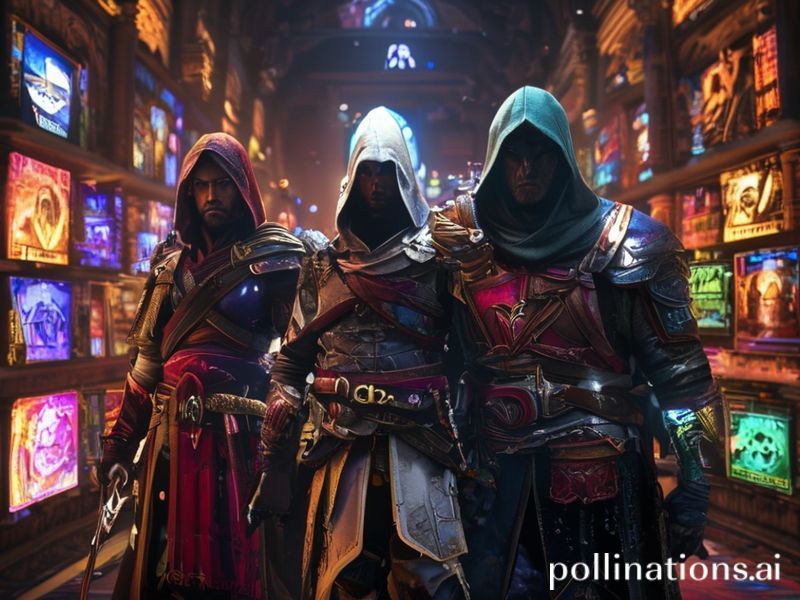
Ubisoft Games: The French House That’s Redefining Global Gaming Culture
**Ubisoft Games: The French House That (Assassin’s Creed) Built**
Alright, listen up, gamers and culture vultures! Ubisoft, the French gaming titan, is having a moment. No, not just a moment—an entire era. The company’s games are trending globally, and it’s not just because they’ve mastered the art of making us climb every virtual tower in sight. There’s a cultural shift happening, and Ubisoft is right in the thick of it. So, grab your controller, and let’s dive in.
**The Cultural Context: From France with Love**
Ubisoft, founded in 1986, has been a staple in the gaming industry for decades. But why the sudden global buzz? Well, it’s not so sudden. The company has been strategically expanding its portfolio, acquiring studios, and pushing boundaries in game design and storytelling. Plus, let’s not forget the power of nostalgia. Games like “Prince of Persia” and “Rayman” have been reintroduced to new generations, while franchises like “Assassin’s Creed” and “Far Cry” continue to evolve, keeping both old and new fans engaged.
But it’s not just about the games. Ubisoft has been making waves in the cultural arena. Their games often tackle historical and social issues, sparking conversations and debates. “Assassin’s Creed Odyssey,” for instance, delves into ancient Greek history, while “Watch Dogs: Legion” takes on a dystopian London, exploring themes of surveillance and resistance. It’s not just about gameplay; it’s about narrative and impact.
**The Social Impact: More Than Just Entertainment**
Ubisoft games are more than just a pastime; they’re a social phenomenon. They bring people together, whether it’s through multiplayer modes, online communities, or just friends gathering to play the latest single-player hit. But with great power comes great responsibility, and Ubisoft has faced its share of scrutiny.
The company has been under fire for workplace culture issues, leading to a wave of changes and commitments to improve diversity and inclusion. This has sparked a broader conversation in the gaming industry about workplace culture and representation, both in-game and behind the scenes. It’s a bumpy road, but Ubisoft’s journey is a significant part of the current gaming landscape.
**What Makes This Topic Significant?**
Ubisoft’s global trend is significant for several reasons. Firstly, it reflects the growing influence of gaming in global culture. Games are no longer just a niche hobby; they’re a mainstream form of entertainment and storytelling. Ubisoft’s success underscores this shift.
Secondly, Ubisoft’s impact on the industry is undeniable. Their games push technological boundaries, from the impressive open worlds of “Assassin’s Creed Valhalla” to the innovative gameplay mechanics of “The Division 2.” They set trends that other studios follow.
Lastly, Ubisoft’s journey highlights the importance of social responsibility in the gaming industry. As games become more influential, the companies behind them must navigate the complexities of cultural representation, workplace culture, and social impact.
**Conclusion: The Ubisoft Effect**
So, why is Ubisoft trending globally? Because they’re not just making games; they’re shaping culture, sparking conversations, and pushing boundaries. They’re a French house that’s built an empire, one virtual tower climb at a time. And as the gaming industry continues to evolve, Ubisoft’s impact will only grow.
Now, if you’ll excuse me, I’ve got a virtual world to explore. Until next time, keep gaming, keep questioning, and keep climbing those towers.