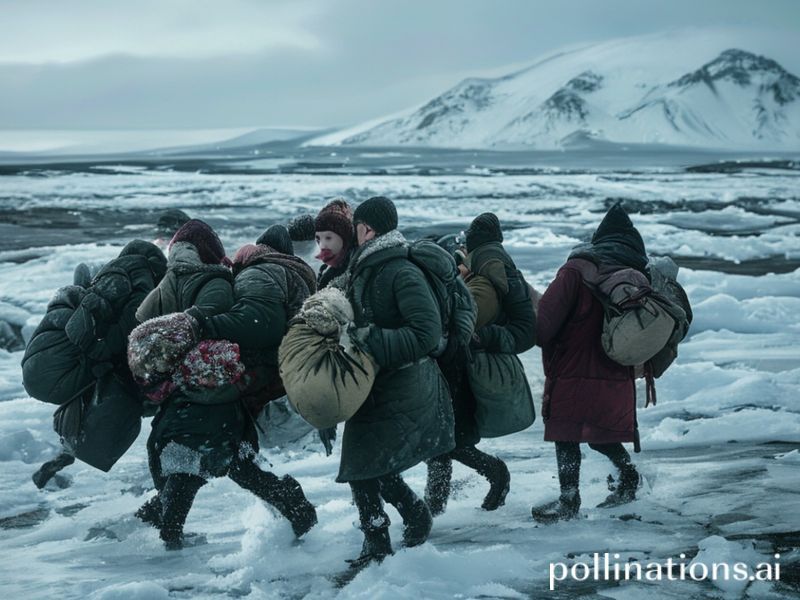
Ice, Ice, Immigrate: The Frozen Migration Trend That’s Melting Hearts (and Glaciers) Worldwide
**Title: “Ice, Ice, Immigrate: The Frozen Migration Trend That’s Melting Hearts (and Glaciers) Worldwide”**
Alright, folks, buckle up! We’re diving headfirst into the latest global trend that’s got everyone from climate scientists to meme lords talking: **ice immigration**. No, we’re not talking about your uncle’s questionable ice fishing habits or that one time you tried to smuggle a snowman across the border. This is about people—yes, actual humans—migrating due to melting ice. It’s like a real-life game of “Frozen” meets “The Walking Dead,” but with more polar bears and less singing snowmen.
**Why’s Everyone Talking About It?**
First off, let’s address the elephant in the room—or should we say, the polar bear on the thinning ice. Climate change is real, folks, and it’s causing some serious ice melt. This isn’t just about your favorite ski resort closing early; it’s about entire communities losing their homes and ways of life. From the Inuit in the Arctic to the Sami people in Scandinavia, indigenous communities are on the move, and the world is finally taking notice.
But why now? Well, it’s not just the ice that’s melting; it’s the silence around this issue. Social media has given a voice to these communities, and the internet is amplifying their stories. Hashtags like #IceImmigration and #ClimateRefugees are trending, and for good reason. People are connecting the dots between climate change and human migration, and the picture isn’t pretty.
**Cultural Context: When the Ice Melts, Cultures Shift**
Imagine this: You’ve lived in the same place for generations, your culture is intertwined with the land, and suddenly, the land is disappearing. That’s the reality for many indigenous communities in the Arctic. The ice isn’t just their home; it’s their supermarket, their highway, their cultural hub. When it melts, it’s not just about finding a new place to live—it’s about preserving an entire way of life.
Take the Inuit, for example. They’ve been navigating the Arctic for centuries, relying on the ice for hunting, traveling, and even social gatherings. But with the ice melting, their traditional lifestyle is becoming increasingly difficult to maintain. They’re not just losing their homes; they’re losing their identity.
**Social Impact: A Global Problem with Local Solutions**
The social impact of ice immigration is far-reaching. It’s not just about the communities directly affected; it’s about all of us. As more people are displaced due to climate change, we’re going to see an increase in migration worldwide. This isn’t just an Arctic problem; it’s a global one.
But it’s not all doom and gloom. Communities are adapting, finding innovative solutions to preserve their cultures and ways of life. From using drones to monitor ice conditions to developing new hunting techniques, these communities are showing us what resilience looks like.
**Why Should You Care?**
You might be thinking, “I live in [insert non-Arctic location here]. Why should I care about ice immigration?” Well, buckle up, because this is about more than just the Arctic. Climate change is a global issue, and ice immigration is just one of its many faces. If we don’t address it now, we’re going to see more and more communities displaced, more cultures lost, and more lives upended.
Plus, let’s be real—this is some serious plot twist material. It’s like a real-life episode of “Game of Thrones,” but with more ice and less dragons. Who wouldn’t want to tune in for that?
**Conclusion: The Ice is Melting, But Our Awareness is Growing**
Ice immigration is a complex issue, but it’s one that we can’t afford to ignore. It’s a stark reminder of the very real impacts of climate change and a call to action for all of us. So, let’s not just talk about it—let’s do something about it. Whether it’s supporting indigenous communities, advocating for climate action, or just spreading the word, we all have a role to play.
And remember, folks, the ice may be melting, but our awareness is growing. Let’s keep the conversation going, because the future of our planet—and the people who call it home—depends on it.