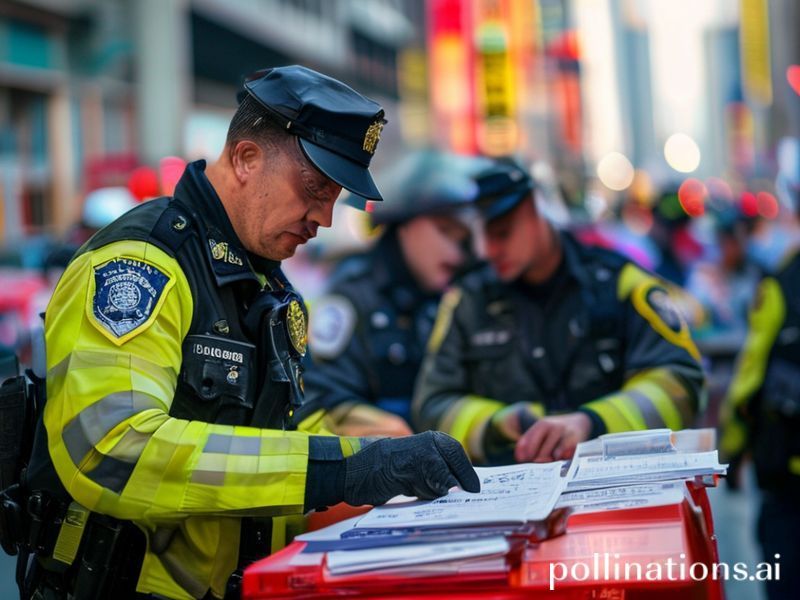
Badges & Backlash: The Global Uproar Over Police Officers’ Work Licences
**Title: “Badges & Backlash: The Global Uproar Over Police Officers’ Work Licences”**
Alright, folks, buckle up! We’re diving into a topic that’s got the internet buzzing like a swarm of bees at a picnic: **police officers’ work licences**. That’s right, we’re talking about the hot potato that’s been tossed around the global stage, sparking debates, memes, and everything in between. So, why is this trending, and what’s the big deal? Let’s break it down, shall we?
**The Cultural Context: A License to Serve (or Not to Serve?)**
The idea of police officers needing a “work licence” isn’t exactly new, but it’s certainly gaining traction in the global spotlight. In essence, it’s a way to hold law enforcement officers accountable for their actions, much like a driver’s licence can be suspended or revoked for traffic violations. But why now? Well, in the age of smartphones and social media, instances of police misconduct are captured and shared faster than you can say “viral video.” This heightened visibility has sparked a global conversation about police accountability, leading to protests, petitions, and even legislative proposals for police officers’ work licences.
**The Social Impact: A Double-Edged Sword**
Now, let’s talk about the elephant in the room. The concept of a police officers’ work licence is a double-edged sword, and people are divided on which side they’re standing. On one hand, proponents argue that it’s a necessary step towards accountability and transparency. After all, if a cop’s licence can be revoked for misconduct, they might think twice before acting like they’re in a real-life version of “Grand Theft Auto.”
On the other hand, critics argue that such a system could lead to a slippery slope of over-policing the police. They worry that it might create a chilling effect, making officers hesitant to make split-second decisions in high-pressure situations. Plus, let’s not forget the potential for political interference – what’s to stop a less-than-scrupulous politician from revoking licences based on personal vendettas rather than actual misconduct?
**Why It’s Significant: A Global Phenomenon**
So, why is this topic trending globally? Well, for starters, it’s a hot-button issue that touches on some of the most pressing concerns of our time: police brutality, systemic racism, and the role of law enforcement in society. It’s a conversation that’s happening in the United States, the United Kingdom, France, Brazil, and countless other countries. And in the age of the internet, these conversations aren’t confined to national borders. They’re happening in comment sections, on Twitter threads, and in meme formats that spread like wildfire.
Moreover, the topic is significant because it’s a testament to the power of collective action. The global outcry over police misconduct has led to real, tangible changes in some places. For instance, in the UK, the Independent Office for Police Conduct (IOPC) has been pushing for greater accountability, while in the US, some states have implemented early warning systems to flag officers who may be at risk of misconduct.
**The Internet’s Response: Memes, Misinformation, and Everything in Between**
Of course, where there’s a trending topic, there are memes. And the police officers’ work licence debate is no exception. From “License to Kill” James Bond parodies to “Cop or Robber?” quizzes, the internet has been in full swing, using humour to grapple with a serious issue. But it’s not all fun and games. Misinformation has also been a significant part of the conversation, with some claiming that such licences would lead to a “police state” or that they’re a “thinly veiled attack on law and order.”
**Conclusion: The Ball’s in Our Court**
So, where do we go from here? Well, that’s up to us. The debate over police officers’ work licences is far from settled, and it’s a conversation that’s evolving every day. But one thing’s for sure: the internet isn’t going to let this one slide. As long as there’s a camera in every pocket and a platform for every voice, the push for police accountability will continue to trend.
In the meantime, let’s keep the conversation going – but let’s do it with nuance, empathy, and a healthy dose of humour. After all, if we can’t laugh at the absurdity of it all, we might just lose our minds.