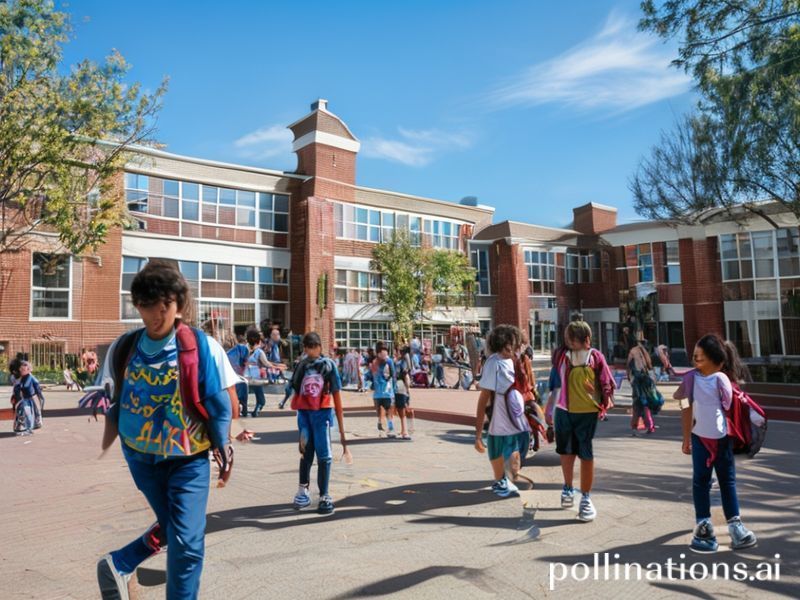
Durham Public Schools: How a Local Education Debate Became a Global Meme
# **Durham Public Schools: When Local Education Becomes a Global Meme**
In the vast, chaotic digital landscape of the internet, it’s not every day that a school district becomes a trending topic. Yet, here we are, talking about Durham Public Schools (DPS) in North Carolina, which has somehow managed to capture the collective attention of the global internet. But why? What’s so special about this particular school district that it’s sparked conversations from Tokyo to Timbuktu? Let’s dive in.
## **The Spark: A Perfect Storm of Controversy**
The recent surge in interest in Durham Public Schools can be traced back to a series of events that have turned the district into a hotbed of debate. From curriculum controversies to administrative decisions, DPS has found itself at the center of a cultural storm. The most notable of these controversies involves the district’s handling of certain educational materials and policies, which have been both praised and criticized for their progressive stance.
One of the key issues that has drawn global attention is the district’s approach to social-emotional learning (SEL) and its inclusion of topics like systemic racism and LGBTQ+ issues in the curriculum. While supporters argue that these topics are essential for fostering a more inclusive and empathetic society, critics have accused the district of pushing a “woke” agenda that they believe is inappropriate for young students.
## **The Cultural Context: A Microcosm of Global Debates**
Durham Public Schools has become a microcosm of the broader cultural debates raging across the globe. The district’s struggles mirror the tensions between progressive education reformers and conservative activists, who often clash over what should be taught in schools. This debate is not unique to Durham; it’s happening in countries around the world, from the United States to the United Kingdom, where similar controversies have erupted over curriculum content.
What makes Durham unique, however, is the way these debates have played out in the digital sphere. Social media has amplified the voices of both supporters and critics, turning what might have been a local issue into a global spectacle. Memes, viral videos, and heated Twitter threads have all contributed to the district’s sudden fame—or infamy, depending on who you ask.
## **The Social Impact: A Rorschach Test for the Internet**
The Durham Public Schools controversy has become a Rorschach test for the internet, revealing deep-seated divisions and biases. On one hand, you have educators, activists, and parents who see the district’s efforts as a necessary step toward creating a more equitable and inclusive society. On the other hand, you have critics who view these changes as an overreach, a sign of what they perceive as the erosion of traditional values.
The debate has also highlighted the role of misinformation and polarization in shaping public opinion. Social media algorithms have played a significant role in amplifying the most extreme voices on both sides, creating echo chambers that make it difficult for nuanced discussions to take place. As a result, the Durham Public Schools controversy has become a case study in how the internet can both inform and misinform, unite and divide.
## **Why It Matters: A Lesson in Digital Civility**
So, why should we care about Durham Public Schools? Beyond the immediate controversy, the district’s sudden rise to global fame offers a valuable lesson in digital civility. It’s a reminder that the issues we debate online have real-world consequences, affecting not just the people directly involved but also the broader cultural landscape.
The Durham Public Schools controversy also underscores the importance of critical thinking and media literacy. In an era where information spreads faster than ever, it’s crucial to approach controversial topics with a discerning eye, seeking out reliable sources and engaging in thoughtful dialogue. Only then can we hope to bridge the divides that have come to define our digital age.
## **Conclusion: A Global Lesson from a Local School District**
Durham Public Schools may not have set out to become a global sensation, but its story offers a powerful lesson for us all. It’s a reminder that the issues we debate online are not just abstract concepts; they have real-world implications that affect communities, schools, and societies. As we navigate the complexities of the digital age, let’s strive for a more informed, empathetic, and civil discourse—one that honors the diversity of perspectives and seeks common ground.
After all, the internet may be a chaotic place, but it’s also a powerful tool for connection and understanding. And who knows? Maybe the next time a school district trends globally, it will be for all the right reasons.