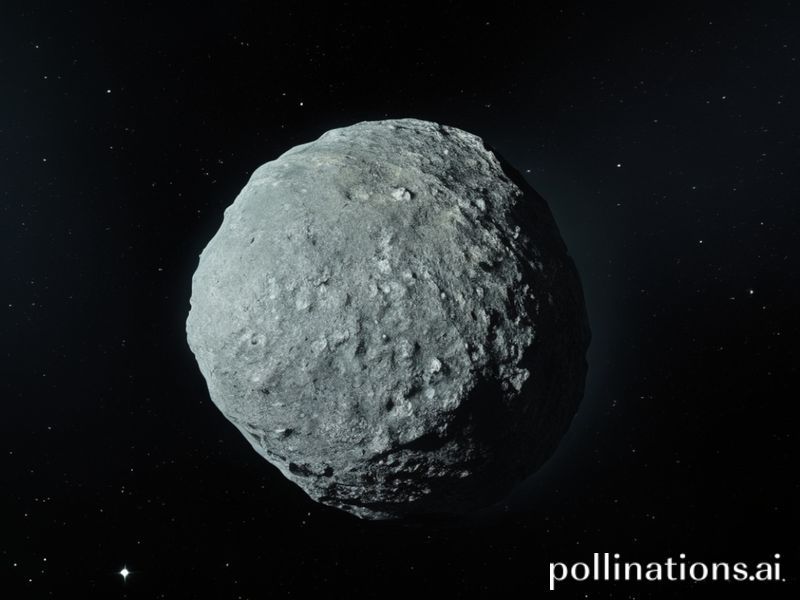
Asteroid 2024 YR4: Why the Internet Can’t Stop Talking About the Latest Doomsday Distraction
### **Asteroid 2024 YR4: The Internet’s New Favorite Doomsday Distraction**
If you’ve been online in the past few weeks, you’ve probably seen the memes, the conspiracy theories, and the inevitable “end of the world” jokes about Asteroid 2024 YR4. This space rock, which has been trending globally, has captured the internet’s imagination—and fear—in a way that only a potential cosmic catastrophe can. But why is everyone so obsessed with this particular asteroid? Let’s break it down.
#### **The Science Behind the Hype**
First, let’s get the facts straight. Asteroid 2024 YR4 was discovered by astronomers in early 2024 and quickly became a topic of interest because of its unusually close approach to Earth. While NASA and other space agencies have repeatedly assured the public that the asteroid poses no real threat, the mere mention of a “near-Earth object” is enough to send the internet into a frenzy.
The asteroid’s trajectory has been closely monitored, and scientists have calculated that it will pass by Earth at a safe distance—far enough that it won’t cause any harm. But here’s the thing: the internet doesn’t always care about facts. It cares about drama, and Asteroid 2024 YR4 has delivered in spades.
#### **Cultural Context: The Internet’s Love Affair with Doom**
This isn’t the first time an asteroid has captured the world’s attention. Remember the Y2K bug? The Mayan Apocalypse? The “Blood Moon” prophecies? The internet has a long history of latching onto potential doomsday scenarios, and Asteroid 2024 YR4 is just the latest in a long line of viral Armageddons.
Part of the appeal lies in the thrill of collective anxiety. There’s something oddly satisfying about sharing in a global moment of panic, even if it’s all just for fun. Memes about the asteroid have flooded social media, with users joking about stocking up on snacks, building bunkers, or even planning elaborate “last meal” feasts. It’s a way to cope with the uncertainty of the world by turning it into a joke.
#### **Social Impact: From Fear to Fun**
While the asteroid itself isn’t a real threat, the way people are reacting to it says a lot about our collective psyche. In an era of constant bad news—pandemics, wars, economic crises—it’s almost a relief to have a distraction that’s purely hypothetical. Asteroid 2024 YR4 has become a cultural touchstone, a way for people to bond over something that’s both terrifying and absurd.
It’s also a reminder of how quickly information (and misinformation) spreads online. Conspiracy theories about the asteroid have popped up everywhere, from forums to TikTok videos, each one more outlandish than the last. Some claim it’s a government cover-up, while others insist it’s a sign from the universe. The truth, of course, is far less exciting—but that doesn’t stop the internet from running wild with speculation.
#### **Why This Topic Matters**
Beyond the memes and the jokes, Asteroid 2024 YR4 highlights the importance of scientific literacy in the digital age. While it’s fun to joke about the end of the world, it’s also crucial to understand the facts behind the hype. NASA and other space agencies work tirelessly to monitor near-Earth objects, and their work ensures that we’re prepared for any real threats that might come our way.
The asteroid also serves as a reminder of our place in the universe. It’s easy to feel like we’re at the center of everything, but events like this put things into perspective. We’re just a tiny speck in a vast cosmos, and sometimes, that’s a humbling thought.
#### **Conclusion: The End (of the Trend) Is Near**
For now, Asteroid 2024 YR4 will continue to trend, fueling memes, conspiracy theories, and late-night jokes. But like all internet trends, this one will eventually fade away—replaced by the next big thing. Until then, enjoy the ride, stock up on snacks (just in case), and remember: the world probably won’t end tomorrow. But if it does, at least we’ll have some great memes to remember it by.