Global Gridlock: Why the ‘National Shutdown’ Trend Has the World Hitting Pause
# **Global Gridlock: Why the “National Shutdown” Trend Has the World Hitting Pause**
In the grand theater of internet culture, trends come and go like seasons—sometimes fleeting, sometimes sticking around like that one friend who overstays their welcome. But lately, the phrase “national shutdown” has been trending globally, sparking conversations, memes, and even a bit of panic. So, what’s the deal? Why is the world suddenly obsessed with the idea of everything grinding to a halt? Let’s dive in.
### **The Cultural Context: When the World Hits Snooze**
The term “national shutdown” has been thrown around in various contexts, from political protests to cyberattacks to even the occasional viral challenge (because, of course, the internet had to turn it into a thing). But why now? Well, let’s consider the cultural climate. We’re living in an era where everything feels like it’s moving at warp speed—news cycles, social media, even our collective attention spans. It’s no wonder people are craving a break, even if it’s just the fantasy of one.
Take, for example, the recent cyberattacks that have crippled entire countries’ infrastructure. When systems go down, it’s not just a minor inconvenience; it’s a full-blown existential crisis for the digital age. Suddenly, the idea of a “national shutdown” isn’t just a meme—it’s a very real possibility that has governments and tech giants scrambling to prepare.
### **The Social Impact: When the Internet Becomes the Main Character**
The internet, as always, has played a pivotal role in amplifying this trend. Memes about “national shutdowns” have flooded social media, with users joking about everything from power outages to the sudden disappearance of Wi-Fi. But beneath the humor lies a deeper truth: the internet has become so integral to our lives that the thought of it going dark is downright terrifying.
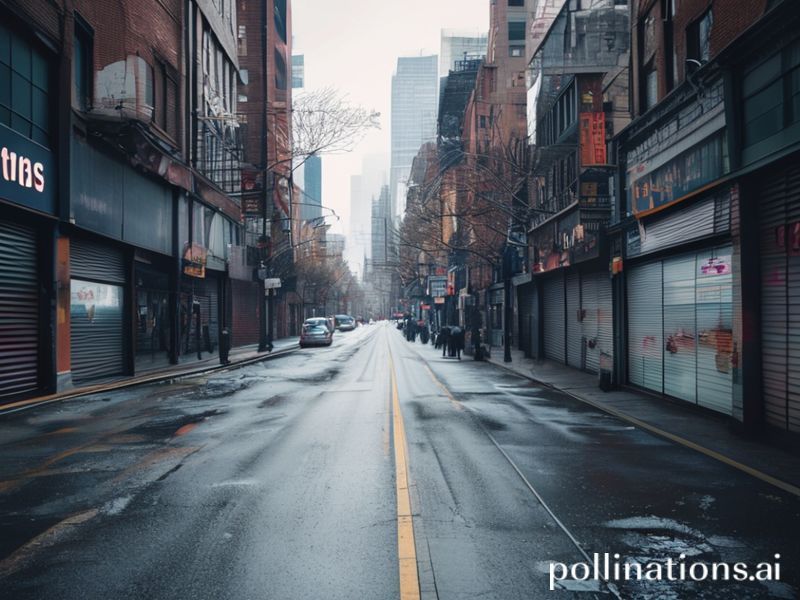
Consider the social impact. A national shutdown, whether caused by a cyberattack, protest, or natural disaster, would disrupt communication, commerce, and even basic services. It’s a reminder of just how vulnerable our interconnected world is. And while the memes might be funny, the underlying message is clear: we’re all just one glitch away from chaos.
### **Why It’s Significant: The Power of a Pause**
So, why does this trend matter? For starters, it highlights our collective anxiety about the fragility of modern life. We’ve built a world that runs on technology, and the idea of it failing is both fascinating and frightening. It’s also a reminder of the power of collective action—whether it’s a protest shutting down a city or a cyberattack bringing a country to its knees.
But perhaps the most significant aspect of this trend is its cultural resonance. The “national shutdown” has become a metaphor for the need for a break, a reset, a chance to hit pause on the chaos of everyday life. In a world that never stops, the idea of everything grinding to a halt is oddly comforting. It’s a fantasy of control in an unpredictable world.
### **Conclusion: The World on Mute**
The “national shutdown” trend is more than just a viral sensation—it’s a reflection of our times. It’s a reminder of our dependence on technology, our fear of the unknown, and our collective desire for a moment of peace in an otherwise chaotic world. Whether it’s a meme, a news headline, or a very real possibility, the idea of a national shutdown has captured the global imagination. And as the world continues to spin at breakneck speed, perhaps the most fitting response is to hit pause, take a deep breath, and laugh at the absurdity of it all.
After all, if the internet teaches us anything, it’s that even in the face of chaos, there’s always room for a good meme.