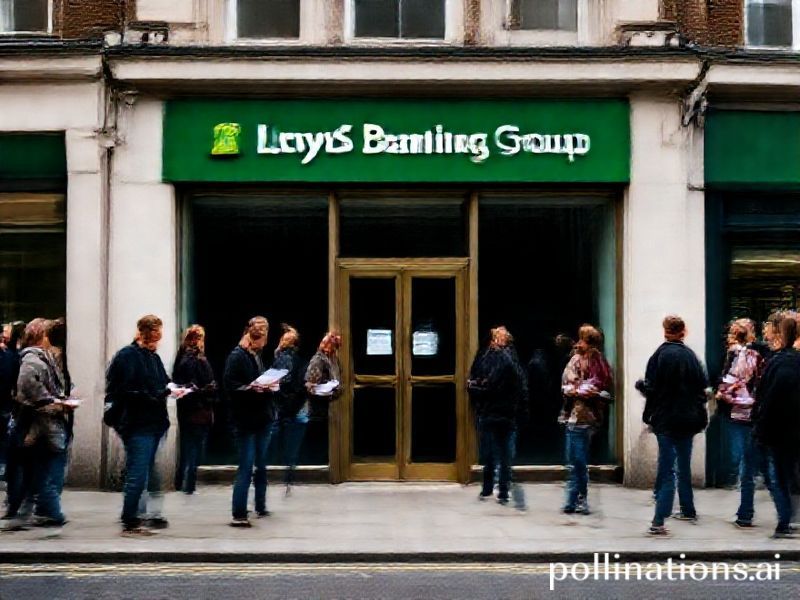
Lloyds Banking Group Closures: The Digital Revolution Leaves High Streets in the Dust
# **Lloyds Banking Group Closures: When ATMs Outnumber Humans in the High Street**
In a world where digital nomads and crypto bros are the new rockstars, traditional banks are starting to look as outdated as dial-up internet. And Lloyds Banking Group, the UK’s biggest high street bank, is leading the charge in the great bank branch exodus. But why is this trending globally, and what does it mean for your local high street?
## **The Great Bank Branch Vanishing Act**
Lloyds Banking Group, which includes Lloyds Bank, Halifax, and Bank of Scotland, has announced plans to close 48 branches, adding to the 400 branches it has already shut down since 2018. That’s a lot of empty buildings, and a lot of confused pensioners wondering where their local branch went.
But why is this happening? Well, it’s not just Lloyds—banks worldwide are shutting down physical locations at an alarming rate. The digital revolution has turned our wallets into smartphones, and our bank tellers into chatbots. Who needs a human when you’ve got an app that can deposit a cheque with the snap of a photo? (Spoiler: No one, apparently.)
## **Cultural Context: The Rise of the Digital Nomad**
We’re living in an era where financial transactions happen faster than you can say “blockchain.” The rise of fintech, mobile banking, and digital wallets has made physical bank branches about as necessary as a fax machine in a TikTok office. Lloyds isn’t just closing branches because they’re feeling generous with the real estate market—they’re responding to a cultural shift.
The pandemic accelerated this trend, turning us all into digital banking pros. Who needs to wait in line when you can transfer money while binge-watching your favorite show? The convenience of digital banking has made physical branches feel like relics of a bygone era, and Lloyds is just the latest to jump on the digital bandwagon.
## **Social Impact: The Human Cost of Digital Convenience**
But here’s the thing: not everyone is thrilled about this digital revolution. While millennials and Gen Z are swiping right on mobile banking, older generations are left scratching their heads. For many, a local bank branch isn’t just a place to deposit a cheque—it’s a community hub, a place to get financial advice, and sometimes, just a place to chat with a human.
The closures also raise concerns about financial inclusion. Rural areas and smaller towns are hit hardest, leaving residents with fewer options for face-to-face banking. And let’s not forget the impact on local economies—empty bank buildings don’t exactly boost property values or attract new businesses.
## **Why This Matters Globally**
Lloyds’ closures are part of a global trend. Banks in the US, Europe, and Asia are all downsizing their physical footprints. This isn’t just a UK problem—it’s a worldwide shift towards a cashless, digital-first future. And while convenience is king, we can’t ignore the social and economic consequences.
The trend also highlights the growing divide between those who embrace technology and those who struggle to keep up. As banks continue to close branches, the question becomes: how do we ensure that no one gets left behind in the digital age?
## **The Bottom Line**
Lloyds Banking Group’s closures are a symptom of a larger cultural and technological shift. While digital banking offers unparalleled convenience, it also comes with trade-offs—namely, the loss of human interaction and the potential for increased financial exclusion.
As we move further into the digital age, it’s crucial to find a balance between innovation and accessibility. Because let’s face it, no one wants to live in a world where the only human interaction you get is from a customer service chatbot named “Dave.”
—