Shredding Stereotypes: Why the Women’s Halfpipe Final Is the Most Important Event of the Olympics
# **Shredding Stereotypes: The Women’s Halfpipe Final That Took the World by Storm**
The internet has been collectively holding its breath, and not just because of the latest TikTok dance trend. The **Women’s Halfpipe Final** at the Winter Olympics has taken the global stage by storm, and it’s not just because of the gravity-defying tricks. This event has become a cultural phenomenon, breaking records, shattering stereotypes, and giving us all a masterclass in how to absolutely crush it—both on and off the slopes.
### **Why Is This Trending Globally?**
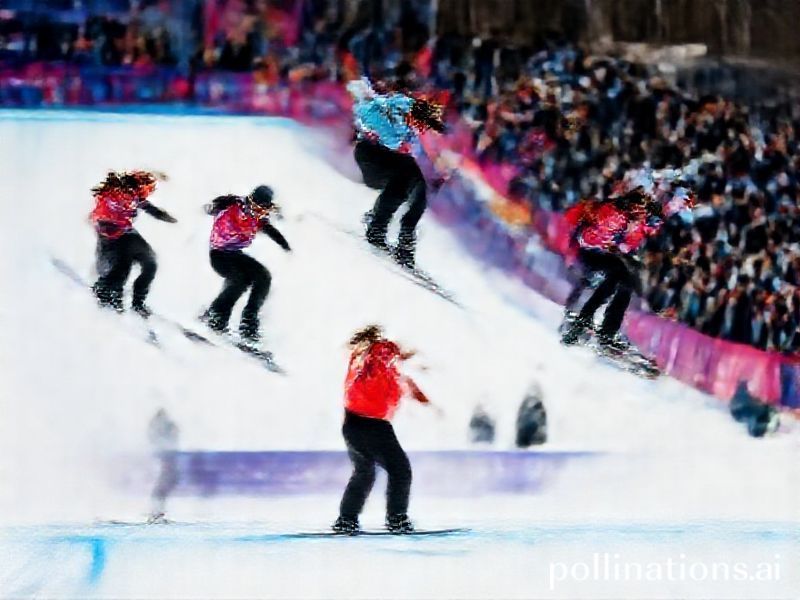
First off, let’s talk about the **athleticism on display**. We’re talking about women launching themselves into the stratosphere, flipping, twisting, and landing with the grace of a swan—except, you know, with snowboards and a halfpipe. The sheer skill and precision required to pull off these tricks have left even the most jaded internet users in awe. Social media has been flooded with clips of riders like **Chloe Kim, Cai Xuetong, and Zhang Zifeng**, who have redefined what’s possible in the sport.
But it’s not just about the tricks. This event has become a **cultural moment** because it represents a shift in how women’s sports are perceived. For years, women’s events have been sidelined, underfunded, and overlooked. But this time, the world is paying attention—and not just because the men’s event was canceled due to weather conditions (though, let’s be real, that didn’t hurt).
### **Cultural Context: Breaking Barriers**
The Women’s Halfpipe Final is part of a larger movement in sports where women are demanding—and receiving—equal recognition. From the **U.S. Women’s Soccer Team** fighting for pay equity to **Simone Biles** redefining gymnastics, female athletes are no longer just participants; they’re **dominating their fields** and reshaping the narrative around women in sports.
In snowboarding, women have long been at the forefront of innovation. Riders like **Shaun White** (yes, we know he’s a man, but he’s part of the culture) have paved the way, but it’s the women who are now **leading the charge** in terms of creativity and athleticism. The halfpipe is no longer just a stage for men to showcase their skills—it’s a platform for women to redefine what’s possible.
### **Social Impact: More Than Just a Competition**
The impact of this event goes beyond the medal count. It’s about **inspiration, representation, and breaking down barriers**. Young girls watching these athletes compete are seeing **role models** who look like them, who are just as skilled, just as daring, and just as deserving of the spotlight.
And let’s not forget the **internet’s role** in amplifying this moment. Memes, reaction videos, and viral clips have turned the Women’s Halfpipe Final into a **global conversation**. People are talking about it, sharing it, and celebrating it—not just as a sporting event, but as a **cultural milestone**.
### **What Makes This Topic Significant?**
At its core, the Women’s Halfpipe Final is significant because it **challenges the status quo**. It forces us to ask why women’s sports have historically been sidelined and why it’s taken so long for them to receive the recognition they deserve. It’s a reminder that **talent knows no gender**, and that when given the opportunity, women can—and will—**dominate**.
So, as we watch these incredible athletes shred the halfpipe, let’s remember that they’re not just competing for medals. They’re competing for **equality, recognition, and a future where women’s sports are celebrated just as much as men’s**.
And if you’re still not convinced, just watch Chloe Kim’s final run. Trust us, it’s worth it.
—
### **Final Thoughts**
The Women’s Halfpipe Final isn’t just a sporting event—it’s a **movement**. It’s a testament to the power of athleticism, the importance of representation, and the need for equality in sports. As the world continues to watch, one thing is clear: **women are not just participating—they’re leading the charge**.
—