Barcelona vs. Newcastle: A Clash of Football Philosophies
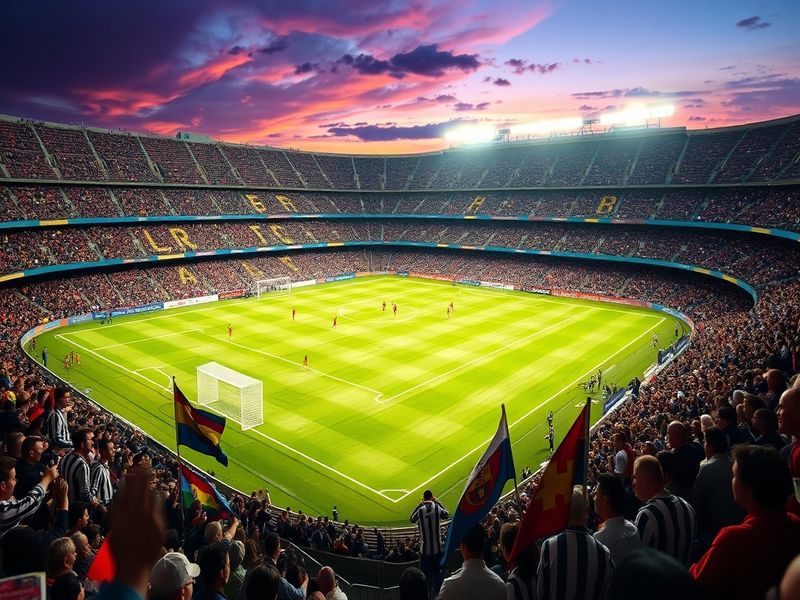
The clash between Barcelona and Newcastle United transcends a simple football match. It represents a collision of two distinct footballing cultures: one steeped in history, tradition, and a philosophy of possession, while the other embraces pragmatism, ambition, and the relentless pursuit of progress. This matchup, though rare in recent years, offers a fascinating lens through which to examine the evolution of the sport on a global scale.
Barcelona, with its roots in the Catalan identity, has long been synonymous with a style of play that prioritizes technical mastery and collective intelligence. The club’s famous “tiki-taka” system, popularized under Pep Guardiola, became a global benchmark for how football could be played with elegance and purpose. Meanwhile, Newcastle United, a club with a rich industrial heritage, has traditionally been defined by its resilience, physicality, and underdog spirit. The contrast between these two approaches reflects broader themes in modern football: tradition versus innovation, artistry versus pragmatism, and the tension between local identity and global ambition.
The Global Appeal of Barcelona’s Footballing Legacy
Barcelona’s influence extends far beyond the borders of Catalonia. The club’s philosophy is often seen as a reflection of Catalan values—community, creativity, and a sense of collective identity. This has resonated deeply with fans worldwide, particularly in regions where football is more than just a sport; it’s a cultural and political statement. The club’s commitment to developing homegrown talent through La Masia, its famed youth academy, has further cemented its reputation as a bastion of footballing philosophy.
However, Barcelona’s global appeal isn’t solely rooted in its style of play. The club’s association with figures like Johan Cruyff, Lionel Messi, and more recently, Xavi Hernández and Andrés Iniesta, has turned it into a symbol of footballing excellence. The “Mes Que Un Club” (“More Than a Club”) motto encapsulates this idea, suggesting that Barça is more than just a football team—it’s an institution that embodies the hopes and dreams of its supporters.
In a sport increasingly dominated by financial power, Barcelona’s story stands out as a reminder of what can be achieved through vision and values. Yet, the club’s recent struggles—both financial and competitive—highlight the challenges of maintaining such a philosophy in a landscape where money often dictates success.
Newcastle’s Rise: From Underdog to Premier League Contender
Newcastle United’s journey to the top of English football is a tale of ambition, investment, and transformation. Purchased by Saudi-led owners in 2021, the club has undergone a dramatic shift in fortunes. Under Eddie Howe, Newcastle has transitioned from a team battling relegation to a side challenging for European spots. This resurgence is not just a sporting story; it’s a reflection of the club’s deep connection to its local community and its ability to reinvent itself.
The club’s rise has been met with a mix of admiration and skepticism. Critics argue that Newcastle’s newfound success is largely a result of financial backing rather than organic growth. Yet, the club’s ability to assemble a competitive squad while maintaining its identity—rooted in the working-class ethos of the Northeast of England—has earned it a loyal following. Newcastle’s style of play, often characterized by high pressing and physicality, contrasts sharply with Barcelona’s possession-based approach, underscoring the diversity of tactics in modern football.
Newcastle’s global fanbase has also expanded significantly in recent years. The club’s social media presence, innovative marketing strategies, and commitment to engaging with fans worldwide have helped it carve out a niche in the global football market. This growth mirrors the broader trend of clubs leveraging technology and digital platforms to connect with audiences beyond their traditional geographical boundaries.
The Cultural and Economic Impact of the Matchup
When Barcelona and Newcastle face off, it’s more than just a football match—it’s a cultural exchange. For Barcelona, the game represents an opportunity to showcase its footballing philosophy on a global stage. For Newcastle, it’s a chance to prove that its recent success is not a fluke but a sign of things to come. The clash of these two approaches offers fans a glimpse into the diversity of football and the different ways the sport can be played and experienced.
The economic implications of such matchups are also significant. For Barcelona, revenue from international fixtures is crucial in offsetting financial challenges. For Newcastle, hosting a club of Barcelona’s stature boosts the club’s profile and commercial appeal. Sponsorship deals, merchandise sales, and broadcasting rights all benefit from such high-profile fixtures, highlighting the intersection of sport and business.
From a cultural perspective, the matchup underscores the global nature of football. Barcelona’s global fanbase, known as “culés,” and Newcastle’s passionate supporters, often referred to as the “Toon Army,” represent two distinct footballing communities. Yet, both share a common love for the game, transcending language, geography, and cultural differences. This shared passion is a testament to football’s unique ability to unite people across the world.
What This Matchup Reveals About Modern Football
The Barcelona vs. Newcastle fixture offers several insights into the current state of football. First, it highlights the tension between tradition and innovation. Barcelona’s emphasis on youth development and technical excellence contrasts with Newcastle’s reliance on financial investment and tactical pragmatism. This tension is a microcosm of the broader debates in football about how the game should be played and who it should serve.
Second, the matchup underscores the increasing globalization of football. Clubs like Barcelona and Newcastle are no longer confined to their local or national contexts. They are global brands with supporters, sponsors, and investors from every corner of the world. This globalization has brought both opportunities and challenges, from financial disparities to the dilution of local identities.
Finally, the fixture serves as a reminder of football’s power to inspire and unite. Whether it’s the artistry of Barcelona or the grit of Newcastle, football has the ability to evoke emotions and create connections that transcend the pitch. In a world often divided by politics, economics, and culture, football remains a unifying force—a shared language that brings people together.
Conclusion: A Matchup for the Ages
The Barcelona vs. Newcastle clash is more than just a football match; it’s a celebration of the sport’s diversity and global appeal. It’s a reminder that football is not a monolith but a tapestry of different styles, cultures, and philosophies. As the game continues to evolve, fixtures like this one will remain vital in shaping its future.
For fans, it’s an opportunity to witness two distinct footballing worlds collide. For the clubs, it’s a chance to reinforce their identities and ambitions. And for the sport itself, it’s a testament to the enduring power of football to captivate, inspire, and unite.
As the saying goes, “Football is the beautiful game.” And in the case of Barcelona vs. Newcastle, it’s a beauty defined by contrast, competition, and the shared love of the sport.