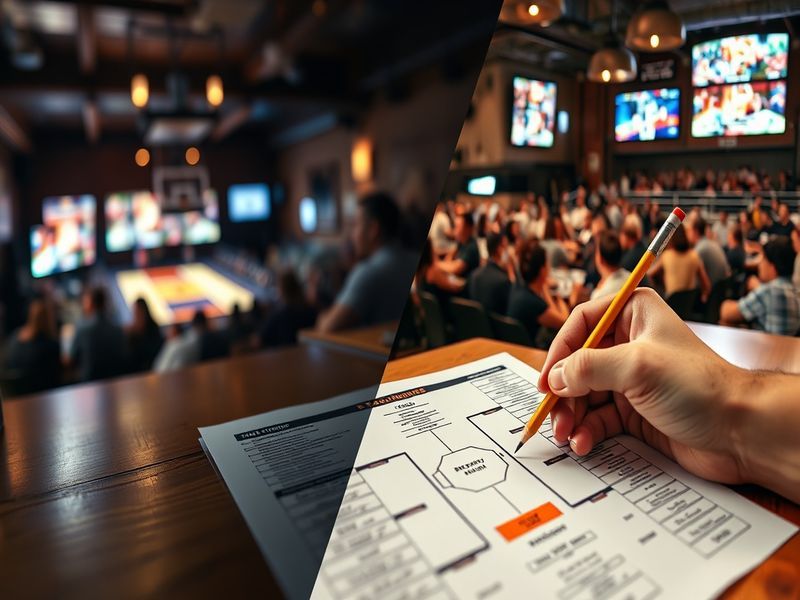
The ritual begins the same way every year. Friends gather around screens, snacks in hand, as they fill out their brackets with hope, strategy, and no small amount of wishful thinking. Bracket predictions have become a global pastime, a shared ritual that transcends sports, gaming, and even corporate forecasting. Whether it’s the NCAA Men’s Basketball Tournament, fantasy football leagues, or esports championships, the act of predicting outcomes has evolved into a cultural phenomenon—one that blends analytics with human intuition.
This phenomenon isn’t confined to a single nation or sport. From the United States to Europe, and from Asia to South America, bracket predictions have embedded themselves into the fabric of competitive culture. They offer a structured way to engage with uncertainty, turning randomness into a game of skill and chance. But why do people invest so much emotion and effort into these predictions? And how have they shaped the way we consume competition?
The Psychology Behind Bracket Predictions
At its core, bracket prediction is a test of human judgment under pressure. Psychologists suggest that people are drawn to these challenges because they satisfy a fundamental desire: the illusion of control. In a world filled with unpredictable outcomes, filling out a bracket gives participants the feeling that they can influence the future—even if only symbolically.
This psychological pull is amplified by the social nature of predictions. Bragging rights matter. A perfect bracket in March Madness becomes a badge of honor, a conversation starter that lasts until the next tournament. Online communities and office pools turn predictions into communal experiences, where competition and camaraderie intertwine. The more people participate, the more the bracket becomes a shared language, a way to bond over mutual triumphs and failures.
Yet, the psychology goes deeper. Behavioral studies show that people tend to overestimate their predictive abilities, especially when outcomes are uncertain. This “illusion of skill” leads participants to believe their choices are more informed than they actually are. The result? A cycle of hope and disappointment that keeps people coming back year after year.
A Global Phenomenon: Where Brackets Rule
While bracket predictions are most famously associated with American college basketball, their influence stretches far beyond U.S. borders. In Europe, fantasy football (soccer) leagues dominate the prediction landscape. Fans across the continent spend hours analyzing player stats, injuries, and team form to build their dream squads. The English Premier League, with its global following, sees millions of brackets filled out each season, creating a year-round cycle of anticipation.
In Asia, esports tournaments like the League of Legends World Championship have spawned a new generation of bracket enthusiasts. Millions of fans log in not just to watch, but to predict match outcomes, often using complex statistical models and community insights. The rise of mobile gaming has further democratized prediction culture, making it accessible to younger audiences who may never have engaged with traditional sports.
Even in regions where sports aren’t the primary focus, bracket predictions have found a home. In India, the Indian Premier League (IPL) cricket tournament sees fans filling out brackets with the same fervor as basketball fans in the U.S. Similarly, in Australia, the Big Bash League in cricket and the AFL (Australian Football League) generate massive bracket engagement during their seasons. The format is adaptable, making it easy to apply to almost any competitive scenario.
How Different Cultures Approach Predictions
The way people approach bracket predictions varies widely by culture. In the U.S., bracketology is often data-driven, with fans poring over seeding, win-loss records, and even historical trends. March Madness, in particular, has turned prediction into an art form, with analysts releasing mock brackets months in advance. The NCAA even hosts its own bracket challenge, complete with interactive tools and expert picks.
In contrast, European fantasy football relies heavily on gut feeling and long-term knowledge of players. Fans often choose teams based on loyalty or personal preferences, making the process as much about identity as it is about statistics. This emotional investment adds another layer to the prediction experience, where fandom and forecasting become inseparable.
In South America, bracket predictions take on a communal feel. Neighborhoods gather to watch matches together, and predictions are often discussed in groups rather than individually. The social aspect is paramount, with bragging rights extending beyond the digital realm into real-world interactions. This communal approach highlights how bracket predictions can shape local cultures and social dynamics.
The Science and Art of Making Predictions
Behind every bracket prediction lies a mix of science and intuition. Data analysts and statisticians have long sought to quantify the unpredictable, developing algorithms that crunch numbers to forecast outcomes. Tools like Sports Insights and ESPN’s BPI (Basketball Power Index) provide metrics that help fans make more informed choices. These models consider factors like player efficiency, team chemistry, and even travel fatigue to assign probabilities to each game.
Yet, for all their sophistication, these tools can’t account for the human element—the momentum shifts, the underdog stories, or the sheer unpredictability of live competition. This is where the art of prediction comes in. Experienced bracketologists often rely on intangibles: a team’s recent performance, a coach’s track record in close games, or even the psychological state of a star player. These factors defy quantification but play a crucial role in shaping outcomes.
Some predictors take a hybrid approach, blending data with gut instinct. They might start with statistical models but adjust their picks based on personal observations or trends they’ve noticed over the years. This method acknowledges that while data provides a foundation, the unpredictable nature of sports and games keeps the process dynamic and engaging.
The Business of Brackets
Bracket predictions aren’t just a hobby—they’re a multi-billion-dollar industry. The NCAA Tournament alone generates over $1 billion annually in advertising revenue, much of it tied to the hype around bracket challenges. Networks like CBS and Turner Sports air hours of analysis leading up to the tournament, while platforms like Yahoo and ESPN offer free bracket challenges to millions of users. The lure of cash prizes and bragging rights has turned prediction into a lucrative ecosystem.
Fantasy sports, too, have become a cornerstone of the sports entertainment industry. Platforms like DraftKings and FanDuel have turned bracket predictions into a daily ritual for millions, with users wagering real money on their picks. The legalization of sports betting in many U.S. states has further blurred the lines between prediction and gambling, creating new opportunities—and controversies—around the practice.
Even esports has embraced the bracket economy. Companies like Riot Games and Valve invest heavily in prediction tools and fantasy leagues, knowing that engaged fans are more likely to consume content, buy merchandise, and support their favorite teams. The rise of blockchain-based prediction markets, where users can bet on outcomes using cryptocurrency, has added another layer of complexity to the industry.
The Dark Side of Bracket Predictions
Despite their popularity, bracket predictions aren’t without criticism. One of the most common concerns is the pressure they place on athletes. In high-stakes tournaments, the weight of public expectations can add to the mental burden of competition. The phenomenon of “bracketology fatigue” has led some to question whether the hype around predictions detracts from the purity of the sport itself.
There’s also the issue of inequality in prediction platforms. While major networks and apps offer free bracket challenges, the rise of paid prediction games and betting platforms has created a divide. Wealthier participants have access to premium tools and insider information, giving them an unfair advantage. This has sparked debates about accessibility and fairness in the world of bracket predictions.
Finally, the emotional toll of predictions shouldn’t be underestimated. Fans often invest significant time and energy into their brackets, only to face disappointment when their picks fall short. For some, this can lead to frustration or even disengagement from the sport altogether. The pressure to “get it right” can turn a fun activity into a source of stress.
Looking Ahead: The Future of Bracket Predictions
As technology advances, the world of bracket predictions is poised for further evolution. Artificial intelligence and machine learning are already being used to refine prediction models, offering fans more accurate forecasts than ever before. Companies like IBM’s Watson have demonstrated the ability to analyze vast amounts of data and identify patterns that human analysts might miss. In the coming years, AI could become a standard tool for even casual predictors.
Virtual and augmented reality are also set to transform the prediction experience. Imagine watching a game through a VR headset while simultaneously seeing real-time AI-generated predictions for the next play. This could turn passive viewing into an interactive, data-driven experience, where fans feel even more connected to the action.
The rise of social media has already changed how predictions are shared and discussed. Platforms like Twitter and Reddit allow fans to debate their picks in real time, creating a global conversation around each game. As these platforms continue to evolve, the social aspect of bracket predictions will likely become even more pronounced, with communities forming around shared interests and rivalries.
Ultimately, bracket predictions are more than just a game—they’re a reflection of human nature. They satisfy our desire for order in a chaotic world, our need for social connection, and our love of competition. Whether it’s a perfect bracket in March or a last-second goal in the World Cup, the thrill of prediction is here to stay.
For now, the ritual remains the same: gather your data, trust your gut, and hope for the best. Because in the end, the most unpredictable element of any bracket is the human heart.