Doomsday: From Ancient Prophecies to Modern Fears
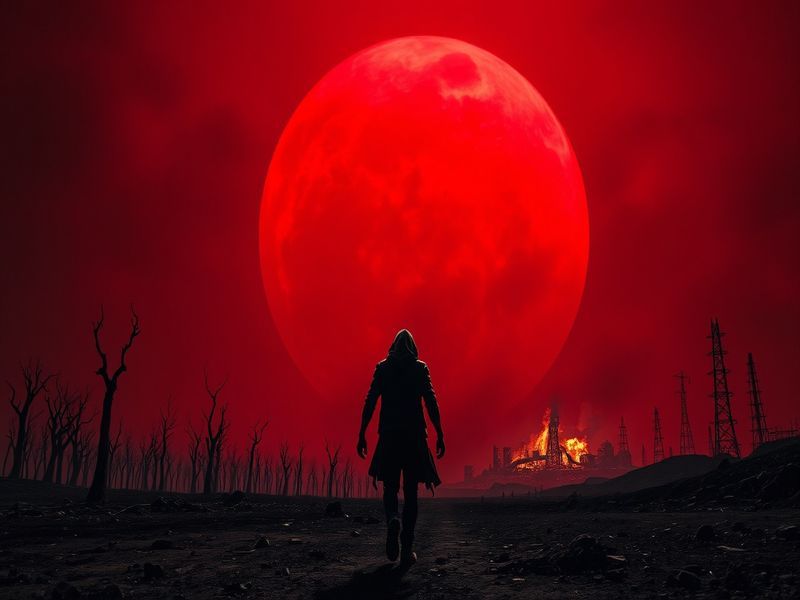
Humanity has long gazed into the future with a mix of curiosity and dread. Doomsday—the idea of an apocalyptic end to civilization—has been a recurring theme across cultures, religions, and eras. These narratives often reflect societal anxieties about power, morality, and the unknown, evolving alongside human history itself.
Today, doomsday fears are no longer confined to religious texts or folklore. Modern threats like climate change, nuclear war, and pandemics have repurposed ancient warnings for a scientific age. The line between myth and measurable risk has blurred, leaving many to wonder: Is doomsday an inevitability, or merely a projection of our deepest uncertainties?
The Psychological Roots of Doomsday Thinking
Psychologists suggest that doomsday beliefs arise from a combination of existential fear and cognitive biases. The human brain is wired to detect patterns, especially those signaling danger. When faced with uncertainty—whether about the future of the planet or personal security—people often turn to apocalyptic narratives as a way to impose order on chaos.
This phenomenon is not new. In ancient Mesopotamia, the Epic of Gilgamesh warned of a great flood sent by the gods to punish humanity. The Mayans, too, had their own cyclical visions of destruction, famously tied to the end of the 5,126-year Long Count calendar in 2012—a date that sparked global speculation (and relief when it passed without incident).
In modern times, doomsday thinking has been amplified by media and technology. Social media algorithms prioritize sensational content, while news cycles amplify threats, creating a feedback loop of fear. Studies have shown that exposure to apocalyptic rhetoric can heighten anxiety, particularly among younger generations who feel increasingly disconnected from traditional institutions.
Religious and Cultural Doomsday Narratives
Religion has been the primary source of doomsday narratives for millennia. The Abrahamic traditions—Judaism, Christianity, and Islam—all feature eschatological prophecies of a final judgment or divine reckoning. In Christianity, the Book of Revelation describes a series of cataclysmic events leading to the Second Coming of Christ. Similarly, Islamic hadith speak of the Day of Judgment, marked by cosmic signs and moral collapse.
Beyond the Abrahamic world, other cultures have their own doomsday stories. In Norse mythology, the Ragnarök describes a battle that leads to the destruction of the gods and the world. Hinduism envisions cycles of creation and dissolution, with the universe periodically dissolving into nothingness before reforming. Even in secular contexts, doomsday myths persist, such as the idea of a technological singularity or artificial intelligence surpassing human control.
- Christian Apocalypticism: The Book of Revelation outlines a sequence of plagues, wars, and divine interventions leading to the end of the world.
- Islamic Eschatology: Prophetic traditions describe signs like the return of Jesus and the rise of the Dajjal (a false messiah) before the Day of Judgment.
- Hindu Cyclical Time: The universe undergoes repeated cycles of creation, preservation, and destruction, with doomsday as a natural phase of renewal.
- Secular Dystopias: Modern doomsday scenarios often revolve around climate collapse, nuclear war, or unchecked AI, reflecting contemporary fears rather than divine judgment.
Modern Threats and the Secularization of Doomsday
While religious doomsday narratives remain influential, the 20th and 21st centuries have introduced new existential risks. The atomic age brought the very real possibility of nuclear annihilation—a fear that defined the Cold War. Today, climate scientists warn of irreversible tipping points that could render large portions of the planet uninhabitable.
These secular doomsdays are not just theoretical. The COVID-19 pandemic demonstrated how a single pathogen could disrupt global systems, from supply chains to public health. Meanwhile, the accelerating climate crisis has led to scenarios like the Hothouse Earth hypothesis, which suggests that even if emissions are reduced, feedback loops could push the planet into an uninhabitable state.
Technology, too, has become a source of doomsday speculation. Artificial intelligence, while transformative, has sparked debates about its potential to surpass human control. Figures like Elon Musk and Nick Bostrom have warned that poorly managed AI could lead to unintended catastrophic consequences. Similarly, biotechnology raises concerns about engineered pandemics or genetic weapons.
The Role of Media and Pop Culture
Doomsday has long been a staple of pop culture, from films like Mad Max to novels like Neuromancer. These stories often serve as cautionary tales, reflecting societal anxieties about the future. In the 1950s and 60s, Cold War fears fueled movies about nuclear war, such as Dr. Strangelove. In the 21st century, climate fiction—cli-fi—has gained traction, with works like The Water Knife painting vivid pictures of water wars and societal collapse.
Media also plays a role in amplifying doomsday fears. Sensationalist headlines and viral social media posts can distort risk perception, making rare events seem imminent. For example, the 2012 Mayan calendar “end of the world” myth was debunked by scholars but still dominated headlines for months. Similarly, climate change deniers and doomsayers alike exploit media cycles to push their narratives.
Yet, not all doomsday narratives are negative. Some apocalyptic stories offer hope, depicting humanity overcoming adversity. Films like Interstellar and Children of Men explore themes of resilience and redemption in the face of collapse. These stories suggest that while doomsday may be inevitable, how we respond to it defines our legacy.
Preparing for the End: Survivalism and Prepper Culture
In response to doomsday fears, a subculture of survivalists and preppers has emerged. These individuals stockpile food, weapons, and supplies in anticipation of a catastrophic event. Survivalist communities often emphasize self-sufficiency, from growing food to building off-grid shelters. Some even engage in tactical training or stockpile gold and ammunition.
The prepper movement has grown alongside online communities, where members share advice on everything from water purification to long-term food storage. While some dismiss survivalists as paranoid, others argue that their practices are a rational response to an uncertain world. Governments, too, have taken note. The U.S. Federal Emergency Management Agency (FEMA) offers guidelines for disaster preparedness, from hurricanes to pandemics.
However, survivalism is not without controversy. Critics argue that the movement fosters isolationism and distrust in institutions. Others point to the environmental impact of hoarding resources or the ethical dilemmas of prioritizing one’s own survival over others. Still, for many, prepper culture is less about fear and more about empowerment—a way to take control in a world where catastrophe feels increasingly plausible.
A Global Perspective: Who Fears Doomsday the Most?
Doomsday fears are not evenly distributed across the globe. Surveys and studies suggest that people in regions facing immediate threats—such as conflict zones or areas vulnerable to climate change—are more likely to express apocalyptic concerns. For example, residents of Pacific island nations, threatened by rising sea levels, often describe doomsday scenarios in terms of literal submersion.
In contrast, countries with stable governments and strong social safety nets tend to view doomsday as a distant or abstract concept. However, even in these places, cultural narratives shape perceptions. In Japan, for instance, the Fukushima disaster in 2011 reignited fears of nuclear annihilation, echoing the trauma of Hiroshima and Nagasaki.
Religion also plays a significant role in shaping doomsday fears. In the United States, where evangelical Christianity is influential, apocalyptic beliefs are more widespread than in secular Europe. Meanwhile, in India, Hindu eschatological traditions coexist with modern concerns about environmental degradation and political instability.
Ultimately, doomsday fears reflect a universal human experience: the tension between hope and despair. Whether rooted in ancient prophecy or modern science, these narratives reveal our deepest vulnerabilities—and our enduring capacity to imagine a future, however uncertain.
Conclusion: Doomsday as a Mirror of Humanity
Doomsday is more than a prediction or a myth—it is a reflection of who we are and what we fear. From the biblical Four Horsemen of the Apocalypse to the modern specter of climate collapse, these narratives evolve with us, adapting to new threats and anxieties. They serve as warnings, as moral lessons, and sometimes as distractions from the mundane.
In a world where the future feels increasingly precarious, doomsday stories offer a way to confront the unknown. Whether through religion, science, or pop culture, we grapple with the idea of an ending to make sense of our place in the world. And perhaps, in doing so, we find not just fear, but a strange kind of clarity.
For those interested in exploring further, cultural analysis and scientific perspectives on existential risks provide deeper insights into how humanity confronts its own mortality.