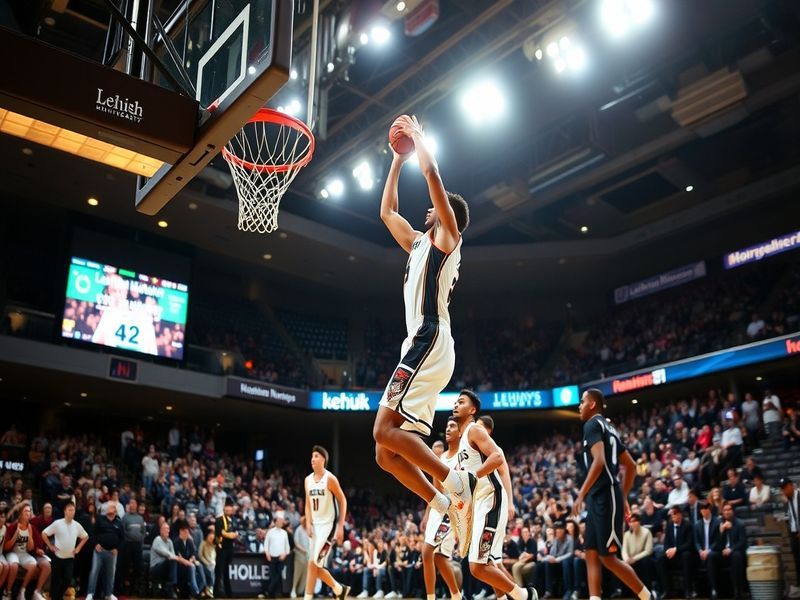
Lehigh University’s basketball program has long stood as a testament to perseverance, strategic adaptation, and the power of community within college athletics. While the Mountain Hawks may not always dominate national headlines, their consistent presence in the conversation reflects a culture of excellence that extends beyond mere wins and losses. The program’s history is marked by pivotal moments that have shaped its identity, from dramatic upsets to the steady development of talent that transcends the court.
The Legacy of Lehigh Basketball: From Humble Beginnings to Modern Relevance
Founded in 1891, Lehigh basketball predates many of its current rivals, yet its early years were defined by modest resources and limited visibility. The program’s first decades were spent carving out a niche in the competitive landscape of college basketball, often overshadowed by larger programs with deeper pockets. However, it was during the mid-20th century that Lehigh began to establish itself as a regional powerhouse, particularly under the leadership of coaches who prioritized fundamentals and player development.
The 1980s and 1990s marked a turning point. With an increased focus on recruiting and a commitment to fostering a strong team culture, Lehigh became a consistent contender in the East Coast Conference and later the Patriot League. The program’s ability to punch above its weight class became evident during this era, setting the stage for the breakthrough moments that would follow.
A Defining Era: The 2010s and the Cinderella Story
The most pivotal chapter in Lehigh’s recent history unfolded in 2012, when the men’s basketball team achieved an improbable upset over Duke University in the NCAA Tournament’s opening round. The 75-70 victory, secured on a last-second layup by CJ McCollum, was more than a statistical anomaly—it was a cultural moment. The win shattered the perception of mid-major programs as mere underdogs, proving that preparation, execution, and belief could overcome even the most formidable opponents.
McCollum’s emergence as a first-round NBA draft pick further elevated the program’s profile, drawing attention to Lehigh’s ability to develop NBA-level talent. Since then, the Mountain Hawks have continued to build on that momentum, with multiple NCAA Tournament appearances and a reputation for producing players who thrive in high-pressure environments. The 2010s also saw the women’s team carve out its own legacy, with several postseason berths and a growing fan base that reflects the program’s commitment to gender equity in athletics.
Cultural Impact: The Role of Basketball in Lehigh’s Identity
Basketball at Lehigh is more than a sport—it’s a unifying force. The university’s relatively small student body and tight-knit alumni network create an environment where games become communal experiences. Tailgates, pep rallies, and post-game gatherings foster a sense of belonging that extends far beyond the court. This culture is intentionally cultivated by coaches and administrators who recognize that the emotional investment of fans is just as critical as the performance of players.
The program’s success has also had tangible benefits for Lehigh University as a whole. Applications from prospective students often cite the basketball team’s reputation as a factor in their decision-making process, and the visibility generated by postseason runs has strengthened the university’s brand. In an era where college athletics are increasingly scrutinized for their commercialization, Lehigh’s approach remains rooted in authenticity—a balance of ambition and humility that resonates with fans and recruits alike.
Key Factors Behind Lehigh’s Sustained Success
The Mountain Hawks’ ability to remain competitive year after year can be attributed to several core principles:
- Player Development: Lehigh prioritizes the growth of its athletes, emphasizing skill refinement, mental toughness, and leadership. Coaches are known for their hands-on approach, often working closely with players to maximize their potential.
- Recruiting Strategy: The program targets student-athletes who align with its culture—players who are coachable, academically driven, and hungry for competition. This selective approach ensures a cohesive roster year after year.
- Community Engagement: From youth clinics to alumni events, Lehigh basketball fosters deep connections within the community. These efforts not only strengthen fan loyalty but also create pipelines for future talent.
- Adaptability: The coaching staff is adept at adjusting strategies based on personnel and opponents. Whether implementing a fast-paced offense or a stifling defense, Lehigh’s flexibility keeps rivals guessing.
- Academic Excellence: Lehigh’s emphasis on education ensures that players are prepared for life beyond basketball. This dual focus on athletics and academics has yielded high graduation rates and successful post-collegiate careers.
Looking Ahead: The Future of Lehigh Basketball
The program’s trajectory suggests continued upward momentum. With a new generation of recruits poised to make their mark and a coaching staff committed to innovation, Lehigh is well-positioned to build on its recent successes. The introduction of advanced analytics and technology in training regimens reflects the program’s willingness to evolve, ensuring that it remains relevant in an ever-changing landscape.
Off the court, Lehigh basketball is also embracing broader trends in college athletics. Sustainability initiatives, mental health resources for athletes, and efforts to enhance diversity and inclusion are becoming integral parts of the program’s ethos. These changes underscore a commitment to progress that aligns with the values of the student body and the institution as a whole.
Broader Implications for Mid-Major Programs
Lehigh’s story offers valuable lessons for other mid-major programs navigating the complexities of college basketball. In an era dominated by powerhouse conferences and billion-dollar television deals, programs like Lehigh demonstrate that success is not solely measured by revenue or exposure. Instead, it is defined by the ability to cultivate a winning culture, foster genuine connections with fans, and produce athletes who excel both on and off the court.
For smaller schools aspiring to compete at the highest levels, Lehigh serves as a blueprint. The program’s resilience in the face of financial disparities and scheduling challenges highlights the importance of strategic planning and resourcefulness. It also underscores the role of basketball as a vehicle for institutional pride—a way to put a university on the map and create lasting memories for its community.
As Lehigh basketball continues to evolve, its journey will be watched closely by fans, analysts, and fellow programs alike. The Mountain Hawks’ ability to balance tradition with innovation may well determine whether they can ascend to even greater heights in the coming years. One thing is certain: their story is far from over.
For fans eager to stay updated on Lehigh’s latest developments, Dave’s Locker’s basketball coverage offers in-depth analysis, game recaps, and exclusive insights. Additionally, those interested in exploring the broader landscape of college sports can visit Dave’s Locker’s sports section for more content.
Conclusion: More Than Just a Team
Lehigh basketball represents the essence of what college athletics should aspire to be—a blend of competition, camaraderie, and character-building. While the program’s achievements on the court are noteworthy, its true impact lies in the lives it touches and the traditions it upholds. As Lehigh continues to write its story, one thing remains clear: the Mountain Hawks are more than just a team. They are a community, a source of pride, and a testament to the enduring power of sport.