MacDill AFB: America’s Strategic Anchor in a Shifting Global Landscape
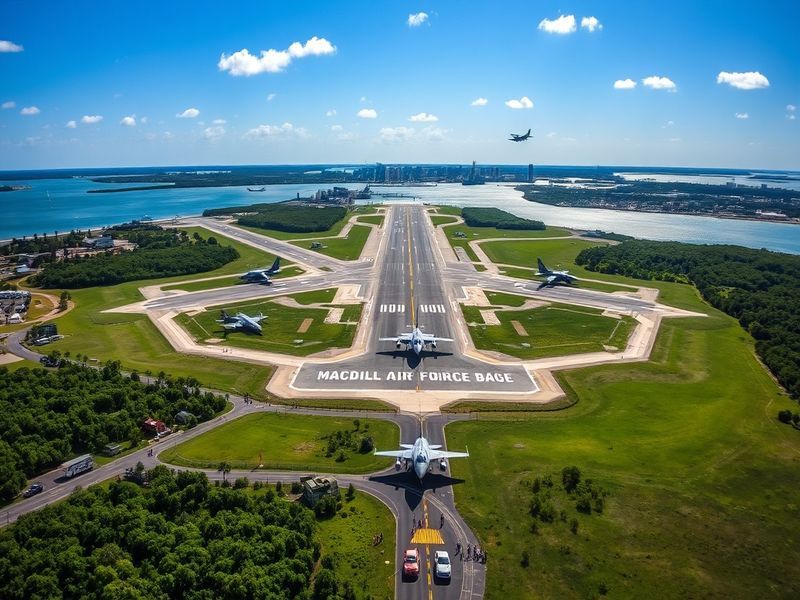
Tucked along the emerald coastline of Tampa Bay, MacDill Air Force Base stands not just as a military installation, but as a cornerstone of U.S. global defense strategy. Commissioned in 1941 as a key training site during World War II, the base has evolved into one of the most strategically vital installations in the Department of Defense’s global network. With over 80 years of operational history, MacDill AFB has quietly shaped American military presence, international alliances, and even cultural exchanges in ways that extend far beyond its runways and barracks.
Today, the base plays a dual role: it serves as headquarters for U.S. Central Command (CENTCOM) and U.S. Special Operations Command (SOCOM), two of the most influential military bodies in the world. This positioning places MacDill at the heart of U.S. responses to crises across the Middle East, Africa, and South Asia. But its influence is not confined to geopolitics. From hosting international defense dialogues to supporting humanitarian missions, MacDill AFB reflects the complex interplay between military power, diplomacy, and global culture.
The Base’s Strategic Evolution: From WWII to 21st Century Security
Founded as the Southeast Air Corps Training Center, MacDill AFB began as a training ground for thousands of pilots destined for combat in Europe and the Pacific. After the war, the base transitioned into a Strategic Air Command hub during the Cold War, serving as home to B-47 Stratojet bombers. Though its mission shifted with the times, its core function—projecting American airpower—remained constant.
By the 1980s, MacDill had become the nerve center for U.S. military operations in the Middle East. The 1990 Gulf War saw the base serve as a critical staging and logistics hub. In the post-9/11 era, MacDill’s role expanded further. The establishment of CENTCOM and SOCOM headquarters in 2002 and 2007, respectively, transformed the base into the operational brain of America’s counterterrorism and regional security efforts.
This transformation wasn’t just logistical—it was cultural. The influx of servicemembers, diplomats, and allied partners turned MacDill into a microcosm of global defense cooperation. Officers from over 30 allied nations have trained or served alongside U.S. personnel at MacDill, fostering relationships that extend beyond the base’s gates. These connections influence everything from joint military exercises to international policy coordination.
Cultural and Community Impact: More Than Just a Military Hub
While MacDill AFB’s global role is undeniable, its presence is deeply felt in the Tampa Bay region. The base employs over 15,000 military and civilian personnel and contributes billions to the local economy annually. But its cultural footprint is equally significant.
The base hosts numerous community events, from air shows attracting thousands of spectators to educational programs for local students. The annual MacDill Air Fest, for example, draws aviation enthusiasts from across the country, blending military tradition with public engagement. These events reinforce the base’s role as both a guardian of national security and a civic partner.
MacDill also serves as a bridge between military and civilian life. Spouses of service members often work in local businesses, while veterans transitioning to civilian careers find support through programs like the Tampa Bay Veterans Alliance. The base’s presence has shaped the identity of Tampa itself, a city that embraces its military heritage while evolving into a diverse, cosmopolitan hub.
Moreover, MacDill’s global operations have introduced international perspectives to the region. Diplomats, contractors, and allied officers stationed at the base bring with them customs, cuisines, and languages from around the world. This cultural exchange enriches the local community, making Tampa Bay a more globally connected place.
Global Operations and the Future of Defense
Today, MacDill AFB is at the forefront of some of the most pressing challenges in modern defense. As U.S. military strategy shifts toward great-power competition with China and Russia, the base’s role in CENTCOM and SOCOM becomes even more critical. Operations in the Middle East continue, but attention is increasingly focused on the Indo-Pacific and Eastern Europe.
The base’s leadership has emphasized innovation, investing in cybersecurity, artificial intelligence, and unmanned systems. These advancements are not just technological—they represent a cultural shift within the military, one that values adaptability and forward-thinking problem-solving.
MacDill is also a key player in humanitarian missions. When disasters strike—whether hurricanes in the Caribbean or earthquakes in Turkey—the base often serves as a staging ground for relief efforts. These operations highlight the dual nature of MacDill’s mission: defending the nation while supporting global stability.
Looking ahead, the base faces both opportunities and challenges. As climate change intensifies, MacDill’s coastal location makes it vulnerable to rising sea levels and stronger storms. The Air Force has invested in resilience projects, from flood barriers to renewable energy initiatives, to ensure the base remains operational for decades to come.
Why MacDill Matters Beyond the Battlefield
MacDill AFB’s significance extends well beyond its military functions. It is a symbol of American strategic reach, a cultural crossroads, and a testament to the enduring partnership between the armed forces and local communities. In an era of rapid geopolitical change, the base remains a steady force—one that adapts, innovates, and connects.
It also serves as a reminder of the human dimension behind global defense. The servicemembers, families, and civilians who call MacDill home are part of a larger story—one of service, resilience, and global engagement. Their work ensures that MacDill remains not just a base, but a vital link in America’s worldwide network.
As the world grows more complex, MacDill AFB stands ready to meet the challenges of the future. Whether through joint military exercises, humanitarian aid, or technological innovation, the base continues to shape the global landscape in ways both seen and unseen.
For those interested in exploring the intersection of military strategy and cultural exchange, MacDill offers a compelling case study. And for residents of Tampa Bay, it is a source of pride, identity, and opportunity. The base is more than a military installation—it is a living, evolving institution that reflects the values and ambitions of the United States and its allies.
To learn more about how military installations shape global culture and defense, visit our News section for ongoing coverage of military and geopolitical developments. For a deeper look at the intersection of technology and defense, explore our Technology category.