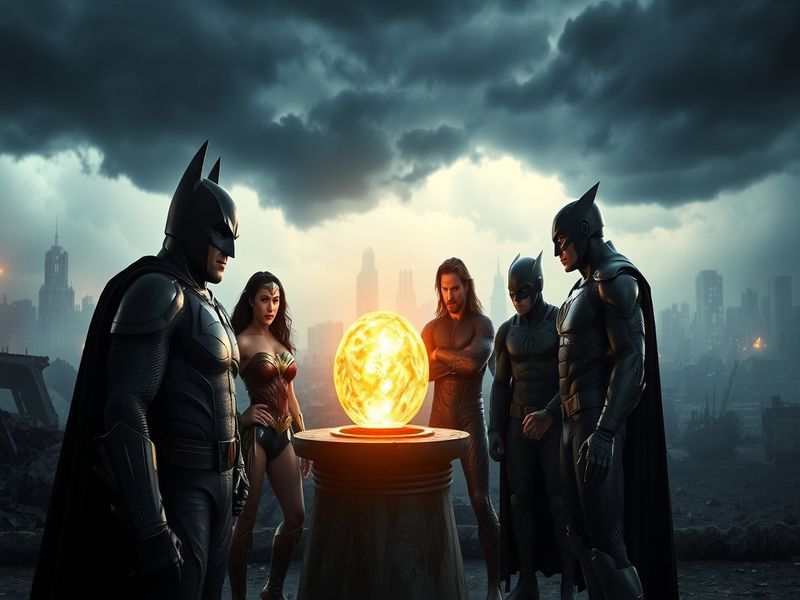
When Zack Snyder’s Justice League premiered on HBO Max in March 2021, it wasn’t just another superhero film—it was a cinematic event years in the making. Originally intended as a 2017 theatrical release under Warner Bros., the project evolved into a director’s cut that redefined fan expectations, studio strategies, and the future of DC’s cinematic universe. Nearly four hours long and meticulously reworked by Snyder himself, the film stands as a testament to perseverance, fan power, and the enduring appeal of the DC Universe’s most iconic heroes.
The road to Justice League’s release was anything but smooth. After Snyder stepped away from the project following the tragic loss of his daughter in 2017, Joss Whedon was brought in to reshoot substantial portions, resulting in a lighter, more comedic tone that alienated some fans. When the final cut was released without Snyder’s involvement, a passionate campaign—#ReleaseTheSnyderCut—began, demanding Warner Bros. to honor the original vision. The studio’s eventual capitulation not only delivered the film but also signaled a shift in how studios respond to fan demands in the streaming era.
The Long Road to Completion
The story of Justice League is as much about the film itself as it is about the cultural moment that brought it to life. Development began in 2014 as part of Warner Bros.’ push to create a connected DC Universe, with Snyder attached to direct after the success of Man of Steel. The original cut, clocking in at approximately 220 minutes, was reportedly reduced to 120 minutes for theatrical release, with Whedon overseeing reshoots to align with the lighter tone of his Avengers-style approach. The resulting film underperformed critically and commercially, leaving many fans unsatisfied.
The fan campaign to release Snyder’s original cut gained momentum in 2020, fueled by the rise of streaming platforms and the growing influence of online communities. Warner Bros. ultimately agreed to greenlight Snyder’s version for HBO Max, marking one of the most significant concessions by a major studio to fan demand in history. The final product, while still a product of collaborative filmmaking, restored Snyder’s darker, more mythic vision—complete with expanded character arcs, additional world-building, and a tone that aligned more closely with his earlier DC films.
Key Differences Between Cuts
- Runtime: The theatrical version ran 120 minutes; Snyder’s cut expands to 242 minutes.
- Tone: Whedon’s version leaned into humor and quippy dialogue; Snyder’s emphasizes pathos and gravitas.
- Character Development: Victor Stone’s arc is significantly expanded, as is Barry Allen’s role in the narrative.
- World-Building: Additional scenes flesh out the Amazonian history, Atlantean politics, and Steppenwolf’s backstory.
- Visual Style: Snyder’s cut restores his signature use of desaturated colors and slow-burn cinematography.
Why This Version Matters for DC’s Future
Zack Snyder’s Justice League isn’t just a director’s cut—it’s a blueprint for how DC can reconcile its fractured cinematic identity. For years, the studio has struggled to define its tone, oscillating between the brooding Batman v Superman: Dawn of Justice and the cheerful Suicide Squad. Snyder’s vision offers a middle path: a story that respects the mythic weight of these characters while still allowing room for heroism and hope. The film’s success has emboldened fans to demand more director-driven projects, particularly in an era where studio interference is common.
The implications extend beyond DC. Warner Bros.’ decision to release Snyder’s cut reflects a broader trend in Hollywood, where streaming platforms and direct-to-consumer strategies are reshaping how films are distributed. HBO Max’s investment in a four-hour film—one that prioritizes narrative depth over commercial appeal—signals a willingness to cater to niche audiences in a way that traditional theatrical releases rarely do. This could pave the way for more experimental or auteur-driven projects in the future, particularly as studios seek to differentiate their streaming services.
A New Era for Fan Engagement
The #ReleaseTheSnyderCut movement was more than just a hashtag—it was a cultural phenomenon that demonstrated the power of organized fandom. Fans leveraged social media, petitions, and even real-world activism to push for a version of the film they believed in. This level of engagement has forced studios to reconsider their approach to franchise filmmaking. In an age where fan theories, memes, and online discourse shape the success of blockbusters, the industry can no longer ignore the voices of its most dedicated audiences.
For DC specifically, the release of Snyder’s cut has reignited conversations about the future of its cinematic universe. While James Gunn and Peter Safran have since taken the reins to reboot the franchise with DCU, Snyder’s influence lingers. The expanded universe he envisioned—with films like Armageddon 2023 and a potential Justice League: Dark—could still see the light of day in some form, whether through animated projects, comics, or even future live-action films. The success of Snyder’s version has proven that there’s an appetite for his vision, and Warner Bros. would be wise to explore it further.
Final Thoughts: A Legacy Beyond the Screen
Zack Snyder’s Justice League is more than a movie—it’s a cultural artifact that reflects the evolving relationship between creators, studios, and audiences. It proves that fan demand can shape corporate decisions, that director-driven visions still hold weight, and that audiences crave depth and complexity in their blockbusters. Whether it’s the definitive version of the film remains a matter of debate, but its impact on DC’s future—and on Hollywood at large—is undeniable.
For fans of Snyder’s work, the release of Justice League is a vindication. For DC, it’s an opportunity to rebuild with a clearer sense of identity. And for the industry, it’s a reminder that the most powerful stories are often the ones that resonate the deepest with those who love them.
For more on DC’s cinematic universe and its evolving landscape, explore our Entertainment and Analysis sections.