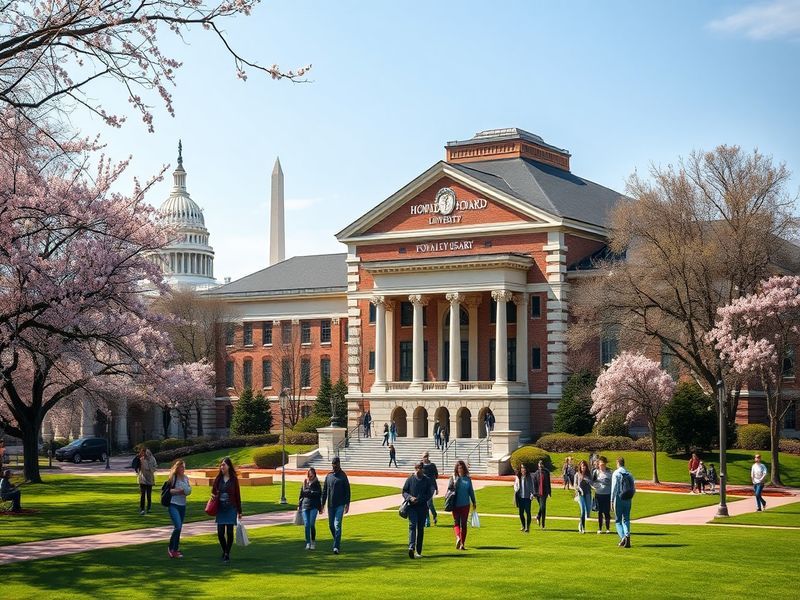
Nestled in the heart of Northwest Washington, D.C., Howard University stands as a beacon of academic excellence and cultural heritage. Founded in 1867, this historic institution has long been a cornerstone of education for African American students and a symbol of resilience in the face of adversity. But its significance extends far beyond its campus borders, influencing global conversations about race, education, and social justice.
Howard University is located in the vibrant neighborhood of LeDroit Park, just north of the U.S. Capitol. Its address is 2400 6th Street NW, Washington, DC 20059. The campus spans 256 acres, blending historic red-brick buildings with modern facilities. This prime location places it within walking distance of major landmarks like the National Mall, the White House, and the Smithsonian museums, offering students unparalleled access to cultural and political hubs.
The Historical Significance of Howard University’s Location
Howard’s position in Washington, D.C., was no accident. The university was established by an act of Congress and named after General Oliver Otis Howard, a Civil War hero and commissioner of the Freedmen’s Bureau. Its location was strategic—chosen to provide education to newly emancipated African Americans during Reconstruction. Over time, Howard evolved into a premier institution, often referred to as “The Mecca” for its role in nurturing Black intellectualism and leadership.
The university’s proximity to the nation’s capital has also shaped its identity. Students and faculty have historically engaged with policymakers, activists, and cultural leaders, amplifying Howard’s influence. Figures like Toni Morrison, Thurgood Marshall, and Kamala Harris have walked its halls, cementing its legacy as a launchpad for change.
Howard’s Role in Global and Local Narratives
While Howard is deeply rooted in Washington, D.C., its impact resonates globally. The university’s commitment to international education is evident through partnerships with institutions worldwide. Programs like the Ralph J. Bunche International Affairs Center prepare students for careers in diplomacy, human rights, and global development. Howard’s location in D.C. provides a natural gateway for students to engage with international organizations, including the World Bank and the United Nations.
Locally, Howard remains a cultural anchor. The annual Homecoming celebrations draw thousands, blending academic pride with musical performances and parades. The university’s cultural festivals, such as the Bison Weekend, showcase African American heritage through art, music, and food. In a city known for its political power, Howard adds a layer of intellectual and creative energy, challenging the status quo and fostering dialogue.
Navigating Howard University’s Campus and Surroundings
Howard’s campus is a blend of history and modernity. The Founders Library, a National Historic Landmark, stands as a testament to the university’s enduring legacy. Meanwhile, the Louis Stokes Health Sciences Library reflects its commitment to cutting-edge research. The campus is also home to the Howard University Gallery of Art, which houses over 4,000 works, including pieces by Romare Bearden and Elizabeth Catlett.
Beyond the campus gates, LeDroit Park offers a mix of historic charm and urban energy. The neighborhood is known for its Victorian row houses and tree-lined streets, creating a picturesque setting for students. Nearby, the U Street Corridor—once the heart of Black Washington—is now a thriving hub for dining, nightlife, and music. Venues like Ben’s Chili Bowl and the Lincoln Theatre add to the area’s cultural richness, making Howard’s location both academically and socially dynamic.
Howard’s Influence on Education and Activism
Howard University has long been a training ground for activists and leaders. The Student Nonviolent Coordinating Committee (SNCC), a pivotal organization in the Civil Rights Movement, was founded at Howard in 1960. Today, the university continues to foster activism through initiatives like the Institute for Politics and International Affairs. Students engage in community service, voter registration drives, and social justice campaigns, ensuring that Howard’s legacy of activism endures.
The university’s academic programs also reflect its global perspective. The School of Business, ranked among the top historically Black colleges, offers programs in entrepreneurship and finance. The College of Medicine is a leader in research on health disparities, while the School of Law has produced prominent judges and attorneys. Howard’s diverse academic offerings attract students from around the world, creating a melting pot of ideas and cultures.
Howard University in the Broader Context of HBCUs
Howard is part of a larger ecosystem of Historically Black Colleges and Universities (HBCUs), each with its own unique story. There are 107 HBCUs in the U.S., and Howard stands out for its size, prestige, and influence. Other notable institutions include Spelman College in Atlanta and Morehouse College in Georgia, which share Howard’s commitment to Black education and empowerment.
Howard’s global reputation sets it apart. While many HBCUs focus on regional impact, Howard has cultivated an international profile. Its study-abroad programs, partnerships with African universities, and hosting of global conferences attract students and scholars from across the diaspora. This global reach ensures that Howard’s legacy extends far beyond the borders of the United States.
The Future of Howard University in a Changing World
As Howard University approaches its 160th anniversary, it faces both challenges and opportunities. The COVID-19 pandemic accelerated the shift to online learning, forcing the university to rethink its approach to education. Yet, Howard has adapted with resilience, launching initiatives like the Howard Forward campaign to modernize its infrastructure and expand its research capabilities.
In an era marked by racial reckoning and political polarization, Howard’s role as a bastion of critical thought has never been more vital. The university continues to produce leaders who challenge systemic inequities, from the courtroom to the boardroom. Its location in Washington, D.C., ensures that it remains at the forefront of conversations about justice, equity, and progress.
For those seeking to understand where Howard University is, the answer lies not just in its address but in its legacy. It is a place where history is made, where minds are shaped, and where the future is imagined. Whether you’re a prospective student, an alum, or a curious observer, Howard’s story is one of enduring relevance and inspiration.
Why Howard University Matters Today
Howard University’s location in Washington, D.C., is more than a matter of geography—it’s a reflection of its mission. By being in the nation’s capital, Howard ensures that its voice is heard in the corridors of power. Its students and faculty engage with policymakers, testify before Congress, and contribute to national debates on issues like education reform and racial justice.
The university’s influence extends to the arts as well. Howard has produced Pulitzer Prize winners, Grammy-nominated musicians, and award-winning writers. Its alumni network is a testament to the power of education to transform lives and communities. In a world where representation matters, Howard continues to be a leader in diversifying the fields of medicine, law, business, and the arts.
For visitors to Washington, D.C., Howard University offers a unique perspective on the city’s history and culture. The university’s campus is a microcosm of the struggles and triumphs of the African American experience. From the Howard University Charter Day celebrations to the annual Homecoming parade, the university invites the public to engage with its legacy.
Conclusion: A Legacy That Endures
Howard University’s location in Washington, D.C., is a symbol of its enduring commitment to education, activism, and global engagement. From its historic campus to its dynamic neighborhood, Howard is more than just a university—it’s a movement. As it continues to shape the leaders of tomorrow, Howard’s story reminds us of the power of education to drive change and inspire progress.
Whether you’re drawn to its academic programs, its cultural events, or its historical significance, Howard University offers something for everyone. It’s a place where the past meets the present, and where the future is being written every day.