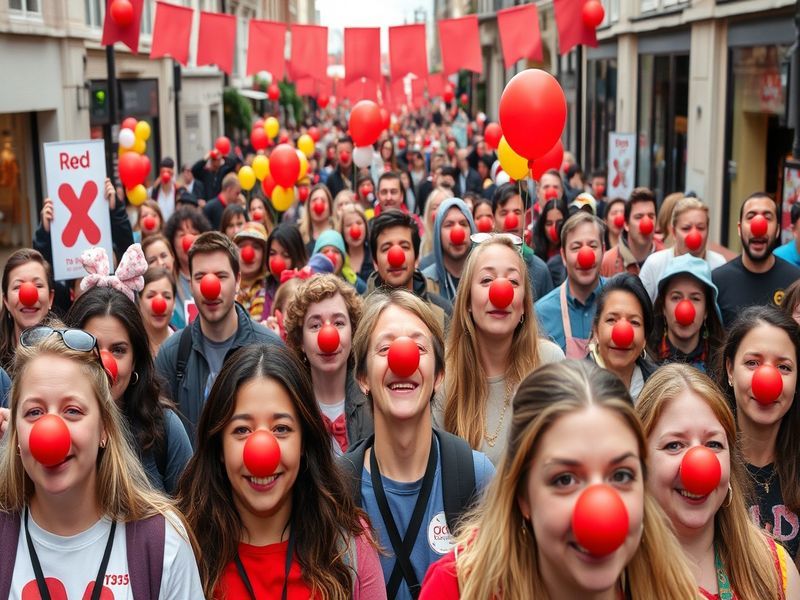
Red Nose Day 2026: A Global Movement for Change
Every two years, Red Nose Day transforms into a worldwide celebration of generosity, creativity, and community action. In 2026, the event will return with even greater ambition, aiming to tackle childhood poverty, education gaps, and healthcare disparities across continents. What began as a British charity initiative has grown into a global phenomenon, uniting people through laughter, fundraising, and shared purpose.
This year’s campaign promises to be more inclusive than ever, reflecting the diverse challenges faced by children in different regions. From bustling urban centers to remote rural villages, Red Nose Day’s reach extends far beyond traditional fundraising. It’s a reminder that change doesn’t always require grand gestures—sometimes, it starts with a red nose and a shared smile.
The Origins and Evolution of Red Nose Day
Red Nose Day was first launched in the UK in 1988 by Comic Relief, a charity co-founded by comedians Richard Curtis and Lenny Henry. The idea was simple: use humor and entertainment to raise awareness and funds for social issues. The inaugural event featured a telethon broadcast on BBC, blending comedy sketches, musical performances, and heartfelt appeals.
By the time the campaign expanded to the United States in 2015, it had already become a cultural touchstone in Britain. American audiences embraced the concept, with NBC airing a primetime special featuring celebrities like Jack Black and Julia Roberts. The U.S. version retained the signature red noses—now a globally recognized symbol—but tailored its messaging to address domestic and international crises.
In 2026, Red Nose Day will celebrate its 38th anniversary. Over the decades, it has evolved from a one-off telethon into a year-round movement. Funds raised support programs in education, healthcare, and emergency relief, often in partnership with local organizations. The red nose itself has become more than just a prop; it’s a conversation starter, a badge of solidarity.
How Red Nose Day Works: From Fundraising to Impact
Red Nose Day operates on a unique model that blends entertainment with activism. The core of the campaign is the annual fundraising drive, which culminates in a star-studded telethon. Viewers are encouraged to donate via text, online platforms, or direct contributions, with every dollar going toward programs that empower children and families.
The 2026 campaign will introduce new digital tools to streamline donations and track impact. For example, a mobile app will allow users to share their fundraising progress on social media, complete with customizable challenges like “Run 5K in a Red Nose” or “Host a Comedy Night.” These features aim to make giving as engaging as the entertainment itself.
Funds are distributed through a rigorous selection process, ensuring transparency and accountability. In 2025, Red Nose Day allocated over $30 million to projects worldwide, including:
- Education: Scholarships, school infrastructure, and teacher training in underserved communities.
- Healthcare: Access to vaccines, maternal care, and mental health resources for children.
- Emergency Relief: Support for families displaced by conflict or natural disasters.
- Innovation: Grants for grassroots organizations testing new solutions to old problems.
In 2026, the campaign will place special emphasis on mental health, a growing concern among young people globally. Funds will support helplines, counseling services, and awareness campaigns in schools. The goal is to destigmatize mental health struggles while providing tangible support to those in need.
A Global Perspective: Red Nose Day in Different Regions
Red Nose Day’s impact varies by region, shaped by local needs and cultural contexts. In Africa, where childhood poverty remains a critical issue, funds often go toward nutrition programs and girls’ education initiatives. For example, in Malawi, Red Nose Day has helped reduce stunting rates by improving access to fortified foods.
In South America, the campaign has focused on protecting children from violence and exploitation. Partnerships with local NGOs have led to safe spaces for at-risk youth, as well as vocational training to break cycles of poverty. In Brazil, a 2025 pilot program taught coding skills to teenagers in favelas, opening doors to digital careers.
Asia presents a different set of challenges, from child labor in India to the aftermath of natural disasters in the Philippines. Red Nose Day’s 2026 efforts in the region include rebuilding schools damaged by typhoons and supporting survivors of human trafficking. Meanwhile, in Europe, the campaign has shifted toward integrating refugee children into education systems, ensuring they receive the same opportunities as their peers.
Even in wealthier nations like the U.S. and Canada, Red Nose Day addresses gaps in social safety nets. Programs like after-school meal initiatives and free school supplies help level the playing field for low-income families. The campaign’s universality lies in its ability to adapt without losing sight of its core mission: ensuring every child has the chance to thrive.
The Role of Celebrities and Public Figures
Celebrities have always been central to Red Nose Day’s appeal. In 2026, the campaign will feature a mix of returning advocates and new voices. Comedians, musicians, and athletes will participate in public service announcements, live performances, and fundraising challenges.
For instance, a collaboration with professional soccer players will launch a global tournament where every goal scored triggers a donation. Musicians will release charity singles, with proceeds benefiting Red Nose Day’s programs. Meanwhile, influencers will take over social media channels to share stories of impact, blending digital reach with real-world change.
The celebrity involvement isn’t just about star power—it’s about accountability. Public figures often visit project sites, meeting beneficiaries and sharing their experiences. These firsthand accounts humanize the statistics, reminding audiences that behind every donation is a child whose life has been changed.
What’s New in 2026: Innovation and Expansion
Red Nose Day 2026 will introduce several innovations designed to engage younger audiences. The campaign’s TikTok presence will expand, featuring challenges like #RedNoseDance and #NoseForChange. Users who complete these challenges can unlock donations from corporate sponsors.
Another new feature is the “Red Nose Day Village,” a pop-up interactive exhibit touring major cities. Visitors can experience simulations of challenges faced by children in poverty, from navigating a food desert to studying in a classroom without desks. The exhibit aims to foster empathy while driving donations.
Technology will also play a bigger role in transparency. A blockchain-based tracker will allow donors to follow their contributions from the telethon to the final project. This tool addresses concerns about where funds go, building trust in the process.
The Future of Red Nose Day: Beyond the Red Nose
As Red Nose Day enters its fifth decade, its organizers are asking: What’s next? The campaign’s long-term vision includes scaling up programs in conflict zones, where access to education and healthcare is severely limited. There’s also a push to involve more young people in leadership roles, ensuring the movement remains relevant to future generations.
Critics argue that charity campaigns like Red Nose Day can’t solve systemic issues alone. They point to the need for policy changes, economic reforms, and societal shifts. Red Nose Day’s organizers acknowledge these limitations but argue that awareness is the first step toward action. By putting a face to poverty and injustice, the campaign creates pressure for broader change.
The red nose may be the symbol, but the real work happens in classrooms, clinics, and communities. In 2026, Red Nose Day will once again prove that sometimes, the simplest ideas—like wearing a red nose—can spark the most profound movements.
For those looking to get involved, the campaign offers endless opportunities: from hosting a bake sale to organizing a comedy night. The message is clear: You don’t need to be a celebrity or a billionaire to make a difference. All it takes is a little creativity, a lot of heart, and maybe a red nose.