Most historical accounts of Sam Houston focus on his leadership during the Texas Revolution or his presidency. Yet one of the most contentious episodes of his career involved a bitter dispute with the territory of New Mexico—a conflict that nearly escalated into armed conflict and revealed deep divisions over Texas’ western claims.
The disagreement stemmed from Texas’ assertion of a vast western territory based on Spanish colonial land grants and the 1836 Republic of Texas constitution. This claim stretched New Mexico’s eastern border far beyond its modern location, encompassing present-day eastern New Mexico and parts of Colorado. While the Republic of Texas aggressively pursued its territorial ambitions, the U.S. government and New Mexico officials viewed these claims as baseless.
The Origins of the Dispute: Land Claims and Political Tensions
Sam Houston, serving as President of the Republic of Texas in 1841, inherited a long-standing territorial feud with Mexico and New Mexico. The issue had simmered since Texas declared independence in 1836, when its constitution laid claim to all lands north and east of the Rio Grande, including much of present-day New Mexico.
This expansive claim was rooted in Spanish colonial land grants and the Republic’s belief that its sovereignty extended to lands historically tied to Mexican provinces. However, New Mexico, then a Mexican territory and later a U.S. territory after the Mexican-American War, rejected Texas’ assertions entirely. The dispute intensified as Texas settlers and officials attempted to assert control over the region.
By 1841, tensions had reached a breaking point. Houston, though known for his diplomacy in other matters, faced pressure from Texas land speculators and political factions eager to expand westward. His administration pursued a dual strategy: negotiating with the U.S. government while also considering preemptive military action to secure Texas’ claims.
The 1841 Texas Expedition and Its Aftermath
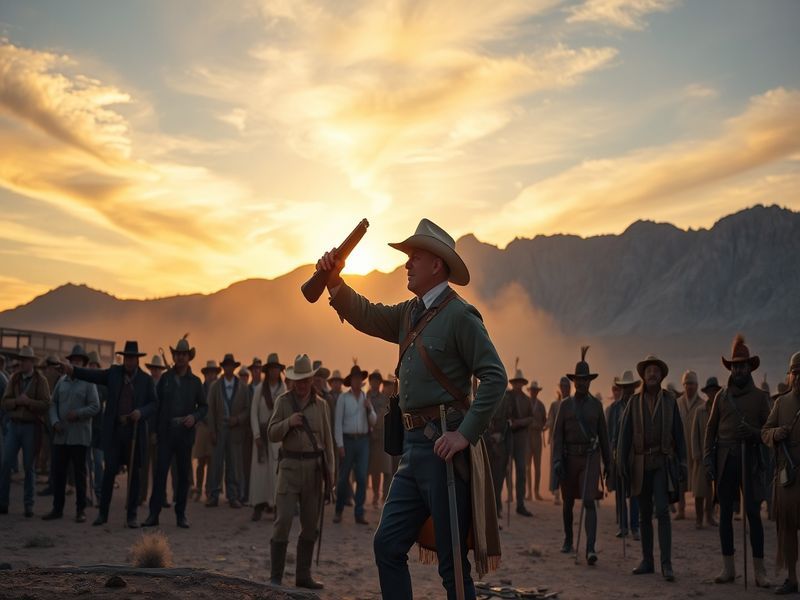
In June 1841, Houston authorized an expedition led by General Hugh McLeod to occupy eastern New Mexico, particularly the area around Santa Fe. The goal was to establish Texas control over the region and force New Mexico to recognize Texas’ territorial claims. The expedition was poorly planned, poorly supplied, and ultimately doomed to fail.
After a grueling march across the Llano Estacado, the Texas forces reached the outskirts of Santa Fe but were intercepted by Mexican authorities and local militia. Outnumbered and exhausted, McLeod’s men surrendered without firing a shot. The Santa Fe Expedition became a humiliating fiasco, costing Texas millions in resources and dozens of lives.
For Houston, the expedition’s failure was a political disaster. It exposed the fragility of Texas’ western claims and undermined his administration’s credibility. The disaster also strengthened opposition voices, including those who believed Texas should focus on securing annexation by the United States rather than pursuing unrealistic territorial ambitions.
Key Consequences of the Expedition
- Financial strain: The failed expedition cost Texas approximately $2.5 million, a staggering sum for the young republic.
- Loss of life: Dozens of Texas volunteers perished from starvation, disease, or execution after capture.
- Diplomatic fallout: The incident strained relations with both Mexico and the U.S., complicating annexation efforts.
- Political fallout: Houston’s opponents used the disaster to challenge his leadership and push for annexation to the U.S.
How the Dispute Paved the Way for Statehood
The Texas-New Mexico boundary dispute was ultimately resolved not through military force, but through negotiation and the broader context of U.S. expansion. By the mid-1840s, Texas’ financial struggles and vulnerability made annexation by the United States an increasingly attractive option.
In 1845, Texas was annexed by the U.S., and its western boundary was formally established in the Compromise of 1850. This agreement set Texas’ modern boundaries while compensating the state with $10 million for relinquishing its claims to New Mexico and other western lands. The compromise also organized the New Mexico Territory, solidifying its eastern border at the 103rd meridian.
For Sam Houston, the resolution of the dispute was bittersweet. Though he had opposed immediate annexation early in his career, he eventually supported it as the only viable path forward. His shift reflected a pragmatic recognition that Texas could not sustain its territorial ambitions independently.
The boundary dispute also highlighted the broader challenges of westward expansion. The conflict foreshadowed later tensions, such as the dispute over the Texas-New Mexico border during the Civil War, when Confederate forces briefly occupied parts of New Mexico in 1862.
Legacy: Lessons from a Forgotten Conflict
Today, the Texas-New Mexico boundary dispute is largely forgotten, overshadowed by the drama of the Texas Revolution and the Mexican-American War. Yet it offers important lessons about the complexities of territorial expansion, the limits of military adventurism, and the role of diplomacy in resolving disputes.
Sam Houston’s involvement in the conflict reveals a more nuanced side of his leadership. While he is often remembered as a unifier and a symbol of Texas identity, his actions in the New Mexico dispute show the challenges of balancing ambition with pragmatism. The episode also underscores the risks of overextending a young republic’s resources and credibility.
For historians and students of Texas history, the dispute serves as a reminder that even iconic figures like Houston were not immune to miscalculation or political pressure. It also highlights the role of geography and terrain in shaping conflicts—a theme that would recur throughout the history of the American West.
As Texas continues to debate issues of borders, identity, and expansion, the lessons of the Sam Houston era remain relevant. The state’s history is not just a story of triumph but also of ambition, compromise, and the hard choices that define nationhood.
Where to Learn More
For readers interested in exploring Texas history further, consider visiting:
- Dave’s Locker History Archive, which features primary sources and expert analysis on Texas’ territorial evolution.
- The Dave’s Locker Politics Section, which examines modern debates over borders and sovereignty.