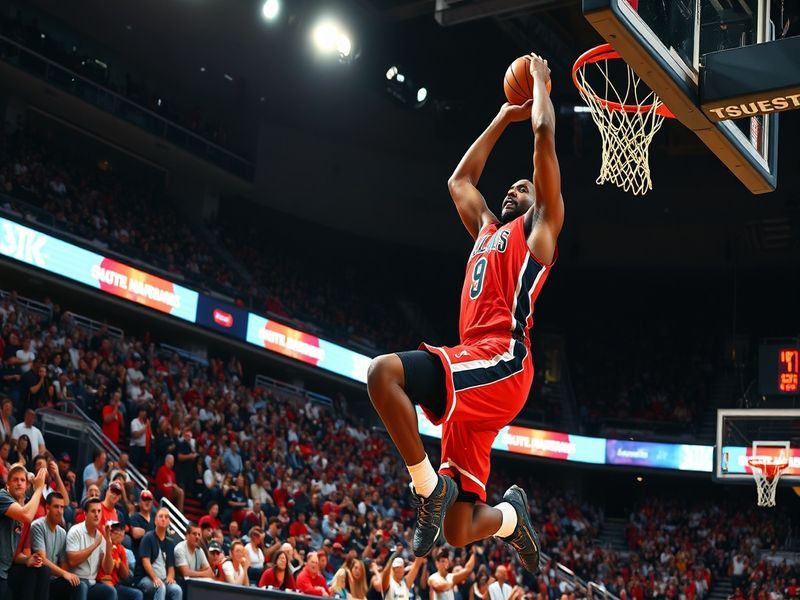
Taj Gibson: A Career Defined by Resilience and Versatility
Taj Gibson’s journey through the NBA spans more than a decade, marked by tenacity, adaptability, and an unwavering commitment to the game. Born in Brooklyn, New York, in 1985, Gibson overcame early challenges to emerge as one of the league’s most respected power forwards. His career reflects broader themes in professional sports: the importance of reinvention, the value of teamwork, and the cultural significance of athletes who transcend their draft positions.
Gibson’s path to the NBA began at the University of Southern California (USC), where he played under coach Tim Floyd. While at USC, Gibson developed a reputation as a defensive anchor and rebounding force, traits that would define his professional career. His college success earned him recognition as a First-Team All-Pac-10 player and set the stage for his entry into the 2009 NBA Draft. Selected 26th overall by the Chicago Bulls, Gibson was not a lottery pick, but he quickly proved his value in a league that often undervalues late first-round selections.
From Chicago to Global Influence
Gibson’s rookie season with the Bulls demonstrated his immediate impact. Playing alongside Derrick Rose and Joakim Noah, he formed part of a young core that revitalized the franchise. During his seven seasons in Chicago, Gibson became known for his defensive intensity, physicality, and ability to stretch the floor as a stretch-four. His role expanded beyond scoring, embodying the modern power forward: a player who could defend multiple positions, set screens, and contribute to team chemistry.
This era in Chicago coincided with a global expansion of the NBA. The league’s international popularity surged, with games broadcast in over 200 countries and territories. Players like Gibson, though not a global superstar, benefited from this growth. His reputation as a hard-nosed, reliable contributor resonated with fans worldwide who appreciated the value of role players in an era dominated by superteams and individual performances.
The NBA’s globalization also influenced Gibson’s career trajectory. Teams began prioritizing versatility and defensive versatility, traits Gibson possessed in abundance. His ability to thrive in systems that emphasized spacing and switchability made him a sought-after asset, particularly as the league evolved toward smaller, more mobile lineups.
The Art of Reinvention: Gibson’s Later Career
After leaving Chicago in 2017, Gibson played for several franchises, including the Oklahoma City Thunder, Minnesota Timberwolves, and New York Knicks. Each stop required adaptation. In Minnesota, he played alongside Karl-Anthony Towns, forming a frontcourt duo that balanced youth and experience. With the Knicks, he brought leadership to a young roster during a transitional period.
Gibson’s later years in the NBA highlight a broader trend: the increasing importance of veteran players in developing systems and mentoring younger talent. His career illustrates how athletes can extend their relevance by embracing new roles. In 2023, Gibson signed with the Pistons, a franchise in rebuilding mode, where he served as both a player and a mentor. His presence underscored the global NBA’s emphasis on veteran leadership as a cultural cornerstone.
Gibson’s career also intersects with the evolution of basketball analytics. Early in his career, his value was often measured in points and rebounds. However, as advanced metrics gained prominence, Gibson’s contributions—defensive rating, offensive rebounds, and screen assists—became quantifiable in new ways. This shift reflects a global trend in sports: the growing reliance on data to evaluate performance and inform decisions.
Cultural Impact: Beyond the Court
Gibson’s influence extends beyond statistics. As an African American athlete who rose from modest beginnings, he represents a narrative of perseverance that resonates globally. His journey from Brooklyn to the NBA resonates with communities worldwide that value hard work and determination. In an era where athletes are often judged by their social media presence, Gibson maintained a professional demeanor, focusing on his craft rather than personal branding.
Gibson’s cultural footprint is also evident in his engagement with international basketball. During the NBA offseason, he participated in exhibitions and camps in Africa, Asia, and Europe, contributing to the global growth of the sport. These efforts align with the NBA’s initiatives to expand its reach and foster basketball development worldwide. Gibson’s involvement reflects a broader trend: athletes as global ambassadors, using their platforms to promote the game beyond league boundaries.
Moreover, Gibson’s career coincides with a period of increased awareness around athlete activism. While he was not a vocal activist, his professionalism and consistency contributed to a culture of respect and accountability in sports. His longevity in a league known for short careers sends a subtle but powerful message about the value of dedication and adaptability.
Legacy and Future
As Gibson’s career winds down, his legacy is secure as a respected role player who thrived in multiple systems. His story is a testament to the evolving nature of professional sports, where versatility and adaptability are as valuable as peak performance. In a league that often celebrates flash over substance, Gibson’s career underscores the importance of reliability, teamwork, and leadership.
Looking ahead, Gibson’s transition from player to mentor or executive seems inevitable. His experience and basketball IQ would make him a valuable asset in player development or front-office roles. As the NBA continues to globalize, his insights could help shape the next generation of international talent.
The broader lesson of Gibson’s career is clear: success in professional sports is not solely defined by draft position or statistical dominance. It is shaped by adaptability, resilience, and the ability to contribute in ways that transcend traditional metrics. In a global sports landscape that values versatility and cultural relevance, Taj Gibson’s career serves as a blueprint for sustained impact.
For fans and aspiring athletes alike, Gibson’s journey offers a reminder that greatness is not reserved for the most heralded prospects. It is earned through hard work, adaptability, and an unwavering commitment to the game.
—