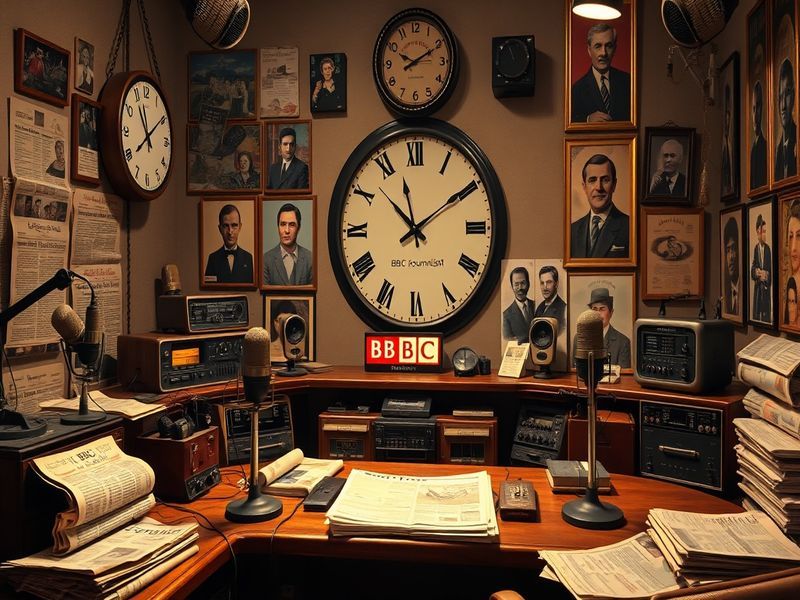
For over eight decades, BBC Persian has served as a vital source of news and information for Persian-speaking audiences worldwide. Since its launch in 1941, the service has evolved from a wartime radio broadcast into a multimedia platform delivering journalism in Farsi to millions across Iran, Afghanistan, Tajikistan, and the global diaspora. Its commitment to accuracy, impartiality, and editorial independence has made it a trusted name in a region where media freedom is often constrained.
The service operates under the broader BBC World Service umbrella, which receives funding from the UK Foreign, Commonwealth & Development Office. This model allows BBC Persian to maintain editorial independence while reaching audiences in countries where independent journalism is frequently suppressed. Its reporting spans politics, culture, human rights, and social issues, often providing perspectives absent from state-controlled media outlets in the region.
The Origins and Evolution of BBC Persian
BBC Persian began as a shortwave radio service in 1941, broadcasting to Iran during World War II. Its early mission was to counter Axis propaganda and provide neutral news coverage during a turbulent period. Over time, the service expanded its reach and scope, adapting to technological and political changes in the region.
In the 1950s and 1960s, BBC Persian became a key source of information during Iran’s oil nationalization crisis and subsequent political upheavals. Its reputation for reliable reporting grew, particularly among Iranians seeking alternatives to government-controlled media. The 1979 Islamic Revolution marked a turning point, as BBC Persian provided live coverage of the events unfolding in Tehran, offering perspectives that differed from state narratives.
The service expanded further with the launch of its Persian-language website in the late 1990s, embracing digital journalism at a time when internet access was becoming more widespread in Iran. Today, BBC Persian operates across multiple platforms, including radio, television, and social media, ensuring its content reaches audiences regardless of their preferred medium.
Challenges and Controversies
Operating in a region with restrictive media environments has presented significant challenges for BBC Persian. Iranian authorities have frequently accused the service of bias and have taken steps to block access to its content. In 2013, Iran’s government blocked BBC Persian’s website, and in 2020, it sentenced several journalists working for the service to prison terms in absentia, accusing them of conspiring against national security.
These actions reflect broader tensions between independent journalism and state-controlled narratives in the region. Despite these pressures, BBC Persian has continued to report on issues such as human rights abuses, economic struggles, and political repression, often providing coverage that is unavailable elsewhere. Its journalists, many of whom work remotely or from exile, face risks ranging from surveillance to legal repercussions.
The service has also navigated internal challenges, including debates over editorial balance and the need to cover sensitive topics without endangering contributors inside Iran. These decisions require careful judgment, balancing the public’s right to know with the safety of those who provide information.
Key Moments in BBC Persian’s History
- 1941: Launch of BBC Persian radio service during World War II.
- 1979: Extensive coverage of the Islamic Revolution, providing live updates and alternative perspectives.
- 2009: Comprehensive reporting on Iran’s disputed presidential election and subsequent protests.
- 2013: Website blocked by Iranian authorities, limiting access to content inside the country.
- 2022: In-depth coverage of nationwide protests following the death of Mahsa Amini, despite internet shutdowns.
Impact and Influence on Persian-Speaking Communities
BBC Persian has played a pivotal role in shaping public discourse among Persian-speaking communities. Its reporting on political developments, social issues, and cultural trends has influenced conversations both inside and outside the region. For many Iranians, the service represents a lifeline to unbiased information, particularly during periods of heightened censorship.
The service’s coverage of human rights issues has also drawn international attention. Reports on topics such as women’s rights, labor strikes, and environmental protests have been cited by global media outlets and human rights organizations. By amplifying voices that are often silenced within Iran, BBC Persian contributes to broader efforts to hold authorities accountable.
In the diaspora, BBC Persian serves as a cultural and informational hub for millions of Iranians who have left the country due to political or economic pressures. Its programming includes cultural content, interviews with artists and intellectuals, and discussions on identity and belonging, providing a sense of connection for those far from home.
For Afghan and Tajik audiences, the service offers critical coverage of regional issues, including conflict, economic instability, and cross-border relations. Its reporting on Afghanistan’s political transition in 2021, for example, provided context and analysis that was scarce in local media.
Looking Ahead: The Future of BBC Persian
As digital media consumption continues to grow, BBC Persian is adapting to new challenges and opportunities. The rise of social media platforms has transformed how audiences access news, and BBC Persian has leveraged these tools to reach younger demographics. Its presence on platforms like Instagram, Twitter, and Telegram has expanded its reach, particularly among Iranians who use VPNs to bypass censorship.
However, the digital landscape also presents risks. State actors frequently employ sophisticated methods to disrupt independent journalism, from hacking attempts to disinformation campaigns. BBC Persian has invested in cybersecurity measures and digital safety training for its journalists to mitigate these threats.
Looking forward, the service faces the dual challenge of maintaining its editorial standards while adapting to an increasingly fragmented media environment. The proliferation of misinformation and propaganda in the region underscores the importance of reliable, fact-based journalism. BBC Persian’s role as a trusted source of information remains as critical as ever.
For audiences inside Iran, the service continues to explore innovative ways to deliver content despite censorship. This includes the use of encrypted messaging apps, offline distribution methods, and partnerships with local activists who share information securely. These efforts ensure that news and analysis remain accessible even when traditional channels are blocked.
How BBC Persian Stays Relevant Today
- Multimedia Approach: Combining radio, television, and digital platforms to reach diverse audiences.
- Community Engagement: Encouraging audience participation through social media and user-generated content.
- Innovative Distribution: Using VPNs, encrypted apps, and offline methods to bypass censorship.
- Investigative Journalism: Producing in-depth reports on underreported issues, such as environmental crises and labor rights.
BBC Persian’s enduring relevance is a testament to its adaptability and commitment to its mission. In a media landscape often dominated by state narratives and sensationalism, the service remains a beacon of independent journalism. Its ability to evolve while upholding its core values ensures that it will continue to serve Persian-speaking audiences for generations to come.
For those interested in exploring more about independent journalism in the Middle East, visit Dave’s Locker News for related articles and analysis. To understand the broader context of media freedom in the region, check out Dave’s Locker Analysis section for deeper insights.