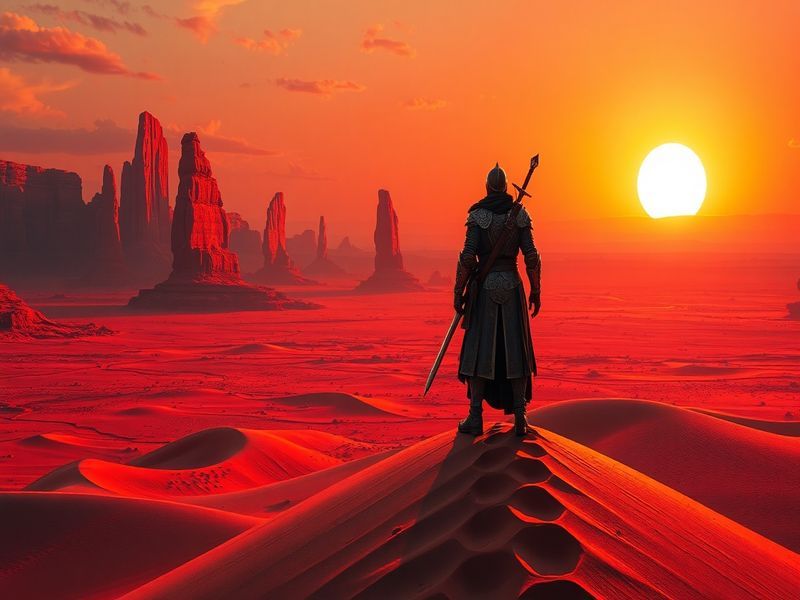
Crimson Desert, the highly anticipated open-world RPG from Pearl Abyss, has begun to carve its niche in the gaming landscape. While still in development, its ambitious scope and striking visuals have already positioned it as a title to watch. Unlike its predecessor, Black Desert Online, Crimson Desert prioritizes a single-player narrative experience over persistent online interactions. This shift reflects a broader trend in the industry, where developers are revisiting the single-player RPG format with enhanced production values and cinematic storytelling.
The game’s setting—a sprawling, war-torn continent—serves as a canvas for its narrative ambitions. Developers have emphasized a world that feels alive, with dynamic weather systems, day-night cycles, and reactive environments. Combat mechanics are also a focal point, blending action-oriented gameplay with RPG depth. Early gameplay demos have showcased fluid melee combat, spellcasting, and tactical positioning, suggesting a system that rewards player skill and adaptability.
The World of Crimson Desert: A Realm of Conflict and Intrigue
At the heart of Crimson Desert is its world, a land fractured by war and political strife. The continent of Pywel is divided among warring factions, each vying for control over its resources and legacy. Players step into this world as a mercenary, navigating a narrative that branches based on choices, alliances, and combat prowess. The setting draws inspiration from medieval Europe and East Asian cultures, blending historical aesthetics with fantasy elements.
Environmental storytelling plays a significant role in defining the world. Ruins, war camps, and abandoned villages tell silent stories of past conflicts, while NPCs offer insights into the political climate. The game’s art direction leans into a painterly style, with vibrant colors and meticulous attention to detail. This visual approach sets it apart from the gritty realism of titles like The Witcher 3 or the stylized fantasy of Elden Ring, offering a unique aesthetic that feels both familiar and fresh.
Key Features of Crimson Desert’s World
- Dynamic Environments: Weather systems, day-night cycles, and destructible terrain create a reactive world.
- Political Depth: Factions with distinct agendas shape the narrative and player choices.
- Cultural Blending: A fusion of medieval European and East Asian influences in architecture, clothing, and lore.
- NPC Interactions: Non-player characters with routines and dialogue that respond to the player’s actions.
Gameplay Mechanics: Combat and Progression
Crimson Desert’s combat system is designed to be visceral and strategic. Players wield a variety of weapons, from swords and spears to bows and magic, each with unique animations and combos. The game emphasizes a “weighty” feel, where attacks have tangible impact, and dodging or blocking is as important as landing blows. Magic, in particular, appears to be a standout feature, with spellcasters able to chain together elaborate incantations for devastating effects.
Progression is tied to both character growth and equipment. Players can level up their mercenary, unlocking new abilities and improving stats. Gear plays a crucial role, with items offering bonuses to attributes like strength, agility, or magic resistance. Unlike many RPGs that rely on traditional level-scaling, Crimson Desert seems to favor a more organic approach, where player skill and equipment choice can make even low-level characters viable in tougher encounters.
The game also introduces a “dual-character” system, allowing players to switch between two protagonists during gameplay. This mechanic adds depth to exploration and combat, as each character may have different skills or perspectives on the world. Early reactions to this feature have been positive, with players noting that it encourages experimentation and replayability.
The Broader Implications for Open-World RPGs
Crimson Desert arrives at a pivotal moment for the open-world RPG genre. Titles like Elden Ring and Cyberpunk 2077 have pushed the boundaries of what these games can achieve, both technically and narratively. Crimson Desert’s focus on single-player storytelling aligns with a growing demand among gamers for immersive, uninterrupted experiences. The success of games like The Witcher 3 and Red Dead Redemption 2 has proven that players still crave rich, narrative-driven worlds without the distractions of online multiplayer.
Moreover, Pearl Abyss’s decision to prioritize visual fidelity and environmental detail reflects a broader industry trend. As hardware capabilities improve, developers are increasingly focused on creating worlds that feel alive and reactive. This attention to detail extends to NPC behaviors, weather systems, and even the passage of time, all of which contribute to a sense of immersion. Crimson Desert’s approach suggests that open-world RPGs are evolving beyond static backdrops into dynamic, living ecosystems.
The game also highlights the importance of cultural storytelling in gaming. By drawing from a blend of historical and fantasy influences, Crimson Desert avoids the pitfalls of generic medieval settings. This approach not only enriches the world-building but also broadens the game’s appeal to players who crave fresh narratives. In an era where many RPGs recycle tropes, Crimson Desert’s willingness to experiment is noteworthy.
What’s Next for Crimson Desert?
As of now, Crimson Desert remains in development, with no official release date announced. However, the game has already generated significant buzz, thanks to its impressive demos and trailers. Pearl Abyss has a track record of delivering high-quality experiences, as evidenced by the success of Black Desert Online. Fans of the studio’s work will no doubt be eager to see how Crimson Desert builds on that legacy.
Looking ahead, the game’s success could influence the direction of future open-world RPGs. If Crimson Desert delivers on its promises, it may inspire other developers to take bigger risks with storytelling, combat, and world-building. Conversely, any missteps in execution could serve as a cautionary tale about the challenges of balancing ambition with accessibility.
For now, players will have to wait and watch as Crimson Desert continues to evolve. One thing is certain: the gaming community is hungry for experiences that push boundaries, and Crimson Desert has the potential to deliver just that.
Final Thoughts
Crimson Desert represents more than just another open-world RPG. It’s a statement of intent from Pearl Abyss, a studio eager to prove that it can transition from online multiplayer to single-player storytelling without losing its identity. The game’s blend of dynamic combat, rich world-building, and cultural depth sets it apart in a crowded genre. As the release date approaches, anticipation will only grow, and the gaming world will be watching closely.
For fans of open-world RPGs, Crimson Desert offers a glimmer of hope in an era where many titles feel derivative. If it succeeds, it could redefine what players expect from the genre. If it stumbles, it will still serve as a valuable lesson in the challenges of innovation. Either way, Crimson Desert is a game that deserves attention.
For more updates on Crimson Desert and other gaming news, visit Dave’s Locker Gaming.
Explore in-depth analysis and reviews at Dave’s Locker Analysis.