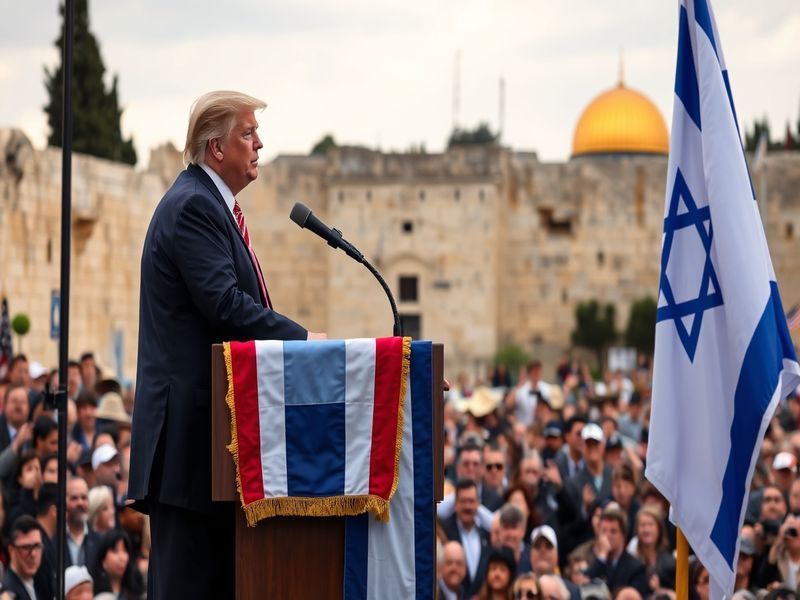
Donald Trump and Israel: An Analysis of Policies and Implications
Donald Trump and Israel: A Complex Relationship
Donald Trump’s presidency marked a significant shift in U.S.-Israel relations. His administration’s approach brought both praise and criticism, reflecting the complexities of Middle Eastern politics. Understanding this relationship requires examining key decisions, policies, and their broader implications.
Key Policies and Decisions
Throughout his time in office, Trump implemented several notable policies regarding Israel. These actions not only affected U.S.-Israel relations but also had far-reaching consequences for the entire region. Here are some of the most significant decisions:
- Recognition of Jerusalem: In December 2017, Trump officially recognized Jerusalem as the capital of Israel. This decision, which moved the U.S. embassy from Tel Aviv to Jerusalem, was groundbreaking and controversial.
- Abraham Accords: In 2020, the Trump administration brokered normalization agreements between Israel and several Arab nations, including the United Arab Emirates and Bahrain. This was a historic step in Middle Eastern diplomacy.
- Withdrawal from the Iran Nuclear Deal: Trump’s decision to withdraw from the Joint Comprehensive Plan of Action (JCPOA) in 2018 was seen as a move to strengthen Israel’s security against Iran.
- Support for Settlements: The Trump administration took a more lenient stance on Israeli settlements in the West Bank, diverging from previous U.S. policies that viewed such expansions as obstacles to peace.
Broader Implications of Trump’s Policies
Trump’s policies had immediate and long-term implications for both Israel and the Palestinian territories. The recognition of Jerusalem as Israel’s capital led to heightened tensions and protests, particularly among Palestinians who view East Jerusalem as the future capital of a potential Palestinian state. Additionally, the Abraham Accords, while celebrated by many, also drew criticism for sidelining the Palestinian issue.
The shift in U.S. policy under Trump altered the dynamics of Middle Eastern alliances. By fostering stronger ties between Israel and certain Arab nations, the Trump administration aimed to create a united front against Iran. However, this approach also risked alienating traditional U.S. allies who advocate for a two-state solution to the Israeli-Palestinian conflict.
Public and Political Reactions
Reactions to Trump’s Israel policies were mixed. Supporters praised his bold moves, arguing they reflected a pragmatic approach to foreign policy. Critics, however, contended that these actions undermined the prospects for peace in the region.
In the U.S., Trump’s stance on Israel appealed to his voter base, particularly evangelical Christians and pro-Israel groups. Conversely, many Democratic lawmakers expressed concern over the implications for Palestinian rights and regional stability. This division highlighted a broader polarization in American politics regarding foreign policy.
Conclusion: The Legacy of Trump’s Approach
Donald Trump’s presidency fundamentally altered the U.S.’s relationship with Israel and its approach to Middle Eastern diplomacy. His policies, while delivering immediate benefits to Israel, also complicated the already intricate dynamics of the region. As the world continues to grapple with the outcomes of these policies, the future of U.S.-Israel relations remains uncertain.
Understanding the implications of Trump’s decisions is crucial for analyzing current geopolitical trends. As new administrations take office, the challenge will be finding a path that balances support for Israel with the pursuit of peace and stability in the region.
For more insights on related topics, visit our Politics and News sections.