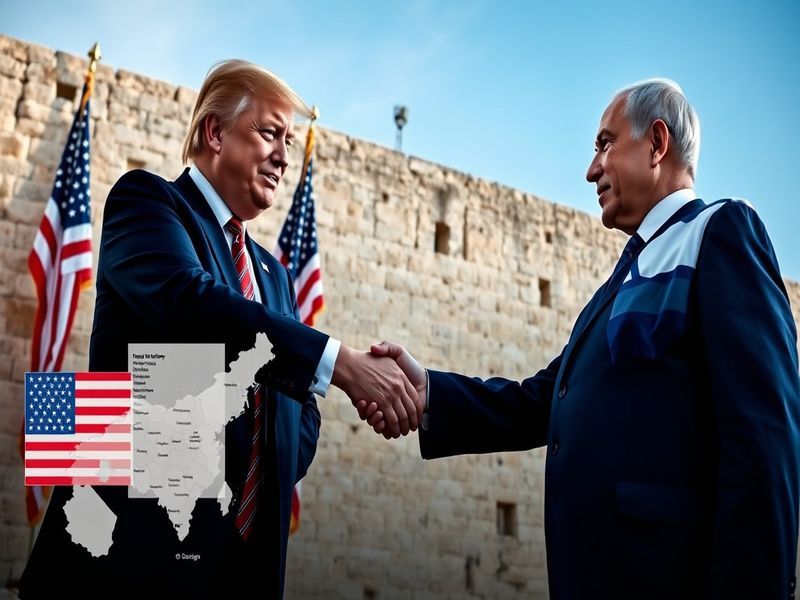
Donald Trump’s Impact on U.S.-Israel Relations: Key Policies and Implications
Donald Trump’s Influence on U.S.-Israel Relations
Donald Trump’s presidency marked a significant period in U.S.-Israel relations, characterized by bold foreign policy decisions and a departure from traditional diplomatic norms. His administration’s approach sought to strengthen ties with Israel while also attempting to redefine the United States’ role in the Middle East.
Key Policy Decisions
Several key actions taken during Trump’s presidency dramatically shifted the dynamics of U.S.-Israel relations. These decisions not only impacted bilateral relations but also had broader implications for the Middle East as a whole.
- Jerusalem as the Capital: In December 2017, Trump officially recognized Jerusalem as Israel’s capital, a move that was met with widespread international criticism and protests.
- US Embassy Relocation: Following the recognition of Jerusalem, the U.S. embassy was relocated from Tel Aviv to Jerusalem in May 2018, further solidifying this stance.
- Normalization Agreements: The Trump administration facilitated the Abraham Accords, leading to normalization agreements between Israel and several Arab nations, including the UAE and Bahrain.
- Withdrawal from the Iran Nuclear Deal: Trump’s decision to withdraw from the Iran nuclear agreement in 2018 was lauded by Israeli officials, as it aligned with their concerns over Iran’s nuclear ambitions.
Broader Implications of Trump’s Policies
The impact of Trump’s policies extended beyond the immediate U.S.-Israel relationship. By recognizing Jerusalem as Israel’s capital, the Trump administration altered the long-standing U.S. position that favored a negotiated settlement regarding the city’s status. This decision sparked a wave of protests in Palestinian territories and drew condemnation from various international bodies.
Moreover, the Abraham Accords marked a pivotal shift in Arab-Israeli relations. These agreements demonstrated a willingness among certain Arab nations to engage with Israel outside the traditional Palestinian framework. While this was a significant diplomatic achievement, it also raised concerns about the future of the Palestinian statehood aspirations.
Domestic and International Reactions
Reactions to Trump’s policies were mixed. Supporters hailed his actions as courageous and necessary for Israel’s security, while critics viewed them as detrimental to the peace process. The recognition of Jerusalem, in particular, was seen as a unilateral step that undermined U.S. credibility as a mediator in the Israeli-Palestinian conflict.
Internationally, Trump’s decisions prompted a reevaluation of alliances and foreign policy strategies. Countries that had historically maintained a more neutral stance began to reassess their positions in light of the new diplomatic landscape. The shift also led to increased tensions between the U.S. and several of its traditional allies.
Conclusion
Donald Trump’s presidency undeniably reshaped U.S.-Israel relations, introducing a series of bold and controversial policies. The recognition of Jerusalem as Israel’s capital and the facilitation of normalization agreements with Arab nations represent significant milestones in the diplomatic history of the region. However, these actions also carry profound implications for the future of Israeli-Palestinian relations and broader Middle Eastern stability.
As the geopolitical landscape continues to evolve, the long-term effects of Trump’s policies will likely be scrutinized by historians and political analysts alike. Understanding these dynamics is crucial for anyone interested in Middle Eastern affairs and the future of U.S. foreign policy.
For more insights on international relations and political analysis, visit our Politics and News sections.