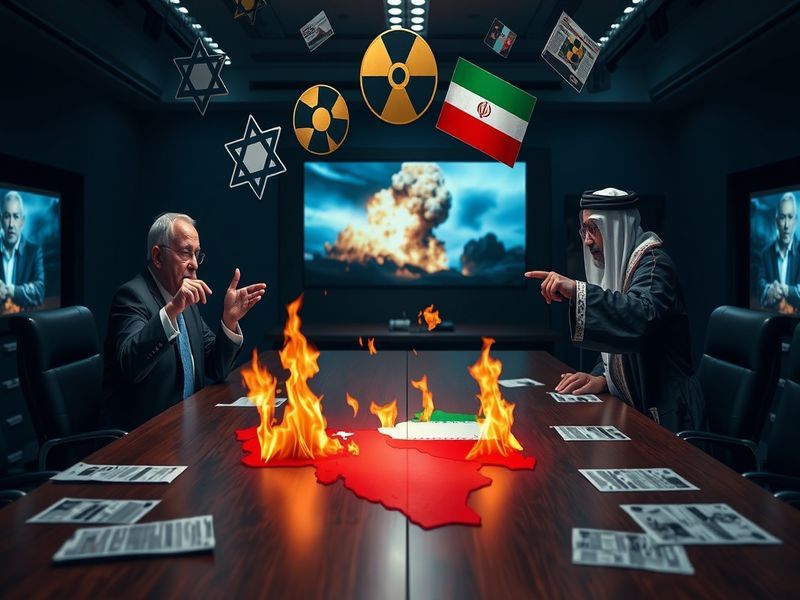
Exploring the Israel-Iran Conflict: Historical and Global Perspectives
The Tensions Between Israel and Iran
The ongoing tensions between Israel and Iran represent one of the most complex geopolitical rivalries in the Middle East. This conflict is not merely a bilateral issue; it encompasses regional dynamics, global alliances, and historical grievances. The roots of this rivalry can be traced back to the Islamic Revolution in Iran in 1979, which established a theocratic regime openly hostile to Israel.
Over the years, this animosity has evolved into a multifaceted confrontation involving military, economic, and ideological elements. Both nations have engaged in proxy conflicts, cyber warfare, and diplomatic maneuvering, all while maintaining a public narrative that justifies their respective positions.
Key Factors Contributing to the Conflict
Several key factors contribute to the ongoing conflict between Israel and Iran. Understanding these components is crucial for grasping the complexities of their relationship.
- Nuclear Ambitions: Iran’s pursuit of nuclear capabilities is a primary concern for Israel. The fear that Iran could develop nuclear weapons has led to increased military preparedness and international lobbying by Israel.
- Regional Influence: Iran’s support for groups like Hezbollah in Lebanon and various militias in Syria is viewed as an extension of its influence, directly threatening Israel’s security.
- Ideological Differences: The ideological divide between Israel, a Jewish state, and Iran, an Islamic Republic, fuels mutual distrust and hostility.
- Historical Grievances: Historical events, such as the displacement of Palestinians and the Iranian Revolution, have entrenched both sides in their respective narratives.
Global Implications of the Conflict
The conflict between Israel and Iran has ramifications that extend beyond the region. Global powers like the United States, Russia, and China have vested interests in the outcome of this rivalry. The United States has traditionally been an ally of Israel, providing military support and diplomatic backing. Conversely, Iran has sought alliances with nations that oppose U.S. influence, complicating international relations.
Furthermore, the conflict can impact global oil markets. Any escalation could disrupt oil supplies from the Persian Gulf, leading to increased prices and economic instability worldwide. The interconnectedness of the global economy means that regional conflicts can have far-reaching consequences.
Recent Developments and Future Outlook
In recent years, tensions have escalated with increased military confrontations. Israeli airstrikes on Iranian positions in Syria have become more frequent, aimed at preventing Iranian entrenchment near its borders. Meanwhile, Iran continues to develop its missile capabilities, which poses a direct threat to Israeli territory.
The potential for a broader conflict remains a pressing concern. Analysts speculate on various scenarios that could unfold, including:
- Increased military engagement leading to a full-scale war.
- Continued cyber warfare that escalates tensions without direct confrontation.
- Diplomatic efforts, potentially involving major powers, aimed at de-escalation.
Each of these scenarios carries its own set of risks and uncertainties, making it difficult to predict the future trajectory of this rivalry. The international community continues to call for dialogue, yet the deeply entrenched positions of both nations complicate any potential resolutions.
Conclusion
The Israel-Iran conflict is emblematic of larger geopolitical struggles in the Middle East. With a rich history and complex motivations, this rivalry is likely to continue influencing regional and global dynamics for the foreseeable future. Understanding the multifaceted nature of this conflict is essential for anyone seeking to grasp the intricacies of international relations today. As tensions persist, the hope for a peaceful resolution remains a distant prospect, overshadowed by the realities of military posturing and ideological divides.
For more insights into global events and their implications, visit our News section or explore our Analysis category for in-depth discussions.